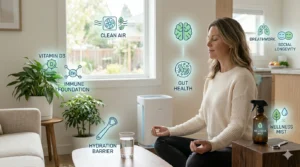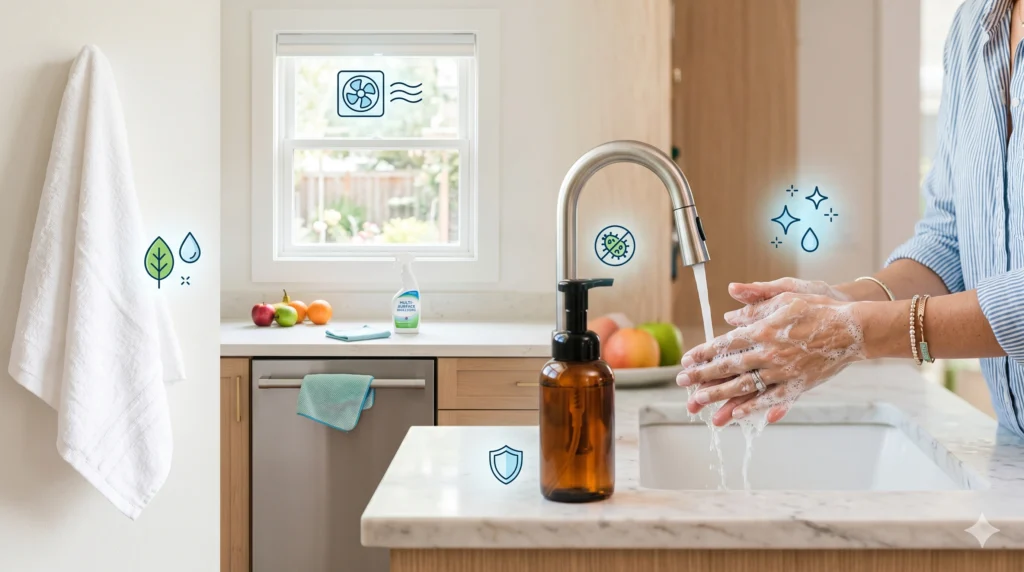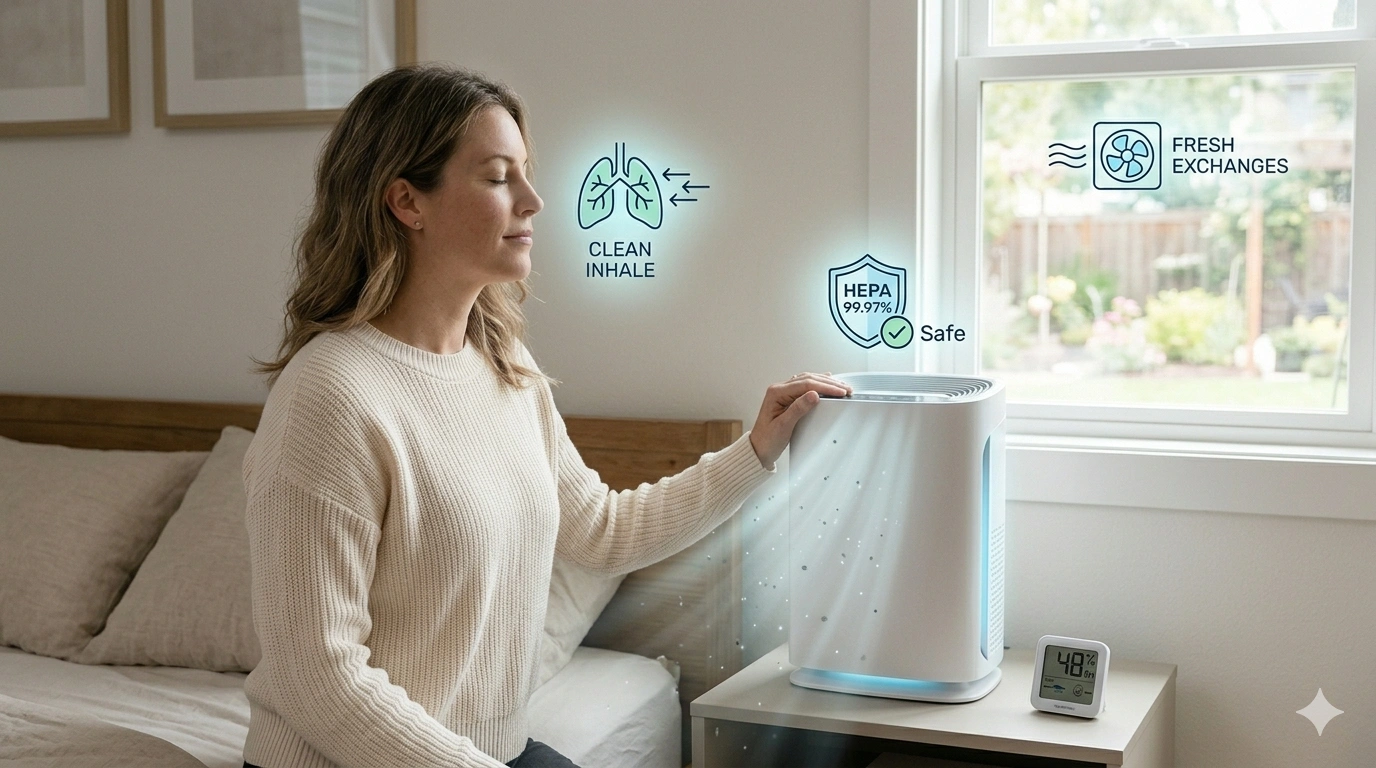

We often focus on the surfaces we touch, but the most consistent interaction we have with our environment is through the air we breathe. On average, we inhale 11,000 liters of air every day. In a modern home, indoor air can be two to five times more polluted than outdoor air due to stagnant circulation, volatile organic compounds (VOCs), and biological aerosols.
Maintaining respiratory hygiene involves engineering your home to filter out pathogens, allergens, and microscopic pollutants before they enter your lungs. Here are ten high-quality pillars for optimizing your indoor air quality and creating a true clean-air sanctuary.
1. The HEPA Standard: Capturing the Invisible
A True HEPA (High-Efficiency Particulate Air) filter is the gold standard for infection control. It is designed to capture 99.97% of particles as small as 0.3 microns.
- The Science: This includes most bacteria, mold spores, and even some viral particles that travel on larger respiratory droplets.
- CADR Ratings: When choosing a purifier, look for the Clean Air Delivery Rate (CADR). Ensure the unit is rated for the specific square footage of your room to ensure the air is “exchanged” at least five times per hour.
2. Strategic Cross-Ventilation Protocols
Mechanical filtration is powerful, but nothing replaces the “flushing” effect of fresh outdoor air. Stagnant air allows CO2 and airborne pathogens to concentrate to dangerous levels.
- The Routine: Open windows at opposite ends of your home for 15 minutes twice a day. This creates a pressure differential that physically pushes “stale” air out and pulls “scrubbed” outdoor air in.
- The Kitchen Rule: Always use an exhaust fan that vents externally when cooking with gas, which releases nitrogen dioxide ($NO_2$) and particulate matter ($PM_{2.5}$).
3. Controlling the Bio-Aerosol: Humidity Management
The survival rate of airborne viruses and the growth rate of mold are both dictated by relative humidity (RH).
- The Sweet Spot: Maintain your home between 40% and 60% RH.
- The Risks: If humidity drops below 40%, your respiratory mucous membranes dry out, making you more susceptible to infection. If it rises above 60%, you invite the growth of toxic mold and dust mites. Use a digital hygrometer to monitor this in real-time.
4. VOC Remediation: The Chemical Load
Volatile Organic Compounds are gases emitted from household staples like paints, “new” furniture, and cleaning sprays. Long-term exposure can lead to chronic respiratory inflammation.
- The Source Audit: Switch to “Low-VOC” or “Zero-VOC” paints and adhesives.
- The Off-Gassing Period: When buying new furniture or carpets, let them “off-gas” in a garage or a well-ventilated room for several days before placing them in a bedroom.
5. HVAC Maintenance and Merv Ratings
Your central heating and cooling system acts as the “lungs” of your house. If the filters are dirty, the system simply redistributes dust and pathogens.
- The MERV Scale: Upgrade your furnace filters to a MERV 13 rating if your system supports it. This is the lowest rating capable of filtering out viral carriers.
- The Coil Check: Have a professional clean your AC evaporator coils annually. Moisture on these coils can lead to “Dirty Sock Syndrome”—a bacterial and fungal growth that taints the air of the entire house.
6. The “No-Shoes” Sanctuary
Up to 80% of the dust and toxins inside a home are tracked in from the outside on the soles of shoes. This includes lead dust, pesticides, and fecal matter.
- The Barrier: Establish a “shoe-free” policy. Use a dedicated rack at the entryway.
- The Impact: This significantly reduces the amount of particulate matter that gets kicked up into the air every time someone walks across a carpeted floor
7. Dust Mite Mitigation in Textiles
Dust mite droppings are one of the most common triggers for respiratory distress and nighttime asthma. These microscopic arachnids thrive in soft surfaces.
- The Encasement Strategy: Use “allergen-proof” zippered covers on all mattresses and pillows. These have a pore size so small that mites cannot pass through.
- High-Heat Laundering: Wash curtains and rugs every three months at $60°C$ to neutralize allergens that have settled from the air.
8. Fragrance Hygiene: The Hidden Irritant
Many “air fresheners” and scented candles use phthalates and paraffin wax, which release soot and chemicals that compromise respiratory cilia—the tiny hairs in your lungs that clear out mucus.
- The Alternative: Use essential oil diffusers with pure oils (cautiously, if you have pets) or, better yet, rely on cleanliness rather than “scent” to define a fresh room. If you burn candles, choose soy or beeswax with cotton wicks.
9. Houseplants: The Biological Filter?
While the famous NASA study suggested plants clean the air, you would need a “jungle” in every room to match the power of a mechanical filter. However, plants do provide psychological benefits and minor CO2 reduction.
- The Caveat: Be careful not to overwater. Damp soil is a primary source of mold spores in the home. Keep the top layer of soil dry or use decorative pebbles to cover it.
10. The Nighttime Air Protocol
We spend the longest continuous period of time in our bedrooms. This is where air quality matters most for recovery.
- The Bedroom Setup: Keep an air purifier running on a “low” or “sleep” setting throughout the night.
- The Door Dilemma: If you sleep with the door closed for fire safety, ensure there is a gap under the door or an open window to prevent CO2 levels from spiking, which leads to morning headaches and poor sleep quality.
Conclusion: Breathing with Intention
Respiratory hygiene is an invisible but vital shield. By controlling the particles, gases, and humidity in your home, you reduce the workload on your immune system and ensure your lungs remain a clear gateway for oxygen rather than a filter for pollutants.