
Water is the essence of life, yet it is also one of the most efficient vehicles for pathogens. While municipal water systems in many areas are regulated, the “last mile”—the pipes in your home, your storage tanks, and your personal filtration devices—is entirely your responsibility. Contaminants like Legionella, Giardia, and various heavy metals can infiltrate your system through neglected fixtures or stagnant lines.
Becoming a “Water Sentinel” involves more than just buying a filter; it requires a systematic approach to how water is stored, handled, and consumed. Here are ten high-quality pillars for ensuring the microbiological and chemical safety of your home water supply.
1. The Filtration Audit: Beyond the Pitcher
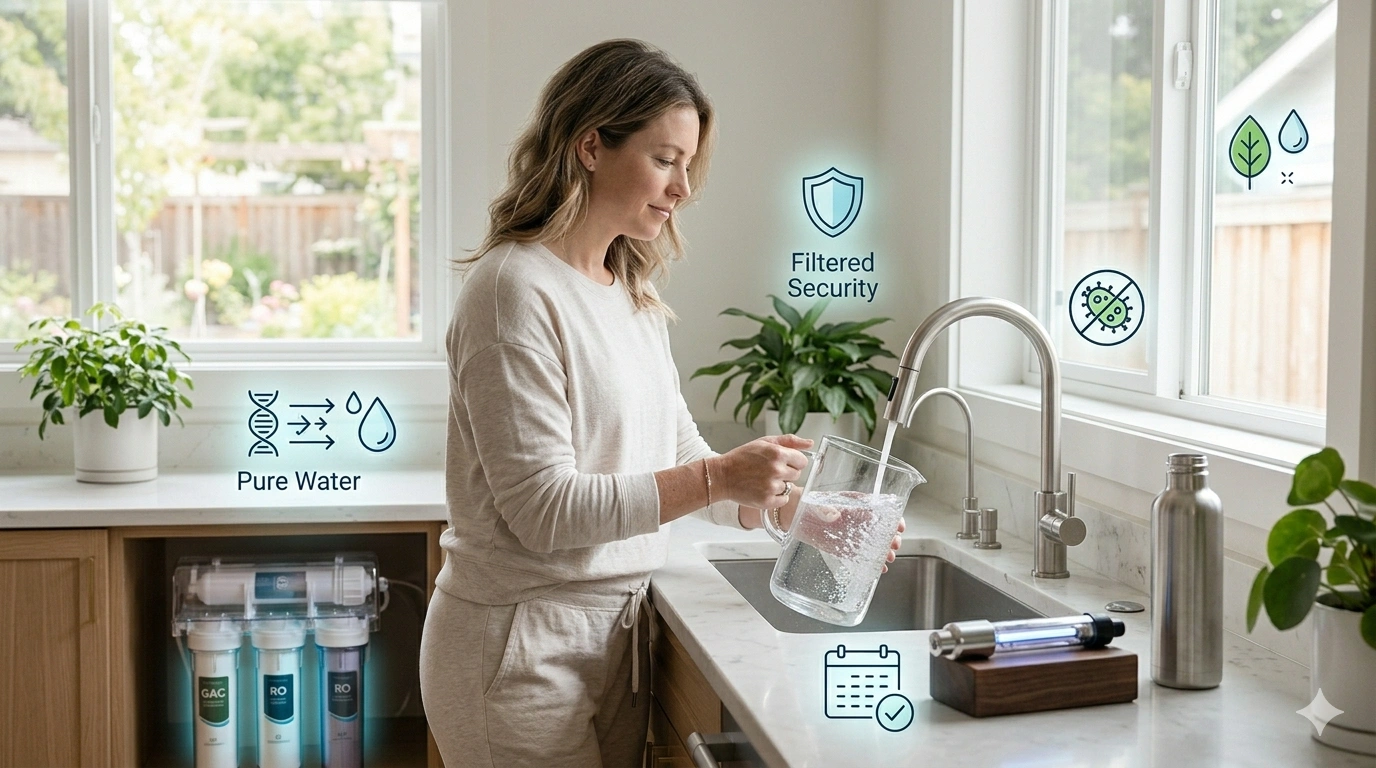
Many homeowners rely on basic carbon pitcher filters, which are excellent for improving taste by removing chlorine but are often ineffective against dissolved heavy metals or certain bacteria.
- The Hierarchy of Filtration: * Activated Carbon: Best for taste and odor (Chlorine).
- Reverse Osmosis (RO): The gold standard for removing fluoride, arsenic, and lead.
- UV Sterilization: Essential if you use well water or stored tank water, as it neutralizes $99.99\%$ of viruses and bacteria by scrambling their DNA.
- The Filter Trap: A neglected filter becomes a bacterial breeding ground. Set a recurring calendar alert to replace cartridges exactly as specified by the manufacturer—never wait for the “taste” to change.
2. Eliminating Stagnation: The 30-Second Flush
Pathogens like Legionella (the cause of Legionnaires’ disease) thrive in stagnant, lukewarm water found in pipes that haven’t been used for several days.
- The Protocol: If a faucet has been unused for more than 6 hours, run the cold water for 30 to 60 seconds before using it for drinking or cooking. This flushes out water that has been sitting in contact with metal plumbing fixtures, reducing lead and copper leaching.
- Vacation Reset: Upon returning from a trip, flush every fixture in the house—including showers—for five minutes to refresh the entire system.
3. Aerator and Fixture Sanitization
The small mesh screens at the end of your faucets (aerators) trap sediment and organic matter, creating a perfect “biofilm” environment where bacteria can multiply and shed into your glass.
- The Maintenance: Once every three months, unscrew your faucet aerators and soak them in white vinegar to dissolve mineral scale. Scrub with a small brush and rinse thoroughly.
- Showerheads: High-pressure showerheads can aerosolize Legionella. Soak showerheads in a descaling solution twice a year to prevent buildup that harbors these microbes.
4. The Integrity of Personal Water Bottles
Reusable bottles are great for the environment but are frequently the most contaminated items in a person’s daily life. Saliva, backwash, and damp environments lead to rapid mold and bacterial growth.
- The Daily Cycle: Water bottles must be washed daily with hot, soapy water.
- The Material Choice: Glass or high-grade stainless steel is preferred over plastic. Plastic develops “crazing” (micro-cracks) over time where bacteria hide and chemicals may leach.
- Drying Protocol: Bacteria require moisture to survive. Always store your bottles upside down on a drying rack to ensure the interior is bone-dry before the next se.
5. Managing Stored Water: Tanks and Coolers
If your home uses a rooftop tank or a bottom-loading water dispenser, you have a “stationary” water risk.
- The Tank Scrub: Professional cleaning of rooftop or underground storage tanks should occur at least once a year. Silt and sludge at the bottom provide nutrients for bacterial blooms.
- The Dispenser Reservoir: Water coolers have internal reservoirs that need sanitization. Every 3-6 months, run a diluted vinegar or food-grade sanitizer solution through the system to prevent the growth of green algae and biofilm.
6. Thermal Controls and the Water Heater
Your water heater can inadvertently become a sanctuary for pathogens if the temperature is set too low to save energy.
- The Safety Setting: To kill Legionella, water should be stored at 60°C (140°F).
- The Scald Guard: Since $60°C$ water can cause burns, use thermostatic mixing valves at the tap to bring the delivery temperature down to a safe $49°C$ ($120°F$) while keeping the tank itself hot enough to remain sterile.
7. Cross-Contamination in Ice Production
Ice is food, yet it is rarely treated with the same hygiene standards. Ice trays and automatic icemakers can harbor “psychrophilic” (cold-loving) bacteria and molds.
- The Ice Audit: Empty and sanitize your ice bin every month. If you use trays, wash them in the dishwasher between every refill.
- The Filter Connection: If your refrigerator has a water dispenser, it has a dedicated filter for ice. This must be changed every six months to prevent the “clogged filter” effect, which slows water flow and encourages bacterial growth in the lines.
8. Handling “Point of Entry” vs. “Point of Use
Understanding your home’s water map is crucial for infection control.
- POE (Point of Entry): Systems that treat all water entering the house (softeners, sediment filters).
- POU (Point of Use): Systems at the kitchen sink or shower.
- The Strategy: For infection control, focus your highest-grade filtration (RO or UV) at the POU where you ingest water, rather than trying to treat the water used for flushing toilets.
9. Well Water Vigilance
If your water comes from a private well, you are your own “utility company.” Surface runoff from heavy rains can introduce coliform bacteria or nitrates from fertilizers into your well.
- Annual Testing: Have your well water lab-tested once a year for bacteria, nitrates, and local contaminants.
- Shock Chlorination: If a test comes back positive for bacteria, the well must be “shocked” with a high concentration of chlorine—a process that should be handled by a professional to ensure the entire plumbing system is disinfected.
10. The Hygiene of Hydration Accessories
Straws, “bite valves,” and lids with complex gaskets are notorious for harboring black mold that is difficult to see.
- Specialized Tools: Use dedicated “straw brushes” to scrub the interior of reusable straws.
- Disassembly: When washing lids, remove all silicone gaskets. Mold often grows underneath the seal where it is protected from standard rinsing.
Conclusion: A Foundation of Health
Ensuring the purity of your home’s water is a continuous process of maintenance and mindfulness. By implementing these ten pillars, you protect your household from invisible biological and chemical threats that can compromise long-term wellness. Pure water is the first line of defense in a healthy home.