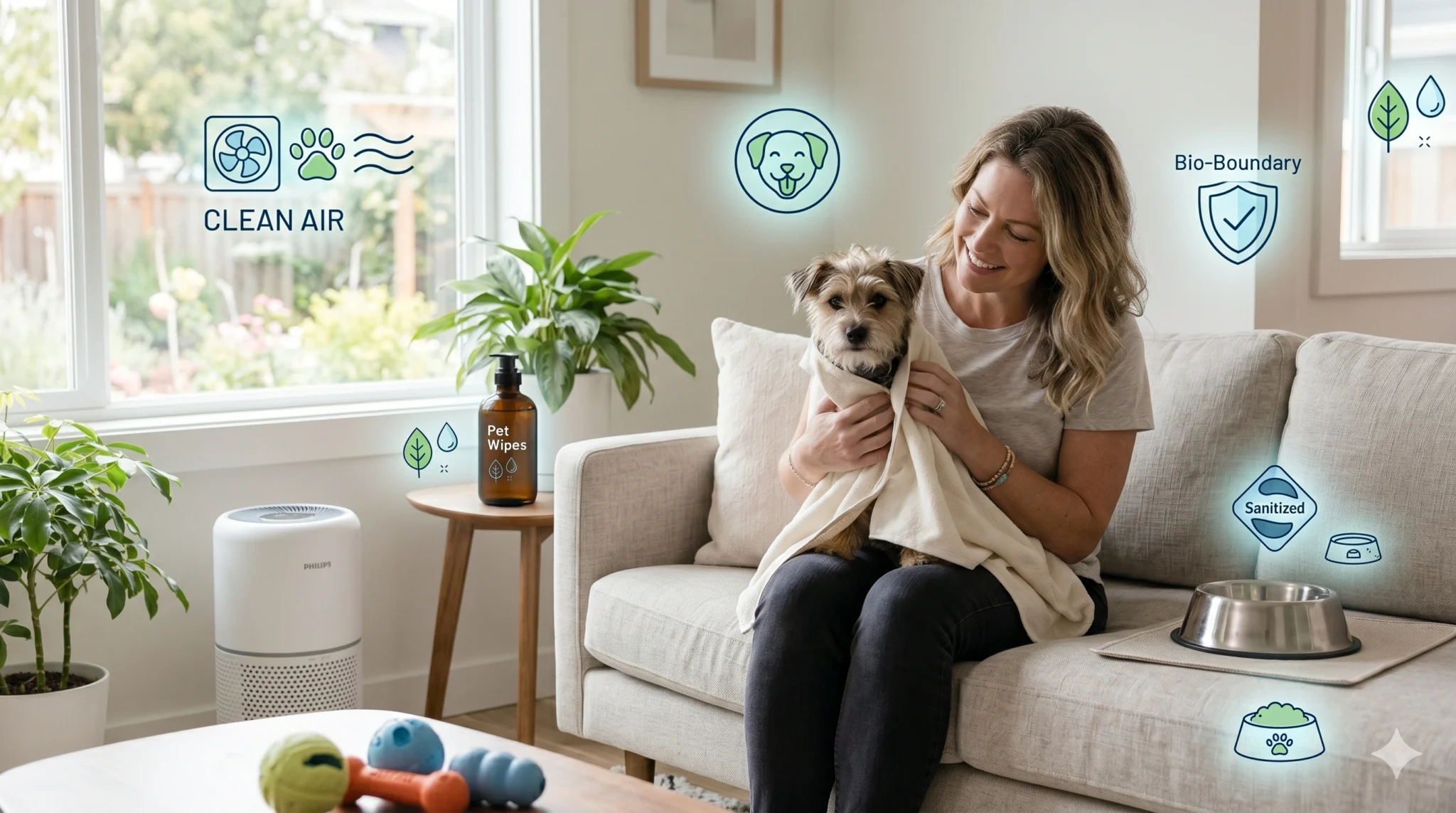

For many of us, pets are more than just animals; they are integrated members of the family. However, from a biological standpoint, pets introduce a unique set of microbes into the home environment. Zoonotic diseases—illnesses that can jump from animals to humans—include everything from bacterial infections like Salmonella and Campylobacter to parasitic threats like roundworms and toxoplasmosis.
Maintaining a “Bio-Boundary” doesn’t mean distancing yourself from your furry friends; it means implementing a structured hygiene protocol that allows for safe cohabitation. Here are ten high-quality pillars for managing pet hygiene and infection control within your home.
1. The Post-Walk “Paws and Pathogens” Protocol
Your dog’s paws are the primary gateway for outdoor contaminants to enter your living space. From street chemicals and pesticides to animal waste and soil-borne bacteria, a single walk can track millions of microbes onto your carpets and furniture.
- The Solution: Keep a dedicated container of pet-safe antiseptic wipes or a “paw plunger” by the door.
- The Routine: Wipe paws thoroughly after every outdoor excursion. This simple habit prevents the “outdoor-to-indoor” transfer of pathogens and allergens that can affect human respiratory health.
2. Dining Hygiene: Separate and Sanitize
Pet bowls are consistently ranked among the top five germiest items in the household. Biofilms—slimy layers of bacteria—form rapidly on the surface of water and food bowls.
- The Protocol: Wash food bowls daily and water bowls every other day in the dishwasher at a high-heat setting ($60°C+$).
- Material Matters: Switch from plastic to stainless steel or ceramic. Plastic develops microscopic scratches over time that harbor bacteria even after washing.
- The “Human” Barrier: Never wash pet bowls in the kitchen sink alongside human dishes. Use a utility sink or a dedicated basin to avoid cross-contamination.
3. The Science of the Litter Box
For cat owners, the litter box is the most significant biohazard zone. Toxoplasma gondii, a parasite found in cat feces, can survive for months in the environment and poses risks, particularly to pregnant women and immunocompromised individuals.
- The Management: Scoop the box at least twice a day. This prevents the maturation of certain parasite eggs, which often takes 24 to 48 hours.
- Deep Cleaning: Once a month, empty the entire box and scrub it with a 10% bleach solution.
- The Lid Rule: If possible, use a covered box or keep it in a well-ventilated area away from the kitchen and dining zones.
4. Grooming as Preventative Medicine
Regular grooming isn’t just about aesthetics; it’s about reducing the “shed load” of dander and bacteria.
- Dander Control: Brushing your pet outdoors prevents loose fur and skin cells (dander) from becoming airborne inside. This is crucial for maintaining indoor air quality and reducing allergy triggers.
- Bathing: Use a veterinarian-approved antimicrobial shampoo. Avoid over-bathing, which can strip natural oils and lead to skin infections, creating more biological waste.
5. Toy Sanitation: The Forgotten Reservoir
Soft toys soak up saliva and bacteria, while hard toys collect floor grime. These items are often shared between pets or handled by children.
- The Wash Cycle: Launder plush toys in a mesh bag on a hot cycle weekly.
- Hard Toys: Sanitize rubber or plastic toys in a solution of vinegar and water.
- Replacement: If a toy becomes heavily frayed or “soupy” with saliva, it is time to discard it.
6. Bedding and Fabric Management
Pets spend 12 to 16 hours a day on their beds, leaving behind a concentrated layer of organic matter.
- The Cover Rule: Only buy pet beds with removable, machine-washable covers.
- The Temperature: Wash pet bedding weekly at $60°C$ ($140°F$) to kill flea larvae, mites, and bacteria.
- The Furniture Boundary: If pets are allowed on human furniture, use dedicated “pet blankets” that can be easily removed and laundered separately from your own linens.
7. Hand Hygiene After Interaction
It is easy to forget to wash your hands after a quick pat or a game of fetch, but saliva and fur are significant carriers of bacteria.
- The Rule: Always wash your hands before eating or preparing food if you have touched your pet.
- Saliva Protocol: While the myth of “clean” dog mouths persists, pet saliva contains numerous bacteria that can cause infections if they enter human mucous membranes or broken skin.
8. Managing “Accidents” with Enzymatic Cleaners
Standard household cleaners often fail to fully break down the proteins in pet waste.
- The Chemistry: Use enzymatic cleaners. These products contain specific enzymes that “eat” the uric acid and bacteria, ensuring that the spot is biologically clean rather than just visually clean.
- Prevention: Ensuring the area is completely free of pheromones prevents the pet from returning to the same spot, which helps maintain overall home hygiene.
9. Waste Disposal and Outdoor Hygiene
If you have a yard, pet waste management is critical for preventing the contamination of groundwater and the spread of parasites.
- Immediate Cleanup: Pick up waste immediately. This prevents flies from acting as vectors, carrying bacteria from the waste to your outdoor dining areas or windowsills.
- Disposal: Double-bag waste and place it in an outdoor bin. Never compost pet waste near food-growing gardens.
10. Preventive Veterinary Care
The health of your pet directly dictates the biological safety of your home.
- Parasite Prevention: Maintain a strict schedule for flea, tick, and heartworm prevention. A single tick brought inside can transmit Lyme disease or Rocky Mountain spotted fever to humans.
- Regular Checkups: Identifying and treating subclinical infections in pets prevents them from becoming “silent spreaders” within the household.
Conclusion: Harmony Through Hygiene
Living with pets is one of life’s great joys, but it requires a specialized set of hygiene “rules of engagement.” By establishing these ten bio-boundaries, you ensure that your home remains a safe sanctuary for both two-legged and four-legged residents.