
Maintaining a pristine home environment isn’t just about aesthetic appeal; it is a fundamental pillar of preventative medicine. In an era where global health awareness is at an all-time high, your home should serve as your primary sanctuary against pathogens.
Effective infection control is built on two foundations: personal hygiene (what you do to your body) and environmental hygiene (what you do to your surroundings). By mastering these ten essential pillars, you can drastically reduce the risk of illness for yourself and your loved ones.
1. The Art and Science of Handwashing
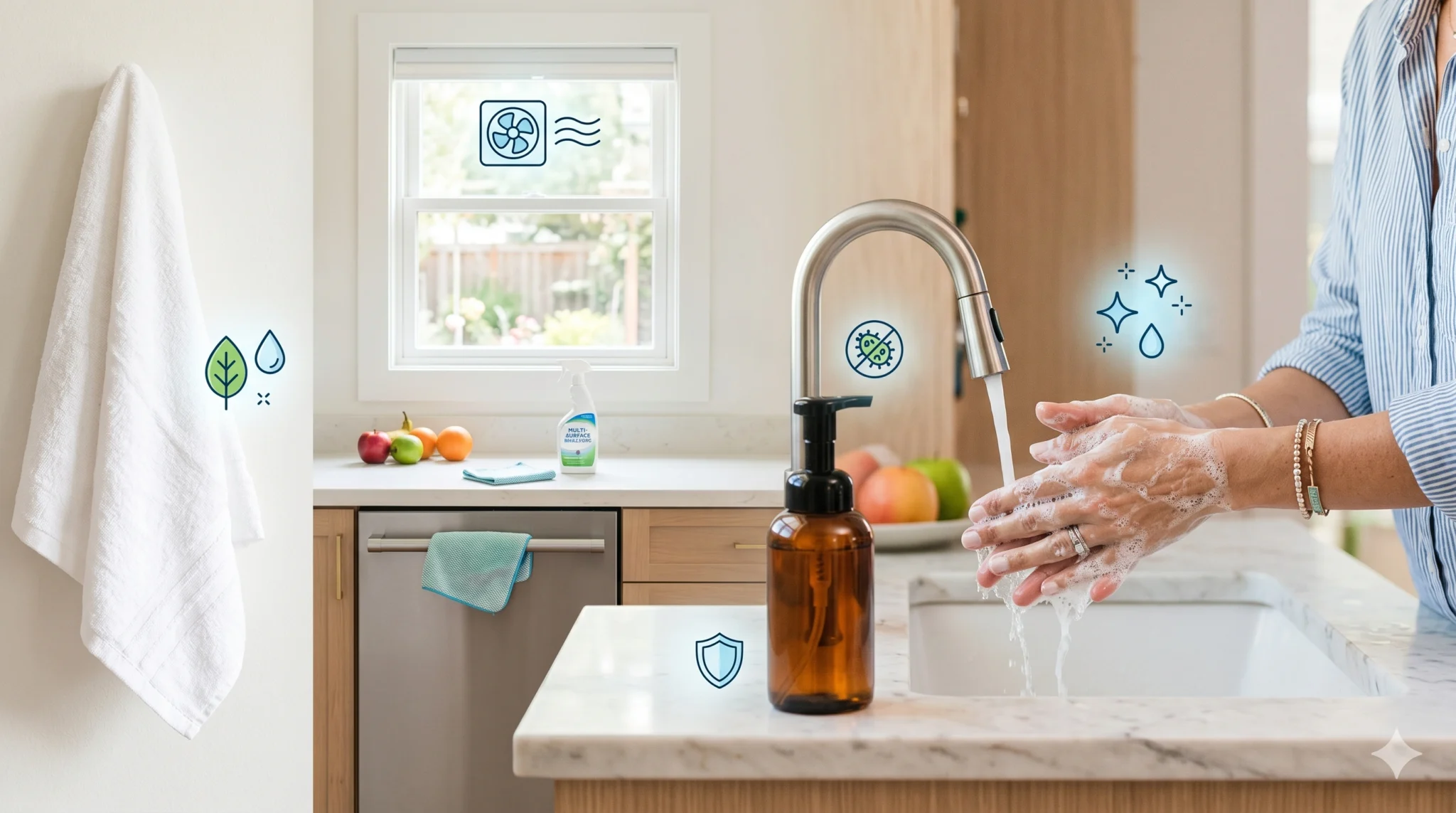
It sounds basic, but hand hygiene remains the single most effective way to prevent the spread of infections. Most people wash their hands, but few do it correctly.
To truly eliminate transient flora—the bacteria and viruses you pick up from surfaces—you must follow the 20-second rule.
- The Technique: Lather the backs of your hands, between your fingers, and under your nails.
- The Timing: Wash before preparing food, after using the bathroom, after touching pets, and immediately upon entering the house from outside.
- The Science: Soap molecules have a polar and non-polar end; one attaches to water, the other to the lipid (fatty) envelope of many viruses, effectively tearing the virus apart and rinsing it away.
Shutterstock
Explore
2. Respiratory Etiquette: Beyond the Basics
Respiratory droplets are the primary vehicle for common colds, influenza, and more serious viral threats. Even if you don’t feel “sick,” you could be a carrier.
- The “Vampire Sneeze”: Always cough or sneeze into the crook of your elbow rather than your hands. This prevents you from transferring pathogens to every doorknob or remote control you touch afterward.
- Disposal: If you use a tissue, dispose of it immediately in a lined trash can and wash your hands. Leaving used tissues on coffee tables creates a biohazard zone in your living room.
3. Kitchen Cross-Contamination Protocols
The kitchen is statistically the most germ-laden room in the house, often housing more fecal bacteria than a toilet seat due to improper food handling.
- Color-Coded Cutting Boards: Use separate boards for raw meats and fresh produce.
- The Danger Zone: Bacteria multiply rapidly between $5°C$ ($40°F$) and $60°C$ ($140°F$). Ensure your refrigerator is set below $4°C$ and that leftovers are cooled and stored within two hours.
- Sponge Management: Kitchen sponges are bacterial breeding grounds. Sanitize them daily in the dishwasher or replace them weekly with microfiber cloths that can be laundered at high temperatures.
4. High-Touch Surface Disinfection
Not all surfaces are created equal. “High-touch” surfaces act as communal hubs for germs. These require daily attention:
- Doorknobs and handles
- Light switches
- Refrigerator handles
- Remote controls and keyboards
- Faucets
Cleaning vs. Disinfecting: Cleaning removes dirt; disinfecting kills germs. Use a detergent first to remove organic matter, then follow up with an EPA-approved disinfectant to ensure the surface is truly safe.
5. Personal Item Integrity
Infection control often fails when we share “personal” items. To maintain a sterile-ish home environment, establish strict boundaries for items that touch mucous membranes or skin.
- Towels: Never share bath towels. Damp towels are incubators for fungi and staph bacteria. Ensure they dry completely between uses and wash them in hot water every 2-3 uses.
- Razors and Toothbrushes: These can carry trace amounts of blood or saliva. Store toothbrushes upright and apart so the heads do not touch.
6. Laundry Hygiene and High-Heat Cycles
Your clothes and linens act as a “second skin,” collecting dead skin cells, sweat, and environmental pathogens.
- Bedding: Wash sheets and pillowcases once a week in water at least $60°C$ ($140°F$) to kill dust mites and neutralize allergens.
- The Laundry Transfer: When handling dirty laundry from a sick household member, wear gloves and avoid “shaking” the laundry, which can disperse viruses into the air.
7. Bathroom Sanitization Strategy
The bathroom requires a specific strategy due to the “toilet plume” effect—the aerosolization of particles when flushing.
- The Lid Rule: Always close the toilet lid before flushing to prevent droplets from landing on toothbrushes or counters.
- Ventilation: Use exhaust fans to reduce humidity. High humidity encourages the growth of mold and mildew, which can cause respiratory irritation and secondary infections.
8. Digital Hygiene: The Smartphone Factor
We wash our hands, then immediately touch our smartphones, which have been everywhere from the bus to the bathroom.
- Daily Wipe-down: Use a 70% isopropyl alcohol wipe or a UV-C sanitizer box on your phone daily.
- The Boundary: Make the dinner table and the bed “phone-free zones” to prevent the transfer of outdoor pathogens to areas where you eat and sleep.
9. Waste Management and Disposal
Trash cans are reservoirs for decaying organic matter and pathogens.
- Lined and Covered: Use bins with lids, preferably foot-pedal operated to avoid hand contact.
- The “Icky” Bin: In the event of an illness, use a dedicated trash can for the sick person’s tissues and waste, and double-bag it when disposing.
- Sanitize the Bin: Once a month, wash the physical trash bin with a bleach solution to eliminate lingering odors and bacteria.
10. Indoor Air Quality and Ventilation
Infection control isn’t just about what you touch; it’s about what you breathe. Stagnant air allows airborne pathogens to linger.
- Cross-Ventilation: Open windows for at least 15 minutes a day, even in winter, to flush out indoor pollutants and CO2.
- HEPA Filtration: Use air purifiers with HEPA filters in high-traffic areas or bedrooms. A true HEPA filter can trap 99.97% of particles as small as 0.3 microns, including many viruses and bacteria.
Conclusion: The Habits of Health
Infection control at home is not about achieving a sterile, laboratory-grade environment—that is neither possible nor healthy for our immune systems. Instead, it is about risk mitigation.