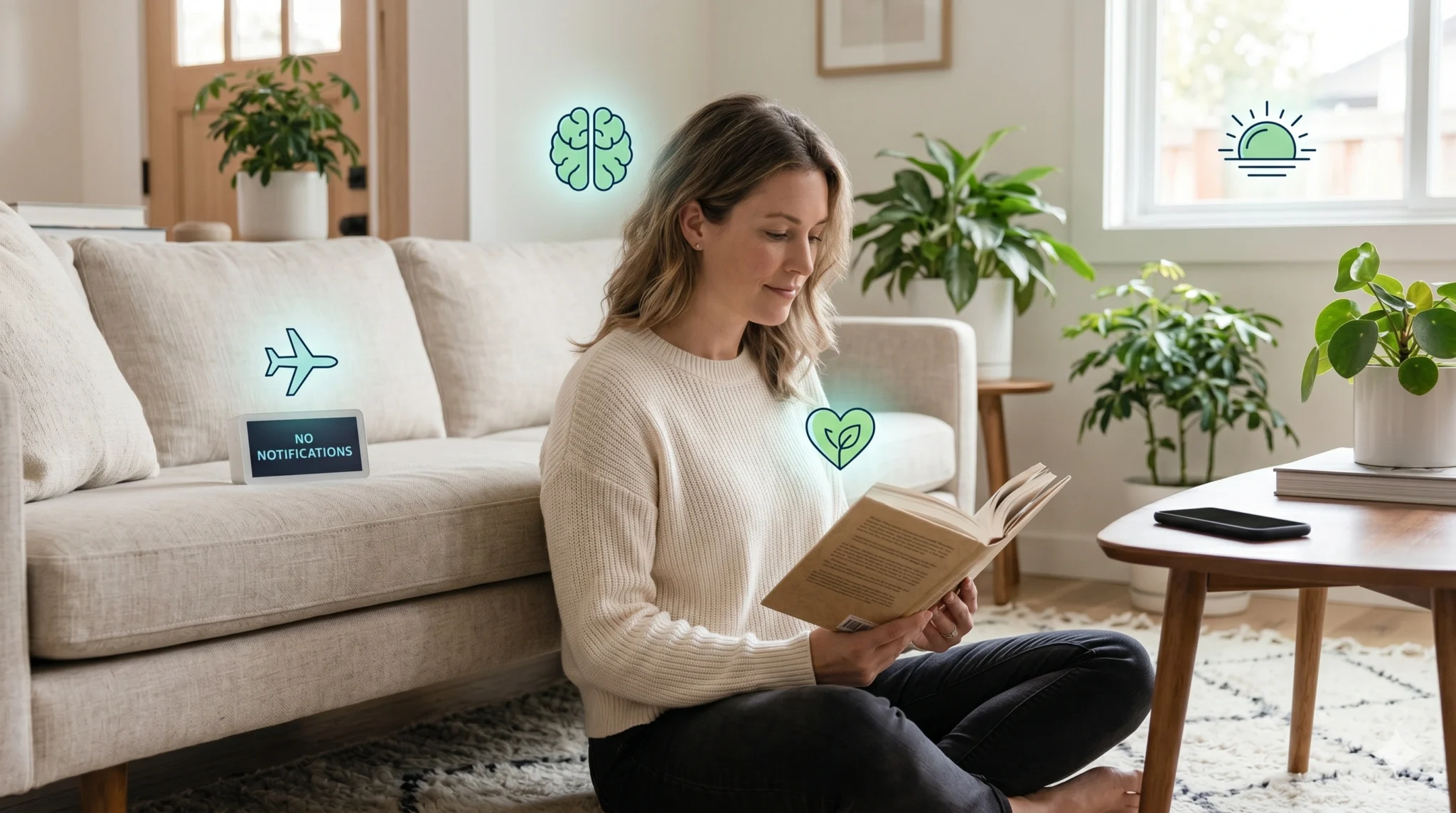

In the modern era, our physical lives are inextricably linked to our digital ones. While we’ve mastered the hygiene of our hands and homes, we often neglect the hygiene of our minds. The average adult spends upwards of seven hours a day interacting with screens—a digital immersion that has fundamentally altered our attention spans, sleep patterns, and stress levels.
A “Digital Detox” isn’t about retreating to a cave or abandoning technology; it’s about establishing a sustainable relationship with your devices. It’s about ensuring that you are using your tools, rather than your tools using you.
1. The Psychology of the “Infinite Scroll”
Social media platforms are engineered using “variable ratio reinforcement”—the same psychological mechanism that makes slot machines addictive. When you swipe down to refresh a feed, you don’t know if you’ll see a boring ad or a heartwarming photo of a friend. That uncertainty triggers a dopamine hit in the brain.
- The Fix: Acknowledge the loop. By recognizing that the “scroll” is a programmed urge rather than a genuine desire for information, you can begin to break the cycle.
2. Curating Your Notification Ecosystem
Every “ping” is a cognitive interruption. It takes the brain an average of 23 minutes and 15 seconds to return to deep focus after being interrupted. If your phone buzzes every ten minutes, you are effectively never operating at full mental capacity.
- The Audit: Go into your settings and disable all non-human notifications. If a machine is “liking” your post or an app is telling you about a sale, you don’t need to know in real-time.
- Batching: Set specific times to check emails and messages rather than reacting to them as they arrive.
3. Implementing “Tech-Free” Sanctuary Zones
Just as we have rooms for specific purposes in a home, we should have physical spaces where technology is prohibited. This creates a psychological boundary that allows the brain to “power down.”
- The Bedroom: The most critical sanctuary. Blue light from screens suppresses melatonin production, shifting your circadian rhythm.
- The Dining Table: Reclaim mealtimes for mindful eating and face-to-face conversation. This fosters deeper social connections and prevents “distracted eating,” which often leads to overconsumption.
4. The 20-20-20 Rule for Physical Health
Digital hygiene isn’t just mental; it’s physiological. Computer Vision Syndrome (CVS) and “Tech Neck” are real medical conditions resulting from prolonged screen use.
- The Rule: Every 20 minutes, look at something 20 feet away for at least 20 seconds.
- The Result: This allows the ciliary muscles in your eyes to relax, reducing headaches and eye strain.
5. Intentional Consumption vs. Passive Grazing
We often find ourselves “grazing” on content simply because we are bored or anxious. This passive consumption rarely leaves us feeling refreshed; instead, it often leads to “doomscrolling” and increased cortisol.
- The Strategy: Before opening an app, ask yourself: “What is my goal?” If the answer is “to kill time,” try a five-minute stretch or a glass of water instead.
6. The Social Comparison Trap
Digital environments are curated highlight reels. Constantly measuring your “behind-the-scenes” against everyone else’s “best-of” leads to what psychologists call Social Comparison Theory—often resulting in decreased self-esteem and increased anxiety.
- The Cleanse: Unfollow accounts that make you feel inadequate. Curate your feed to include educational content, hobbies, or genuine friends rather than “aspirational” influencers.
7. Reclaiming “Boredom” as a Creative Catalyst
In a world of constant stimulation, we have lost the ability to be bored. However, boredom is the state in which the brain’s Default Mode Network (DMN) activates. This is where daydreaming, problem-solving, and creative “aha!” moments happen.
- The Challenge: Next time you are waiting in line or riding an elevator, resist the urge to pull out your phone. Let your mind wander. You might be surprised at the ideas that surface.
8. Establishing a Digital Sunset
Our bodies are governed by the rising and setting of the sun. Artificial light, specifically the short-wavelength blue light from LEDs, tricks the brain into thinking it is midday.
- The Protocol: Implement a “Digital Sunset” 60 minutes before bed. Swap the tablet for a physical book or an e-reader with an e-ink display (which doesn’t emit direct light). This signals to your endocrine system that it is time to prepare for restorative sleep.
9. The Power of “Do Not Disturb” (DND)
Most modern smartphones have robust “Focus” modes. Use them.
- Scheduled DND: Set your phone to automatically enter Do Not Disturb mode from 9:00 PM to 7:00 AM.
- Emergency Bypass: You can white-list specific contacts (like family members) so their calls still come through, ensuring you stay reachable for emergencies without being bothered by junk mail.
10. Measuring Success Offline
At the end of a digital detox, the goal isn’t a lower “Screen Time” number (though that helps). The goal is an increase in presence.
- The Metric: Are you more engaged in your hobbies? Is your sleep quality better? Are your relationships deeper? These are the real indicators of successful digital hygiene.
Conclusion: Finding the Middle Ground
Technology is a marvelous servant but a terrible master. By applying the same rigor to your digital consumption as you do to your physical health, you can enjoy the benefits of connectivity without the burnout of over-saturation. True health in the 21st century requires us to be as mindful of what we put into our minds as what we put into our bodies.