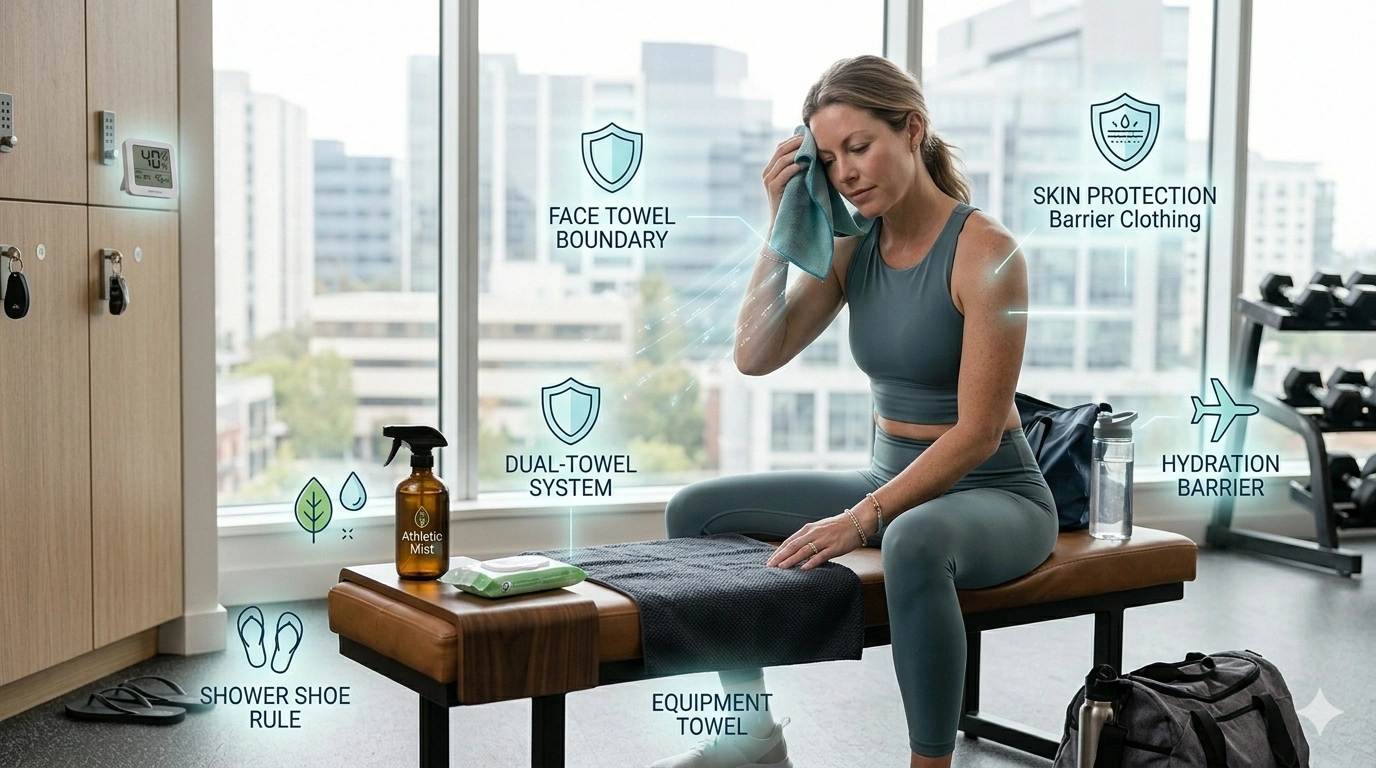

The gym is a unique biological environment—a high-density space where heat, moisture, and communal equipment create the perfect incubator for fungi and bacteria. From the common cold to more resilient skin infections like Ringworm, Staph, or even MRSA, the risk of “bio-transfer” is significantly higher in athletic settings.
For someone committed to physical performance and wellness, maintaining an “Athletic Boundary” is essential to ensure that your workout routine builds your health rather than compromising it. Here are ten high-quality pillars for managing hygiene and infection control in fitness environments.
1. The “Dual-Towel” System
In a gym, your towel is your primary protective barrier. Using a single towel for both the equipment and your face is one of the most common hygiene failures.
- The Protocol: Carry two distinct towels. Use a darker-colored towel exclusively to lay on benches and machines to act as a barrier against other people’s sweat. Use a lighter-colored, microfiber towel only for wiping sweat off your own face and body.
- The Logic: This prevents the transfer of surface bacteria (like Staphylococcus) from a communal weight bench directly into your pores or eyes.
2. Equipment Sanitization: The Before and After Rule
While many gyms provide disinfectant sprays, most users only wipe down equipment after they use it as a courtesy. To protect yourself, you must be proactive.
- The Routine: Spray and wipe the handles, seat, and adjustment pins before you touch them.
- Dwell Time: Professional disinfectants often require 30-60 seconds of wet contact to kill pathogens. Spray the equipment, wait a moment while you adjust your music or gloves, and then wipe.
3. Footwear Integrity and “Locker Room Safety”
Locker rooms and communal showers are the primary sites for fungal transmissions, such as Athlete’s Foot (Tinea pedis) and plantar warts.
- The Shower Shoe Rule: Never let your bare feet touch the floor of a gym shower or locker room. Wear rubber flip-flops or specialized shower shoes at all times.
- The Shoe Swap: Change out of your gym shoes immediately after your workout. Storing damp, sweaty shoes in a dark gym bag encourages fungal growth. Use a charcoal insert or an antifungal spray inside your shoes after every session.
4. Barrier Clothing and Skin Protection
While “gym aesthetics” often lean toward minimal clothing, exposing more skin increases your risk of abrasions and subsequent infections.
- The Gear: Wear moisture-wicking compression gear that covers your thighs and upper arms. This acts as a secondary “skin” that prevents direct contact with communal upholstery.
- Abrasions: If you have any cuts or “turf burns,” cover them with a waterproof bandage before entering the gym. Broken skin is a wide-open door for pathogens
5. Personal Item SequestrationYour gym bag can quickly become a “fomite”—an object that carries infection.
- The Wet Bag: Always place your sweaty gym clothes and used towels into a sealed, waterproof “wet bag” before putting them into your main gym bag.
- The Floor Rule: Avoid placing your gym bag directly on the locker room floor. Use the hooks provided. The floor is the most contaminated surface in the facility.
6. The Post-Workout “Golden Hour”
The faster you remove sweat and bacteria from your skin, the lower your risk of “Acne Mechanica” (breakouts caused by friction and sweat) and fungal infections.
- The Shower Timing: Aim to shower within 60 minutes of finishing your workout.
- Antimicrobial Soap: Use a tea tree oil-based or eucalyptus-based body wash. These natural antimicrobials are effective against fungal spores without being as harsh as synthetic chemical soaps.
7. Hydration Hygiene: The No-Touch Refill
Gym water fountains are communal hubs for respiratory droplets.
- The Technique: Use a bottle with a “sip” lid rather than an open mouth. When refilling, ensure the nozzle of the fountain does not touch the rim of your bottle.
- Daily Sanitization: Wash your gym water bottle daily in the dishwasher at a high-heat setting ($60°C+$). Residual protein shake powder left in a bottle is a high-yield nutrient source for bacteria.
8. Handling “Shared Gear”: Mats and Belts
Yoga mats and lifting belts are porous materials that trap skin cells and moisture.
- Bring Your Own: If possible, always bring your own mat. If you must use a gym-provided mat, use a “mat towel” with silicone grips to cover the entire surface.
- The Wipe-down: If you use a communal lifting belt, wipe the interior (the side touching your clothing/skin) with a disinfectant wipe before and after use.
9. Hand Hygiene and “Face Touching”
We unconsciously touch our faces an average of 16-23 times per hour. In a gym, this is the primary way respiratory viruses enter your system.
- The Mental Trigger: Train yourself to never touch your eyes, nose, or mouth during a workout. If you need to wipe sweat, use your “clean” face towel, not your hands.
- Sanitize Between Sets: Keep a small bottle of hand sanitizer clipped to your gym bag and use it after finishing a circuit on a machine.
10. Laundry Hygiene for Athletic Fabrics
High-performance synthetic fabrics (spandex, polyester) are designed to “wick” moisture, but they also trap “body soils” and bacteria deep within the fibers.
- The Wash Protocol: Turn gym clothes inside out before washing (this is where the most bacteria reside). Use an “activewear” detergent that contains enzymes designed to break down sweat proteins.
- Avoid Fabric Softener: Softeners leave a coating on the fibers that traps bacteria inside and reduces the fabric’s “wicking” ability, leading to that permanent “gym smell.”
Conclusion: Peak Performance, Peak Hygiene
An active lifestyle requires an active defense. By implementing these ten pillars of athletic infection control, you ensure that your time in the gym remains a positive investment in your longevity. Protecting your skin and respiratory system is just as important as hitting your personal best on the bench press.