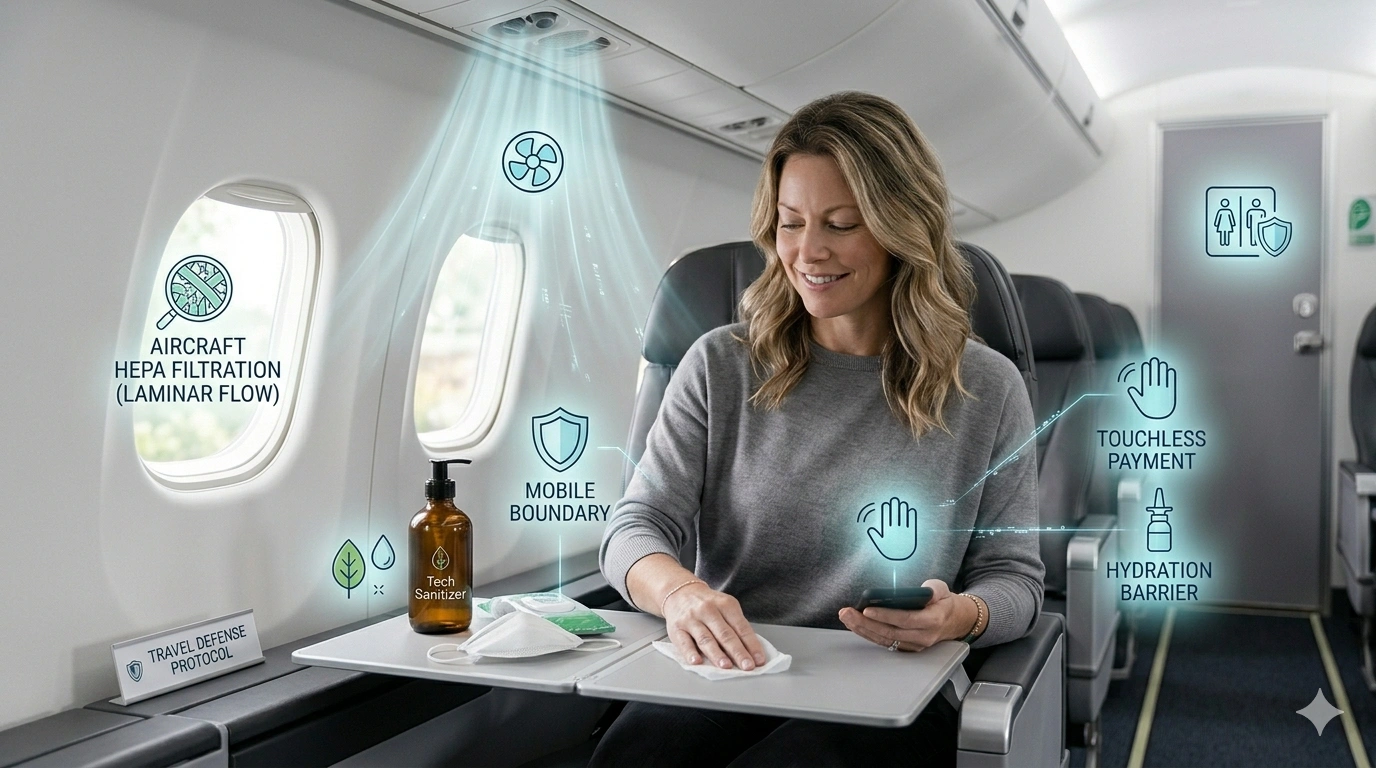

The home is a controlled environment, but the moment you step outside, you enter a “shared biome.” Whether you are commuting on public transit, working in an office, or traveling internationally, you are exposed to a significantly higher density of diverse pathogens. Transitioning from a sterile home to a high-traffic public space requires a mobile infection-control strategy.
By treating your travel kit as a “portable boundary,” you can maintain the high standards of your home sanctuary anywhere in the world. Here are ten high-quality pillars for managing personal hygiene and infection control while on the move.
1. The Portable Sanitization Kit
You cannot control the cleanliness of a train seat or an airplane tray table, but you can control your interaction with them. A travel hygiene kit should be your “digital nomad” essential.
- The Essentials: * 70% Alcohol-based hand sanitizer.
- EPA-approved disinfectant wipes (travel pack).
- High-filtration masks (N95 or FFP2).
- Zinc-based lip balm or nasal gel to maintain mucosal moisture.
- The Logic: Wiping down high-touch surfaces in a “micro-environment” (like an airplane seat) reduces your localized pathogen exposure by over 90%.
2. Hand Hygiene in “High-Touch” Transit
Public transit is a primary vector for respiratory and gastrointestinal illnesses. Handrails, buttons, and kiosks are touched by thousands of people daily.
- The “Dirty Hand” Rule: Designate one hand as the “transit hand” (for holding rails) and the other as the “clean hand” (for touching your phone or face).
- The Sanitizer Trigger: Make it an unconscious habit to sanitize your hands immediately after exiting a vehicle or touching a communal kiosk, before you touch your personal belongings.
3. Air Quality Management in Cabin Environments
Airplanes and buses use recirculated air. While modern planes have HEPA filters, the air between you and your neighbor is not filtered until it enters the vents.
- The Personal Air Shield: If your seat has a personal air vent (gasper), turn it on to a medium flow and point it directly in front of your face.
- The Physics: This creates a laminar flow of filtered air that acts as a physical “curtain,” pushing away the stagnant air and droplets from surrounding passengers.
4. Mucosal Integrity and the Hydration Factor
Travel, especially by air, involves extremely low humidity (often below 10%). This dries out the mucus in your nose and throat, which is your body’s primary “sticky trap” for viruses.
- Internal Hydration: Drink 250ml of water for every hour of travel.
- External Support: Use a saline nasal spray every 2 hours to keep the nasal passages moist. A moist membrane is a functioning barrier; a dry one is a doorway for infection.
5. Hotel and Rental Room “First-Contact” Sanitization
Professional cleaning in hotels often focuses on aesthetics rather than clinical disinfection. High-touch items are frequently missed.
- The Hot List: Use your disinfectant wipes on the remote control, light switches, faucet handles, and the bedside phone.
- The Bedspread Rule: Remove the decorative top comforter or “bed runner” immediately upon arrival. These are laundered much less frequently than sheets and often harbor significant microbial loads.
6. Food Safety for the Traveler
When traveling, your gut microbiome is introduced to new bacterial strains. “Traveler’s Diarrhea” is often the result of minor cross-contamination that a local’s immune system would ignore.
- The “Boil it, Cook it, Peel it, or Forget it” Rule: Stick to hot, steaming foods or fruits you peel yourself.
- The Ice Trap: Avoid ice in drinks in regions where water quality is questionable. Freezing does not kill most waterborne pathogens; it merely puts them into a dormant state until they melt in your glass.
7. Managing the “Travel-Wear” Laundry
Your clothing acts as a giant filter for the environments you pass through.
- The Separation: Keep a lightweight, sealable dry bag in your luggage for “worn” clothes. Never mix dirty transit clothes with clean ones.
- The High-Heat Reset: Upon returning home, immediately launder your travel clothes at $60°C$ ($140°F$) to ensure you aren’t “importing” foreign pathogens into your home sanctuary
8. Digital Hygiene on the Road
We touch our phones constantly while traveling—often right after touching a boarding pass or a taxi door handle.
- The Wipe-Down: Your phone is an extension of your hands. Wipe it with 70% isopropyl alcohol every evening when you return to your room.
- Touchless Payments: Use NFC payments (Apple/Google Pay) whenever possible to avoid handling physical cash or touching dirty credit card terminals.
9. Public Restroom Strategy
Public restrooms are high-aerosol environments.
- The Flush Shield: If the toilet does not have a lid, turn your back and exit the stall immediately after flushing to avoid the “toilet plume.”
- The Paper Towel Barrier: Use a paper towel to open the door when exiting. If you must use a hand dryer, be aware that they can blow floor bacteria onto your clean hands; high-velocity dryers are generally safer than older, low-heat models.
10. The Post-Travel “Quarantine” Audit
Even if you feel fine, your body may be in the incubation period for a virus.
- The 48-Hour Observation: For the first two days after a major trip, be extra vigilant with hand hygiene at home, especially if you live with vulnerable individuals.
- The Kit Refill: Immediately restock your travel hygiene kit. You are most likely to forget a used-up bottle of sanitizer when you are rushing for your next trip.
Conclusion: The Mobile Sanctuary
Personal hygiene is not a destination; it is a way of moving through the world. By adopting a “Travel Defense” mindset, you extend the biological safety of your home to every hotel room, airplane seat, and office desk you encounter. True health is the ability to explore the world without bringing its pathogens home with you.