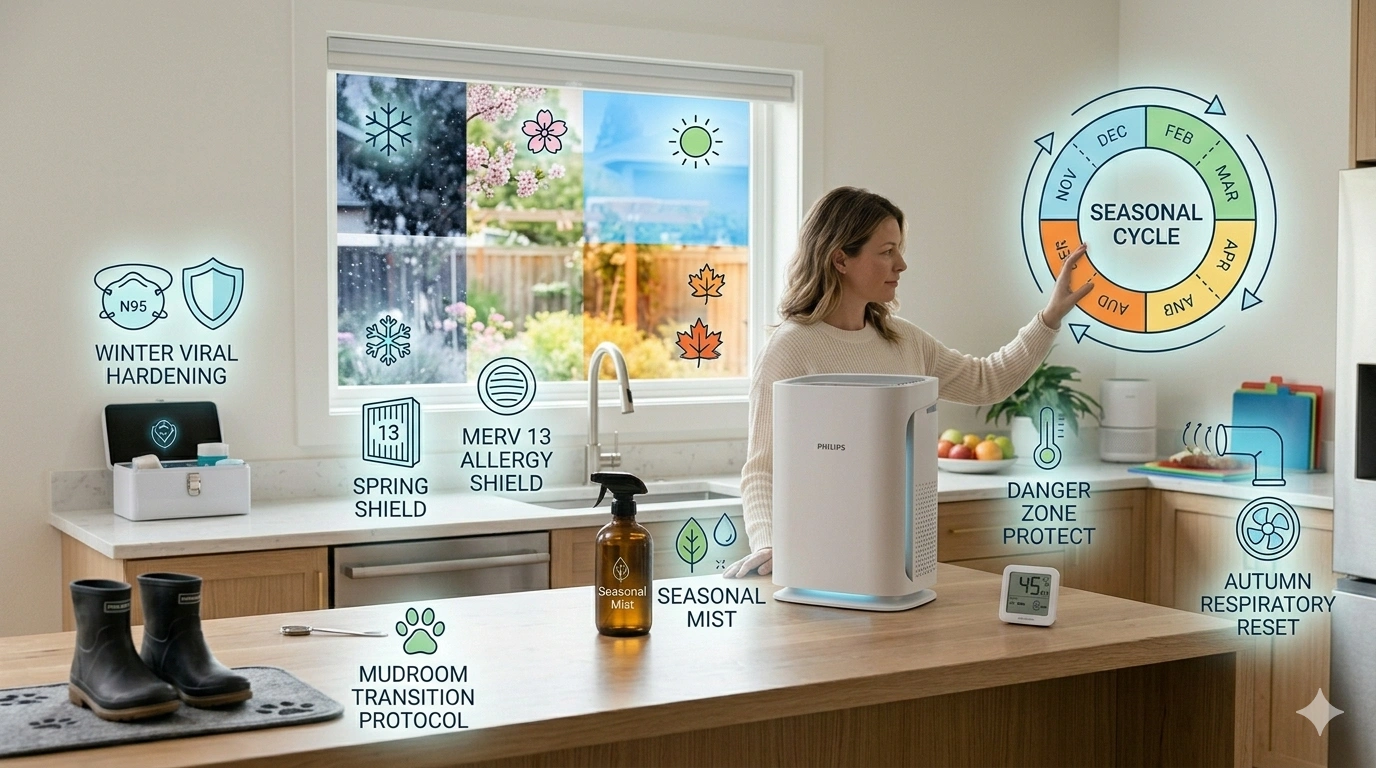

Our environment is not static. As the Earth tilts and the seasons shift, the biological threats within our homes transform. The winter brings a surge in encapsulated viruses like influenza and RSV, which thrive in cold, dry air. Spring introduces a deluge of pollen and mold spores, while summer’s heat accelerates bacterial growth and pest activity.
A truly high-quality infection control strategy must be adaptive. By synchronizing your hygiene protocols with the seasonal cycle, you can anticipate threats rather than simply reacting to them. Here are the ten pillars of seasonal hygiene and infection control for a year-round healthy home.
1. The Winter Viral Hardening
In winter, we spend $90\%$ of our time indoors. Encapsulated viruses are more stable in cold temperatures and low humidity, allowing them to remain infectious on surfaces for longer periods.
- The Protocol: Increase the frequency of high-touch surface disinfection. Focus on items brought in from outside, such as grocery bags and delivery boxes.
- The Humidity Defense: As discussed in previous articles, use a humidifier to keep indoor RH between $40\%$ and $60\%$. This keeps your respiratory “cilia” active and causes viral droplets to fall out of the air faster.
2. Spring Allergy and Mold Remediation
Spring is the season of “bio-burden” increase. As plants bloom and rain increases, the home is flooded with pollen and mold spores.
- The Barrier: Change your HVAC filters to a fresh MERV 13 at the very start of the season.
- The Window Rule: Despite the pleasant weather, keep windows closed during peak pollen hours (usually early morning and evening) to prevent your home from becoming a reservoir for allergens.
- Damp Audit: Check window sills and basements for condensation. Wipe down damp areas with vinegar to prevent mold colonies from establishing.
3. Summer Food Safety and Pest Control
Heat is the primary driver of bacterial metabolism. In summer, the risk of foodborne illness (like Salmonella and Staphylococcus) increases dramatically.
- The Cold Chain: Use insulated bags for grocery shopping to prevent meat temperatures from entering the “Danger Zone” during the drive home.
- Pest Exclusion: Ensure window screens are intact. Flies and cockroaches are biological vectors that carry pathogens from outdoor waste directly onto your kitchen counters.
4. Autumn Respiratory Preparation
Autumn is the “pre-game” for the viral season. It is the best time to strengthen the home’s biological defenses before the first frost.
- Duct Cleaning: If you haven’t had your ducts inspected in several years, autumn is the ideal time. This ensures that when you turn on the heater for the first time, you aren’t blowing accumulated summer dust and mold throughout the house.
- Immune Stockpile: Audit your “wellness cabinet.” Replace expired thermometers, restock high-quality masks, and ensure you have a supply of electrolyte solutions and basic fever reducers
5. The “Mudroom” Transition Protocol
Seasonal shifts often bring wet or muddy conditions. Mud is a complex bio-mixture of soil bacteria, animal waste, and decaying organic matter.
- The Two-Mat System: Use a heavy-duty scraper mat outside and a moisture-wicking microfiber mat inside.
- The Pet Factor: In rainy seasons, keep a dedicated “pet towel” and paw sanitizer by the door to prevent moisture from creating fungal “hot spots” in carpets or pet bedding.
6. Holiday Social Hygiene
The end-of-year holidays involve high-density social gatherings, often with multi-generational family members. This is the peak risk period for cross-infection.
- The Serving Strategy: Move away from “communal bowls” (like chips or dips) and toward individual portions or served plates to prevent “double-dipping” and shared utensil contamination.
- The Ventilation Hack: If hosting a crowd, run your kitchen exhaust fan and an air purifier on high. This creates a continuous “scrubbing” effect in the communal areas.
7. Seasonal Textile Deep-Cleaning
Fabric surfaces act as “sinks” for seasonal contaminants.
- Winter Gear: At the end of winter, professionally clean or high-heat wash heavy coats and scarves, which have spent months absorbing respiratory droplets.
- Summer Linens: In summer, wash bedsheets twice as often to remove the increased buildup of sweat and skin cells, which attract dust mites.
8. Water System Seasonal Maintenance
Temperature changes can affect the chemistry and biological load of your water.
- The Tank Audit: If you use an outdoor or rooftop water tank, ensure it is insulated against summer heat (which encourages algae) and winter freezes (which can crack pipes and introduce contaminants).
- The Spigot Flush: In the spring, flush outdoor hose bibs for several minutes before use, as stagnant water in these lines can harbor high concentrations of bacteria over the winter.
9. Managing Seasonal “Indoor Toxins”
Our cleaning needs change with the seasons.
- Winter Soot: If you use a fireplace, ensure the chimney is cleaned to prevent the accumulation of creosote and fine particulate matter ($PM_{2.5}$) that irritates the lungs.
- Summer Chemicals: Be mindful of the increased use of insect repellents and sunscreens indoors. These can accumulate on furniture and contribute to the VOC load of the home.
10. The Seasonal Habit Reset
Hygiene is a mental game. Use the “Equinox” and “Solstice” as triggers for a home hygiene audit.
- The Checklist: Check batteries in smoke/CO detectors, replace toothbrush heads, sanitize your “digital cleaning” tools (like vacuum filters), and rotate your cleaning supplies.
- The Psychology: Seasonal resets prevent “hygiene fatigue” by breaking the year into manageable 90-day sprints.
Conclusion: Flowing with the Environment
Infection control is not a static wall; it is a fluid dance with the environment. By acknowledging that your home faces different threats in July than it does in January, you can apply your efforts where they matter most. This adaptive approach ensures that your “Sanctuary of Wellness” remains resilient, no matter what the weather brings.