
For a host, the home is more than a sanctuary; it is a venue. When you open your doors to friends, family, or colleagues, you are temporarily merging multiple “biological spheres.” Every guest brings their own unique microbial signature, and in a high-density social setting, the probability of cross-infection increases significantly.
Mastering “Social Hygiene” isn’t about being an antisocial host or creating a sterile, uncomfortable environment. It is about implementing subtle, high-quality “background” protocols that protect your guests while maintaining the warmth and flow of the event. Here are ten pillars for managing infection control during home gatherings.
1. The Entryway “De-Gowning” Protocol
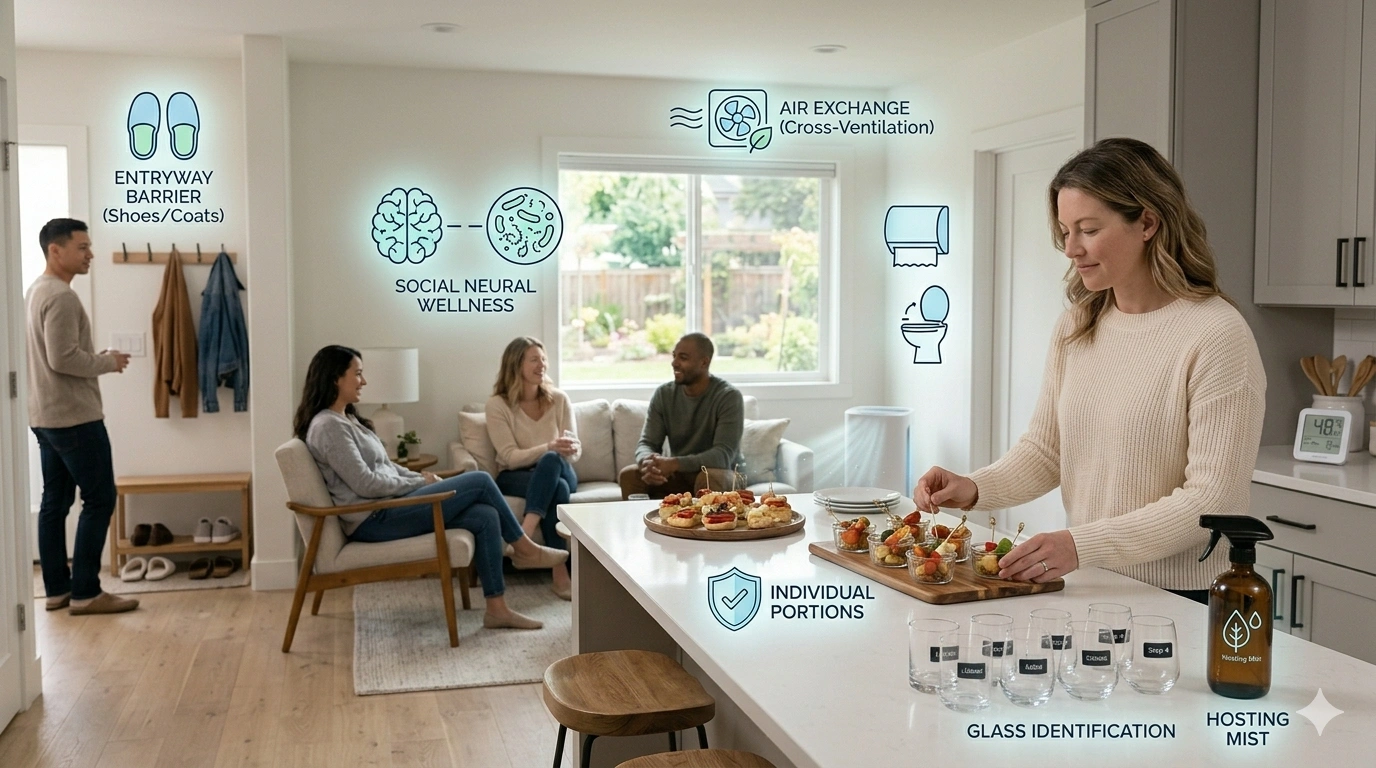
Infection control begins at the threshold. The items your guests carry from the outside world—shoes, coats, and bags—are primary carriers for environmental pollutants and pathogens.
- Shoe-Free Policy: Politely request that guests leave their shoes at the door. Provide high-quality, washable guest slippers to ensure their comfort.
- The Coat Zone: Designate a specific closet or rack for coats. Avoid piling coats on a bed, as bed linens are porous and can easily trap allergens or microbes from outdoor garments.
2. Strategic Air Exchange and Ventilation
In a room full of people, CO2 levels rise and respiratory aerosols accumulate. This is the primary driver of “event-linked” illnesses.
- The Cross-Breeze: Open windows on opposite sides of the room 15 minutes before guests arrive and keep them cracked throughout the evening.
- HEPA Supplementation: Place your air purifier in the main gathering area. Set it to a higher, “white noise” level to maximize air filtration without disrupting conversation.
3. Culinary Safety: The End of the “Communal Bowl”
Traditional party snacks—bowls of nuts, chips, or dips—are high-risk zones for hand-to-mouth transmission and “double-dipping.”
- Individual Portions: Use small ramekins, shot glasses, or individual skewers for appetizers.
- The Utensil Rule: If serving buffet-style, ensure every dish has its own dedicated serving spoon. Change these spoons halfway through the event to prevent bacterial buildup from multiple hands.
4. Beverage Hygiene and Glass Identification
One of the most common ways germs spread at parties is through “accidental sharing”—someone taking a sip from the wrong glass.
- Identification Tools: Use wine charms, colored glass markers, or distinct glassware to ensure every guest knows exactly which drink is theirs.
- The Refill Protocol: When refilling drinks, ensure the bottle or pitcher nozzle does not touch the rim of the guest’s used glass.
5. The “High-Traffic” Disinfection Sweep
Certain surfaces will be touched by every single guest. These require “invisible” maintenance during the event.
- The Mid-Event Wipe: Periodically (and discreetly) wipe down the bathroom faucet, the toilet flush handle, and the main entryway doorknob.
- Touchless Tech: If you have smart lighting, set the “Party Scene” beforehand so guests don’t need to touch light switches.
6. Bathroom Hospitality and Hygiene
The guest bathroom is the most critical site for infection control during a gathering.
- Single-Use Towels: Replace communal cloth hand towels with high-quality, disposable paper hand towels. Damp cloth towels are primary reservoirs for fecal-oral bacteria.
- The Lid Reminder: Keep a small, aesthetic sign or verbal reminder to close the toilet lid before flushing to prevent the “aerosol plume.
7. Trash Management and Disposal
Parties generate significant waste, much of it containing saliva or food residues.
- Lined and Covered: Ensure all trash bins have liners and lids.
- Frequent Emptying: If a bin becomes more than 75% full, empty it immediately. An overstuffed bin is difficult to close and can lead to surface contamination when guests try to force items inside.
8. The “Sick Guest” Diplomacy
As a host, you have a responsibility to the collective health of the group.
- Pre-Event Communication: In your invitation, include a lighthearted note: “We can’t wait to see you! If you’re feeling a bit under the weather, please prioritize your rest—we’ll catch you at the next one.”
- The Lead: If you as the host feel unwell, cancel or move the event to a virtual format. Modeling this behavior creates a safe “health culture” among your peers.
9. Post-Event “Biological Reset”
Once the last guest has left, your home needs a systematic “reset” to return it to its sanctuary state.
- The Soft Surface Clean: Use a fabric sanitizer spray on upholstered furniture that guests sat on.
- Dishwasher Sanitization: Run all party dishes, even those that look “barely used,” through a full sanitize cycle ($65°C+$).
10. Managing Multi-Generational Risks
If your gathering includes elderly family members or young children, your hygiene standards must escalate to protect the most vulnerable.
- The Perimeter: Create a “quiet zone” for older guests that is well-ventilated and away from the high-density “mosh pit” of the party.
- Assisted Hygiene: Ensure children are supervised during handwashing to confirm they are using soap and drying their hands properly before returning to shared play areas.
Conclusion: Hosting with Confidence
Great hospitality is about making guests feel safe and cared for. By implementing these ten pillars of social hygiene, you ensure that your gatherings are remembered for the connections made, not the illnesses shared. You are not just a host; you are a curator of a healthy communal environment.