
When children enter the home, the biological ecosystem changes fundamentally. Young children are, by nature, tactile explorers; they interact with their world through touch and taste, and their immune systems are “in training.” For parents, this presents a unique challenge: balancing the need for robust infection control with the biological necessity of building a child’s immune resilience.
The “Child Boundary” is not about creating a sterile “bubble” for your family. It is about implementing intelligent, high-quality protocols that reduce the transmission velocity of harmful pathogens (like the common cold, RSV, or stomach bugs) while still allowing children the freedom to play and develop. Here are ten essential pillars for managing family hygiene and infection control.
1. The Entryway “Bio-Lock” Protocol
The threshold between the outside world and your home is the most critical infection-control point. Children are closer to the ground, where the highest concentrations of environmental toxins and street-level pathogens accumulate on shoes and wheels.
- The Stroller Sanitation: Before entering the main living space, wipe the wheels of the stroller with a disinfectant wipe.
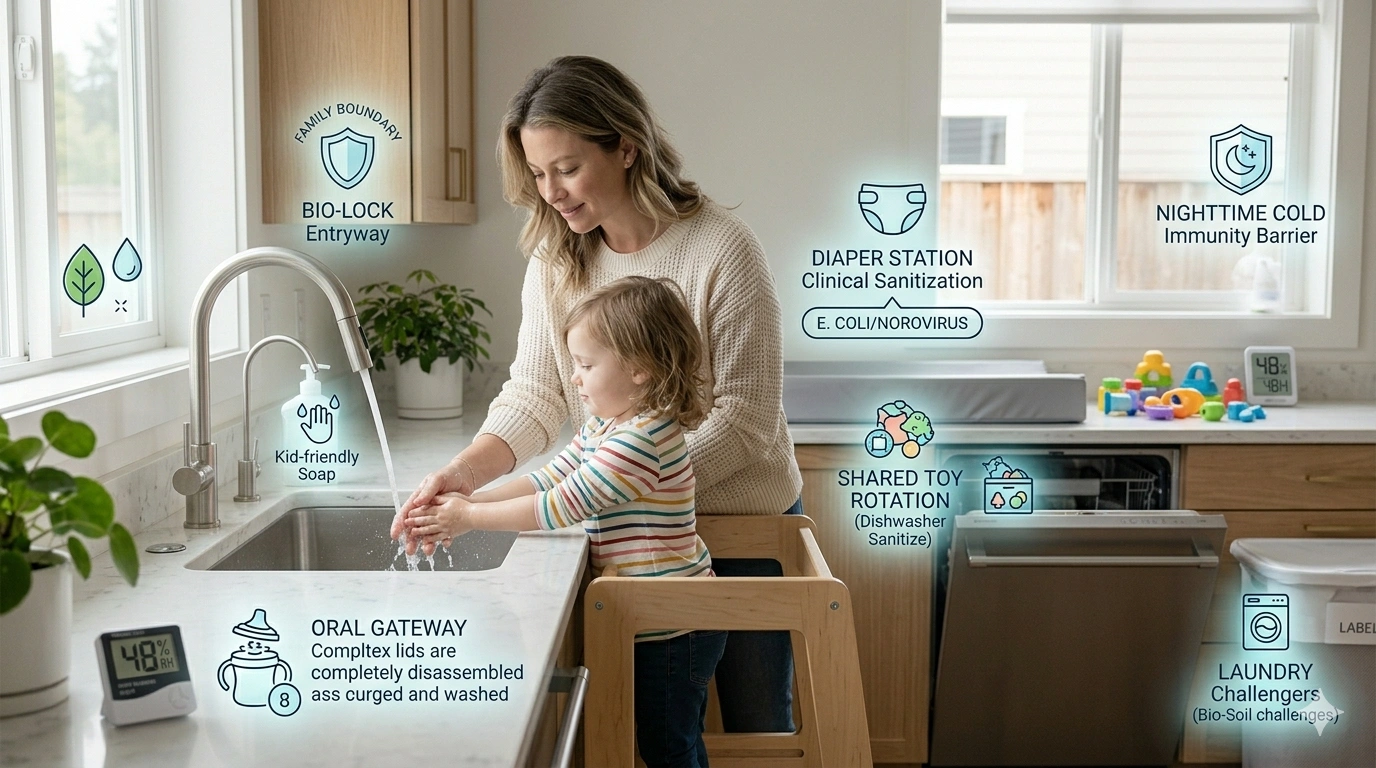
- The “Soap and Water” Nudge: Make it a non-negotiable family rule that the first action upon entering the home is handwashing. Place a small step stool and kid-friendly soap at the sink to remove environmental “track-in” immediately.
2. Micro-Biome Stewardship vs. Hyper-Sterility
In the context of children, the “Hygiene Hypothesis” is vital. Depriving a developing immune system of “training” (exposure to natural soil bacteria) may increase the long-term risk of allergies and asthma.
- The Balance: Maintain clinical disinfection for “Hot Zones” (changing tables, bathrooms, cutting boards) and shared toys that have been handled during illness.
- The “Healthy Soil” Shift: Allow play in “natural” environments, like a home garden. The beneficial microbes (probiotics) in soil actually train and strengthen a child’s internal ecosystem.
3. Diaper Change Station: The Clinical Imperative
The diaper changing area is, biologically, the most concentrated source of high-risk fecal-oral bacteria in a home (E. coli, Norovirus). It requires hospital-grade sanitization.
- Non-Porous Surface: Ensure the changing pad has a durable, waterproof covering (like high-grade vinyl) with sealed seams. Stitched or cracked seams are permanent traps for enteric pathogens that standard wiping cannot clear.
- The Process: Clean with soap and water after every use, and disinfect with an alcohol-free sanitizer daily.
4. Food Safety and the “No-Share” Rule
Children often “backwash” into cups and frequently swap half-eaten snacks—a primary driver of intestinal parasites and viruses in family settings.
- The “Personal Set” Protocol: Provide children with their own, distinctly marked set of utensils and cups.
- POSITIONING: Train children to use their “personal space” at the table. Never let children eat directly from communal bags or plates where multiple hands are entering the same food source.
5. Managing Shared Toys and Playdate
Shared toys are “fomites” that efficiently transfer cold and flu viruses. In a playdate setting, transmission risk escalates.
- The Rotation Strategy: When a playdate ends or a child gets sick, place hard plastic toys into the dishwasher on a high-heat “Sanitize” cycle ($60°C/140°F+$).
- Fabric Toys: Use a steam cleaner monthly on plush toys that cannot be laundered, as steam kills $99.99\%$ of viruses and dust mites without using chemical sprays that children might later ingest.
6. Managing the Nighttime Cold: Bedtime Hygiene
When a child is sick, the biological load of a bedroom (droplets and mucus) peaks overnight. Infection control must adapt to support recovery and prevent family spread.
- The Laundry Protocol: When a child is sick, launder all bed linens daily in hot water ($60°C+$). This clears the “viral load” they are re-inhaling for hours as they sleep.
- The Humidity Barrier: As discussed in previous articles, use a humidifier to keep bedroom air between $40\%$ and $60\%$. This ensures their mucosal membranes remain functional and active.
7. Laundry Hygiene for “Bio-Soil” Challenges
Laundry generated by young children is complex. It often involves high levels of protein-based soils (spit-up, food) and “enteric” soils (urine, stool).
- The Enzymatic Clean: Use a dedicated detergent with advanced enzymes (proteases and lipases) that break down organic proteins.
- Sequestration: Use a lined, waterproof hamper for children’s clothes and wash “high-soil” items (like cloth diapers or bedding soiled during illness) separately from the rest of the family’s wardrobe, using a high-heat cycle and oxygen bleach.
8. Oral Hygiene and the “Gateway” Factor
The mouth is the primary entry point for pathogens. In children, chronic oral inflammation from poor dental hygiene can create a “leaky” biological barrier.
- Gasket Management: If you use sippy cups with complex lids or complex straw cups, disassemble them completely every day. Mold and black yeast thrive in the sealed gaskets that you cannot see, leading to respiratory and digestive irritation.
9. Hand Hygiene and “Face Touching”
Children are not conscious of where their hands have been. Training them to stop touching their eyes and nose is nearly impossible; the defense must be recurrent sanitization.
- Visual Cues: Place a small, glowing light-blue icon of a shield and water droplet near sinks and the changing table (image_1.png style). This serves as a psychological “nudge” for adults and a simple reminder for children.
- Sanitize After “Floor Time”: Make handwashing mandatory after any period of direct play on the floor, especially in high-traffic common areas.
10. Social Boundary Diplomacy and Playdate
As a parent, you are the biological guardian of your family. You set the rules for the biomes that interact.
- The Diplomacy: Include a clear, lighthearted note in your invitations: “We can’t wait to play! To keep everyone safe, if your little one has a cough or fever, please reschedule—we’ll catch you at the next one.” This creates a supportive “health culture” among your parent network.
- modeling: If your child is sick, model this behavior by canceling their playdates or school attendance immediately.
Conclusion: Family Immunity is a Managed Asset
Infection control for families is not a sterile sprint; it is a 90-day biological marathon. By implementing these ten pillars of family hygiene, you ensure that your home remains a resilient sanctuary—a place where children’s immune systems can grow strong without being overwhelmed by preventable illness. A healthy family biome is the foundation of long-term wellness.