
Pets are beloved family members, but from a biological perspective, they are “high-velocity vectors.” They move between the outdoor environment and your indoor sanctuary, bringing with them a unique array of microbes, allergens, and parasites. Managing a healthy home with pets requires a specialized “Multi-Species Hygiene” protocol that protects both human and animal health without sacrificing the bond we share with our companions.
Creating a safe pet biome involves more than just a bath; it requires an engineering approach to how dander, saliva, and outdoor track-in are managed. Here are ten high-quality pillars for mastered pet hygiene and infection control.
1. The “Entryway Paw-Station” Protocol
Pets do not wear shoes, meaning every surface they walk on outdoors—from public sidewalks to forest floors—is tracked directly onto your carpets and furniture.
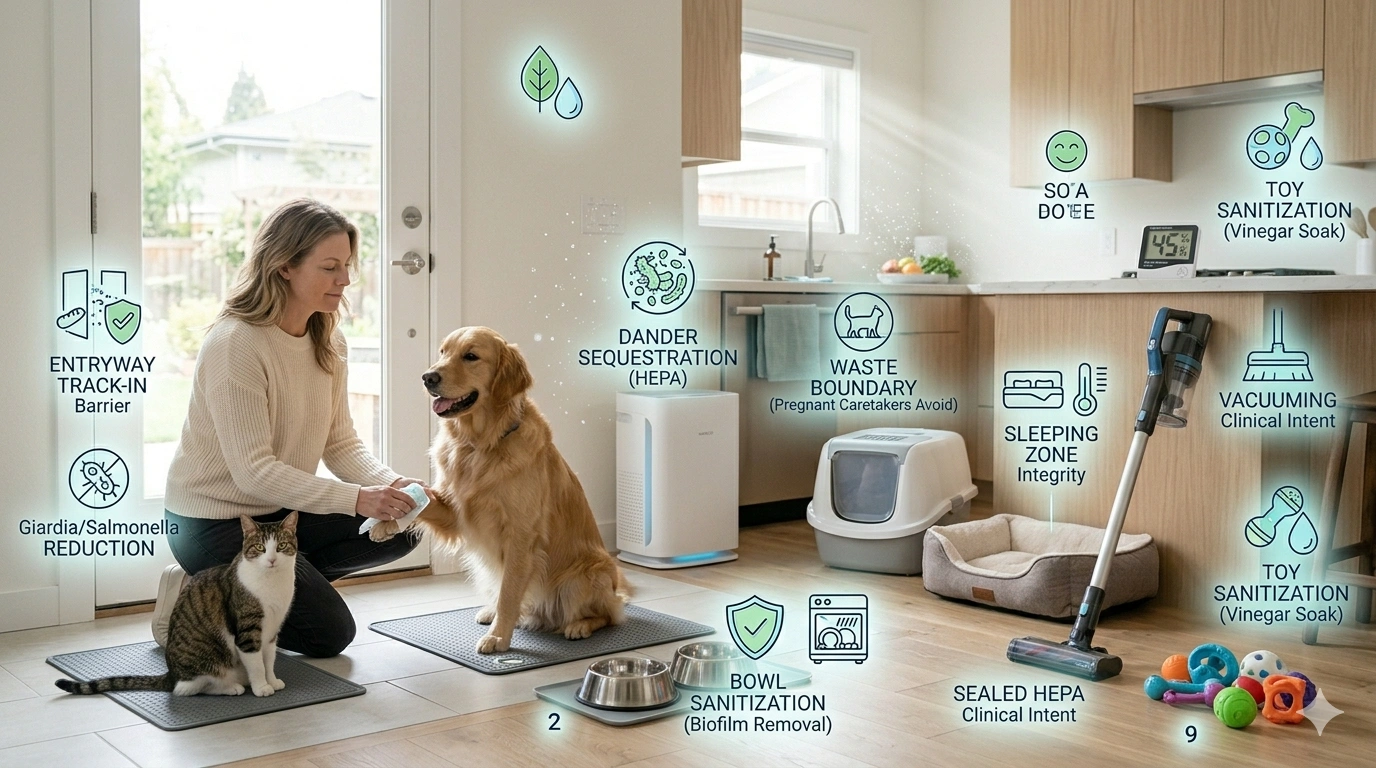
- The Routine: Keep a dedicated “Paw-Station” at the door. Use pet-safe, alcohol-free antimicrobial wipes or a specialized paw plunger to clean all four paws before the animal enters the main living area.
- The Logic: This significantly reduces the introduction of environmental toxins, lawn chemicals, and fecal-oral bacteria like Giardia or Salmonella into your home ecosystem.
2. Managing the Saliva Cycle
Pet saliva contains a diverse range of bacteria, including Pasteurella and Capnocytophaga. While usually harmless, these can cause infections if they enter broken skin or contact mucosal membranes (eyes and mouth).
- The Barrier: Discourage “face-licking” and ensure everyone in the household washes their hands after vigorous play or contact with pet saliva.
- Bowl Sanitization: Pet bowls should be treated as food-grade surfaces. Wash them daily in a dishwasher on a “Sanitize” cycle ($60°C+$) to prevent the growth of “pink slime” (Serratia marcescens) and other bacterial biofilms.
3. High-Efficiency Dander Sequestration
Pet dander (microscopic skin flakes) and fur are primary carriers for allergens and can harbor environmental pollutants.
- The Air Filter: Use a True HEPA air purifier in the rooms where your pet spends the most time. Dander is highly buoyant and can stay airborne for hours; HEPA filtration is the only effective way to remove these particles from the breathing zone.
- Grooming as Hygiene: Brush your pet outdoors or in a tiled room with an air purifier running. This “intercepts” the dander before it can settle into the soft fibers of your home.
4. The Integrity of the “Sleeping Zone”
If your pet sleeps in your bed, you are essentially sleeping in their outdoor track-in.
- The Protective Layer: If co-sleeping is a priority, use a dedicated “pet blanket” that covers your duvet.
- Laundering Frequency: Wash pet bedding and your top linens weekly at $60°C$ with an enzymatic detergent and oxygen bleach to neutralize odors and kill dust mites or flea larvae.
5. Managing the “Waste Boundary”
Litter boxes and outdoor waste areas are high-concentration zones for parasites and bacteria.
- The Litter Protocol: Clean litter boxes daily. Use a lidded box to reduce the aerosolization of waste particles.
- The Caretaker Rule: If there is a pregnant individual in the home, they must avoid cleaning cat litter due to the risk of Toxoplasmosis.
- The Disinfectant: Use a stabilized hydrogen peroxide cleaner for waste areas, as it effectively kills pathogens without the toxic fumes of ammonia-based cleaners.
6. Vacuuming with Clinical Intent
Standard vacuums often exhaust microscopic allergens back into the room.
- The Tech: Use a vacuum with a sealed HEPA system. This ensures that $99.97\%$ of the dust, dander, and flea eggs collected stay inside the machine.
- The Routine: Focus on “soft-to-hard” transitions (where carpets meet walls), as this is where hair and dander naturally accumulate into “bio-clumps.”
7. Controlling Zoonotic Parasite
Infection control includes managing the “macro” biological threats: fleas, ticks, and internal parasites.
- The Preventative Barrier: Maintain a strict, year-round schedule for veterinary-prescribed flea, tick, and heartworm preventatives.
- Internal Check: Ensure pets receive regular fecal exams. Many intestinal parasites are zoonotic, meaning they can be passed from pets to humans, particularly children who play on the floor.
8. The Hard-Surface “Wet Clean”
Fur and dander have a static charge that makes them cling to hard floors. Dry sweeping often just moves these particles into the air.
- The Protocol: Use a damp microfiber mop with a pH-neutral cleaner. The moisture “grounds” the dander and fur, allowing the split fibers of the microfiber to physically lift and remove the biological load rather than redistributing it.
9. Toy and Accessory Sanitization
Pet toys are often porous and spend hours in a warm, moist mouth—the perfect conditions for bacterial proliferation.
- Soft Toys: Launder plush toys in a mesh bag on a hot cycle monthly.
- Hard Toys: Soak rubber or plastic toys in a solution of 1 part white vinegar to 10 parts water for 30 minutes, then scrub and rinse.
10. The “Shared Space” Kitchen Rule
The kitchen is where pet hygiene and food safety intersect.
- The No-Go Zone: Keep pets off kitchen counters. Their paws, having walked in litter or dirt, can transfer pathogens directly to food-preparation surfaces.
- Feeding Station: Designate a specific area for pet feeding away from human eating zones. Place a waterproof, easy-to-clean mat under the bowls to catch splashes and “kibble-scatter.”
Conclusion: A Balanced Biome
Living with pets is immensely rewarding for our mental and physical health. By implementing these ten pillars of pet hygiene, you protect your family from “cross-species” infection while ensuring your home remains a clean, welcoming sanctuary for all its inhabitants.