While the previous discussion outlined the fundamental pillars of hygiene, maintaining a healthy home in an increasingly complex biological landscape requires a deeper dive into the “How-To” of execution. True infection control is an iterative process—it evolves with the seasons, the health of the inhabitants, and the specific architecture of the living space.
To achieve a high-quality, professional standard of domestic hygiene, we must move beyond “tidying up” and embrace microbial management. Here are 10 expanded, high-level protocols to ensure your home remains a pristine sanctuary.
1. Mastering the “Dual-Phase” Hand Sanitization
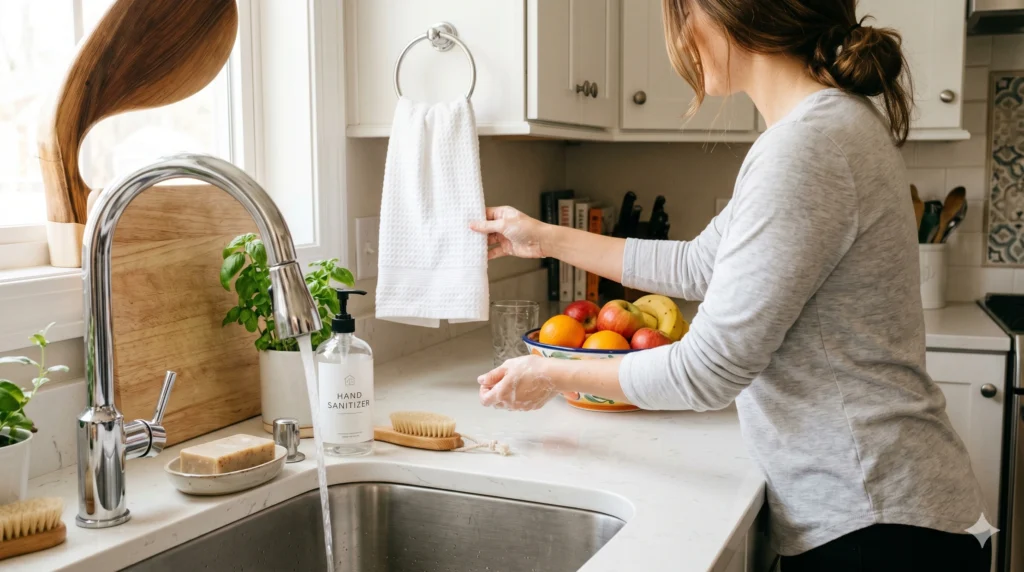
Hand hygiene is often performed incorrectly, leaving behind colonies of bacteria in the skin’s micro-crevices. A professional-grade approach involves two distinct phases.
- Phase 1: Mechanical Removal. Use soap and running water to physically lift and wash away dirt and organic matter. This is essential because hand sanitizers do not work effectively on visibly soiled hands.
- Phase 2: Antimicrobial Fortification. After drying hands completely, applying a 70% alcohol-based sanitizer provides a secondary layer of protection against residual pathogens.
- The “Nail Brush” Requirement: Keep a dedicated, frequently sanitized nail brush at every sink. The area under the fingernails is the most common site for “missed” pathogens during a standard wash.
2. High-Touch Disinfection: The “Dwell Time” Mastery
The most common mistake in home infection control is the “spray and wipe” method. Most EPA-registered disinfectants require a specific dwell time—the amount of time the surface must remain wet—to actually kill viruses like Norovirus or SARS-CoV-2.
- Protocol: Spray the surface (doorknobs, light switches, faucet handles) and allow it to sit for the full duration listed on the label (usually 3 to 10 minutes) before wiping.
- Residual Protection: Consider using “organosilane” antimicrobial coatings for high-touch areas. these provide a microscopic “bed of nails” that physically punctures microbes for weeks after application.
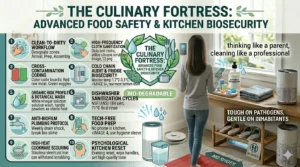
3. Kitchen Biosecurity: The “Clean-to-Dirty” Workflow
Professional kitchens utilize a “one-way” workflow to prevent cross-contamination. You can replicate this at home to ensure food safety.
- Zone Separation: Designate a “Dirty Zone” where groceries and raw meats enter the kitchen, and a “Clean Zone” where final plating and serving occur.
- The Sanitizer Bucket: During heavy meal prep, keep a small basin of water with a capful of bleach or a food-safe sanitizer. Dip your wiping cloths in this frequently to ensure you aren’t just moving bacteria from one counter to another.
4. Bathroom Bio-Aerosol Containment
The bathroom is the primary source of enteric (intestinal) bacteria in the home. Beyond the “lid-down” rule, advanced hygiene involves managing the surfaces that collect aerosolized mist.
- Soft Surface Rotation: Bath mats and hand towels should be treated as “single-day” items. Because they remain damp in a humid environment, they become breeding grounds for bacteria.
- Exhaust Fan Optimization: Run your bathroom exhaust fan for at least 20 minutes after a shower or toilet use. This pulls moisture and aerosolized particles out of the room before they can settle on surfaces.
5. The “Dirty” Side of Smart Tech
Our smartphones are effectively a “third hand” that we rarely wash. Studies show they carry more bacteria than most toilet seats.
- The UV-C Solution: For delicate electronics that shouldn’t be saturated with liquids, use a UV-C sanitizing box. This uses short-wavelength ultraviolet light to disrupt the DNA of microorganisms.
- Charging Port Hygiene: Use a soft, dry brush to clear debris from ports weekly; dust buildup can trap moisture and skin oils, creating a localized microbial niche.
6. Advanced Laundry: Beyond the Detergent
Laundry isn’t just about removing stains; it’s about breaking down the “biofilm” that body oils and bacteria create on fabric fibers.
- The Bleach Alternative: If you cannot use bleach on colored clothes, use a specialized laundry sanitizer additive in the rinse cycle.
- Drum Sanitization: Modern front-loading washers often develop mold in the rubber gasket. Run a monthly “Clean Washer” cycle with specialized tablets or white vinegar to ensure your “cleaning” machine isn’t actually contaminating your clothes.
7. Strategic Entryway “Decontamination”
The first three feet of your home are the most critical for infection control. This is the “transition zone” where the outside world meets your private environment.
- The Sanitization Station: Place a touchless hand sanitizer dispenser and a tray for mail/packages at the entryway.
- Air-Lock Concept: If possible, open a window near the entrance to create a draft that pushes air outward when you enter, minimizing the amount of outdoor particulate matter that drifts into the living room.
8. Managing “Bio-Aerosols” with HEPA Standards
Airborne transmission is a significant factor in household illness spread.
- The CADR Rating: When selecting an air purifier, look for the Clean Air Delivery Rate (CADR). For effective infection control, the unit should be able to cycle the air in the room at least 5 times per hour.
- Placement Matters: Do not hide your air purifier in a corner. Place it in the center of the room or near the “breathing zone” (e.g., on a nightstand or near a desk) to ensure it is filtering the air you are actually inhaling.
9. Grooming Tool Sterilization: The “Barber” Standard
Tools like hairbrushes, nail clippers, and tweezers are often ignored for months.
- The Soaking Protocol: Every two weeks, soak all non-electronic grooming tools in a solution of Barbicure or a high-percentage isopropyl alcohol.
- Hairbrush Hygiene: Remove hair daily. Every month, wash brushes in warm water with a clarifying shampoo to remove the buildup of skin cells and oils that bacteria feed on.
10. Waste Stream Integrity
The way you handle trash determines the pest and pathogen load of your kitchen and utility areas.
- The “Double Bag” for Illness: If a household member is sick, double-bag their waste (tissues, wipes, etc.) before taking it to the main bin.
- Outdoor Bin Sanitation: Don’t let your outdoor bins become a “bio-hazard.” Hose them out with an antimicrobial solution once a month to prevent flies from transferring pathogens from the trash back to your back door.
Summary: The Proactive Homeowner
High-quality infection control is about reducing the burden of proof on your immune system. By automating these routines, you ensure that the viral and bacterial load in your home remains low enough that your body can easily manage any stray pathogens.
A clean home is a quiet home—one where the invisible inhabitants are kept in check, allowing the human inhabitants to thrive.