
As we deepen our understanding of domestic infection control, a common concern arises: how do we maintain a “clinical” level of safety without turning our homes into a toxic cloud of harsh chemicals? The goal of high-quality hygiene is to support human health, which includes protecting our respiratory systems and skin barriers from caustic residues.
“Green” cleaning is often dismissed as less effective, but when backed by science and proper technique, natural surfactants and plant-based disinfectants can be just as lethal to pathogens as their synthetic counterparts. This article focuses on 10 high-level protocols for an Eco-Conscious Infection Control Strategy.
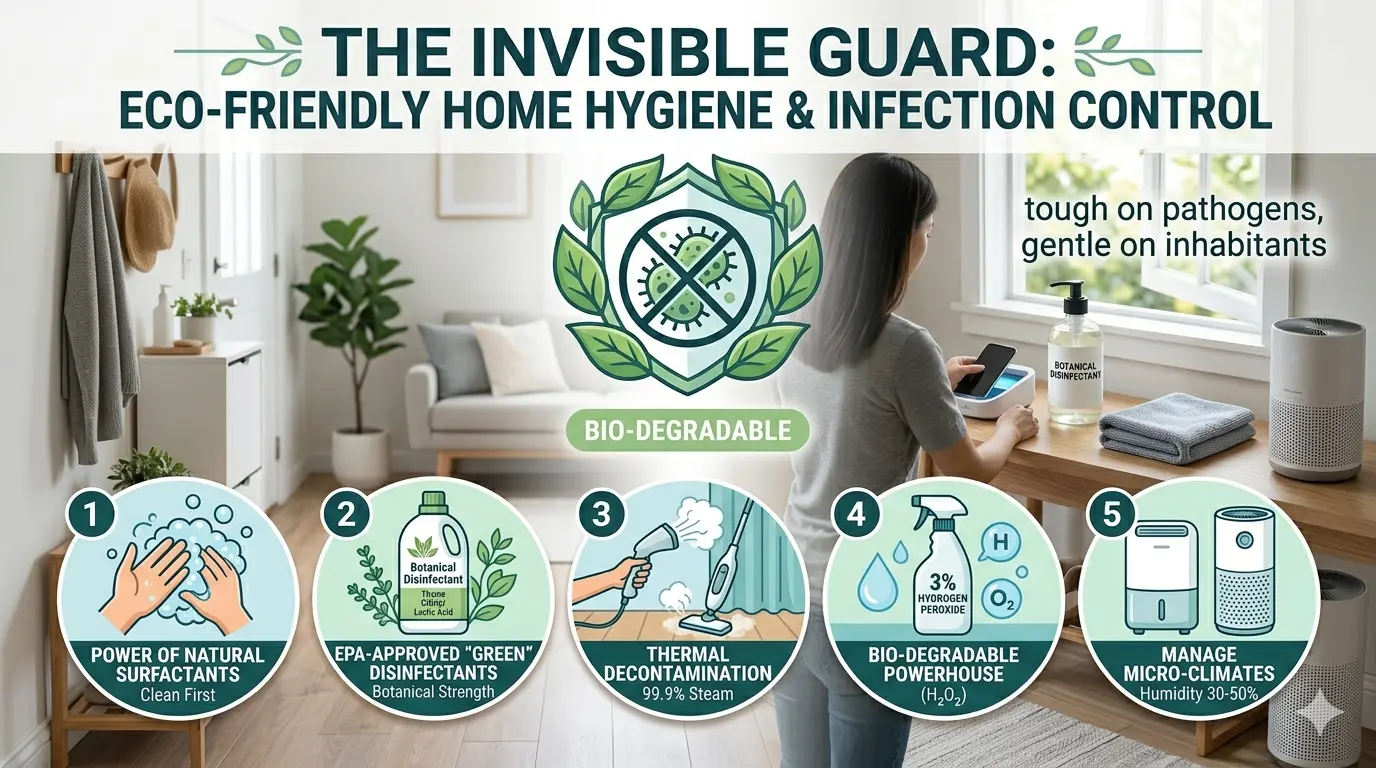
1. The Power of Natural Surfactants
Before a surface can be disinfected, it must be cleaned. Pathogens often hide under “biofilms”—slimy layers of proteins and fats.
- The Science: Plant-based soaps (like castile soap) contain surfactants that lower the surface tension of water, allowing it to penetrate and lift grime.
- Protocol: Always perform a “pre-wash” with a soap-and-water solution. This removes the organic matter that can neutralize many eco-friendly disinfectants before they have a chance to work.
2. Utilizing EPA-Approved “Green” Disinfectants
You don’t have to guess if a natural product works. The EPA maintains “List N,” which identifies disinfectants effective against resilient viruses.
- Thymol (Thyme Oil): A powerful botanical disinfectant that punctures the cell walls of bacteria and viruses.
- Citric and Lactic Acid: These organic acids create a pH environment so low that most pathogens cannot survive.
- Protocol: Look for products labeled as “Botanical Disinfectants.” Ensure they have an EPA registration number, confirming they have been lab-tested for efficacy.
3. Vapor-Phase Decontamination (Steam Cleaning)
One of the most eco-friendly ways to kill 99.9% of germs is through pure thermal energy. Steam requires no chemicals, only water.
- The Technique: High-pressure steam at temperatures above 212°F (100°C) denatures the proteins in microbes instantly.
- Application: Use a steam mop for hardwood and tile, and a handheld steamer for high-touch upholstery, curtains, and even plush toys that can’t go in the wash.
4. Hydrogen Peroxide: The Bio-Degradable Powerhouse
Hydrogen peroxide ($H_2O_2$) is a staple in medical settings and is incredibly eco-friendly because it breaks down into simple water and oxygen.
- Protocol: Use a 3% concentration in an opaque spray bottle (light breaks it down). It is highly effective against mold, mildew, and many viruses.
- Safety Tip: Never mix hydrogen peroxide with vinegar in the same bottle, as it creates peracetic acid, which is highly irritating to the lungs.
5. Managing Micro-Climates with Dehumidification
Infection control is largely about moisture management. Dust mites and mold—which compromise the immune system—thrive in humidity levels above 60%.
- The Strategy: Use energy-efficient dehumidifiers in basements and bathrooms to keep relative humidity between 30% and 50%.
- Benefit: By keeping surfaces dry, you inhibit the “growth phase” of bacteria, reducing the frequency with which you need to apply disinfectants.
6. The “White Vinegar” Myth vs. Reality
Vinegar is a fantastic cleaner, but it is not an EPA-registered disinfectant. It will not kill resilient viruses like the flu or COVID-19.
- The Proper Use: Use vinegar for descaling mineral deposits on faucets and cleaning glass.
- Infection Control Tweak: Use vinegar as a “pre-treatment” to lower the pH of a surface, making your subsequent botanical disinfectant even more effective.
7. Essential Oil Integration: More Than Just a Scent
While they shouldn’t be your only line of defense, certain essential oils have documented antimicrobial properties.
- Tea Tree and Eucalyptus: These oils contain terpenes that show activity against fungal spores and some bacteria.
- Protocol: Add 10–15 drops to your microfiber laundry rinse cycle to help freshen linens and provide a mild antimicrobial boost without synthetic fragrances.
8. Microfiber Technology: Mechanical Removal
Not all cloths are created equal. High-quality microfiber has a “star-shaped” cross-section that physically grabs and holds onto microbes rather than just pushing them around.
- The Protocol: Use “color-coded” microfiber (e.g., Blue for glass, Yellow for bathroom, Red for kitchen).
- The Wash Rule: Never use fabric softener on microfiber, as it coats the fibers and ruins their ability to “grab” bacteria.
9. HEPA and Activated Carbon Filtration
Eco-friendly hygiene includes the air. VOCs (Volatile Organic Compounds) from furniture and carpets can irritate the lungs, making you more susceptible to respiratory infections.
- The Dual-Filter Strategy: Use a purifier that combines a HEPA filter (for pathogens) with an Activated Carbon filter (for chemicals and odors).
- Indoor Plants: While they don’t replace an air purifier, plants like the Sansevieria (Snake Plant) help oxygenate the room and slightly reduce CO2 levels.
10. The Zero-Waste Sanitization Station
Create an entryway routine that doesn’t rely on disposable plastic wipes.
- Protocol: Keep a glass spray bottle of 70% alcohol and a stack of clean, small microfiber rags in a basket by the door.
- The Cycle: Wipe your phone and keys upon entry, then drop the used rag into a “dirty” bin to be laundered. This provides medical-grade sanitization with zero landfill waste.
Conclusion: Balance and Biology
A high-quality home hygiene protocol is a balance between being tough on pathogens and gentle on the inhabitants. By utilizing thermal energy, biodegradable acids, and mechanical removal, you can achieve a “surgical” level of cleanliness while maintaining a non-toxic environment.