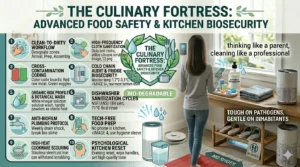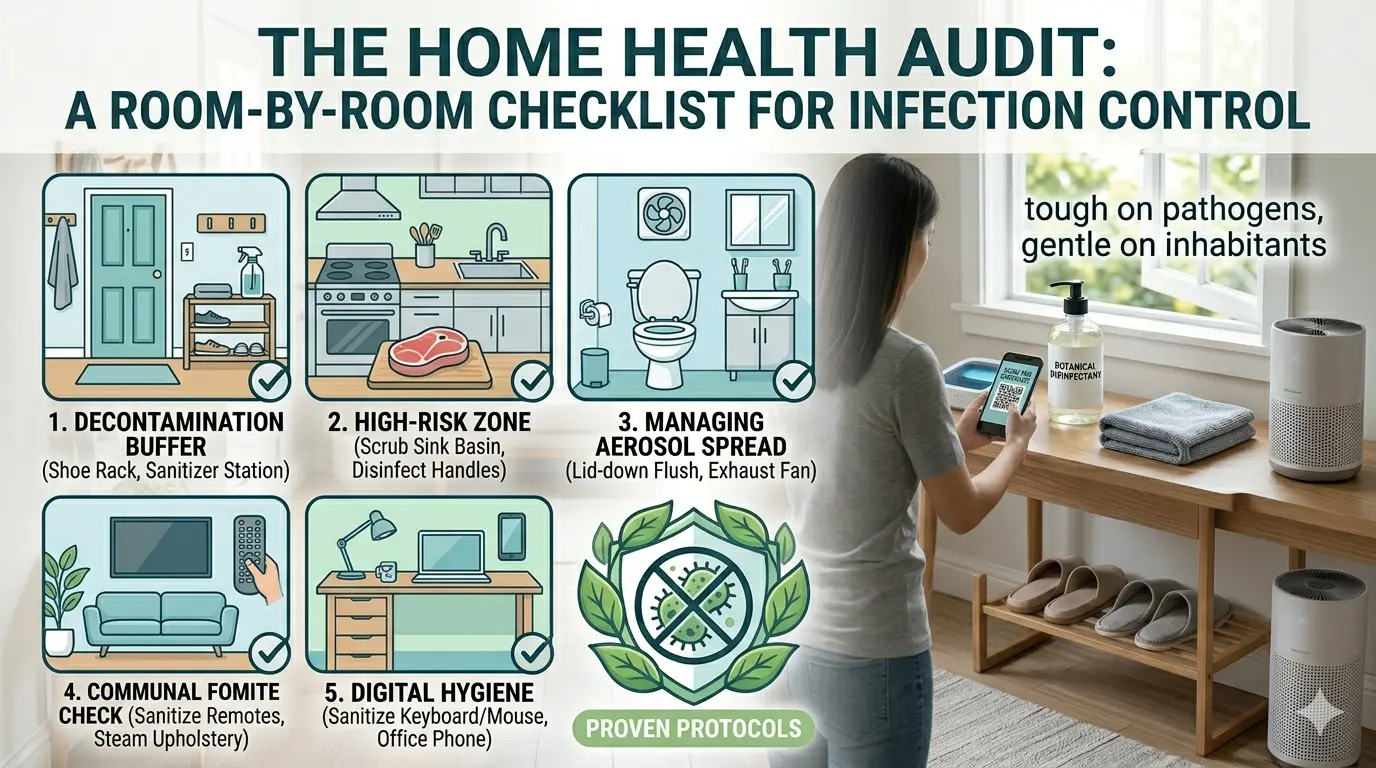

Understanding the theory of hygiene is one thing; executing it consistently across the diverse environments of a modern home is another. To achieve a high-quality standard of domestic safety, we must view each room as a unique ecosystem with its own specific microbial challenges.
This article provides a comprehensive, 10-point Room-by-Room Audit. By walking through your home with this checklist, you can identify “blind spots” in your current routine and implement professional-grade infection control measures where they matter most.
1. The Entryway: The “Decontamination” Buffer
The entryway is the most critical zone for stopping environmental pathogens from infiltrating your living space.
- The Shoe Audit: Is there a physical rack or bin for outdoor shoes? Eliminating “tracked-in” soil reduces bacterial loads by up to 85%.
- The Sanitization Station: Do you have a dedicated spot for hand sanitizer and a tray for keys and mail?
- Protocol: Treat the entryway as a “Clean-In” zone. Nothing from the outside should move past this point without being sanitized or stored.
2. The Kitchen: The High-Risk Zone
Because it involves both raw food and high-traffic communal surfaces, the kitchen requires the most frequent intervention.
- The Sponge/Cloth Test: Smell your cleaning tools. If they have an odor, they are already colonized by bacteria. Switch to microfiber or sanitize daily.
- The Sink Basin: The kitchen sink often has more bacteria than a bathroom. Scrub the basin with a disinfectant daily, especially after handling raw poultry or meat.
- Appliance Handles: Don’t forget the refrigerator, microwave, and oven handles. These are the most frequently touched surfaces during food prep.
3. The Bathroom: Managing the Aerosol Spread
The primary goal in the bathroom is containing enteric (intestinal) pathogens and managing moisture.
- The “Toilet Plume” Reminder: Is everyone in the house closing the lid before flushing?
- Ventilation Check: Is the exhaust fan clear of dust and functioning? It should run for 20 minutes post-shower to prevent mold.
- Personal Item Separation: Are toothbrushes stored separately and upright, ideally in a cabinet to protect them from airborne particles?
4. The Living Room: Communal “Fomite” Check
The living room is where multiple inhabitants spend long periods, leading to the accumulation of “fomites” (objects that carry infection).
- Remote Controls & Controllers: These are rarely cleaned. Use a 70% alcohol wipe on these items daily.
- Upholstery Steam: Vacuum soft surfaces weekly. If a family member has been ill, use a fabric-safe steamer to neutralize pathogens trapped in the fibers.
- Throw Blankets: These are often shared. Launder them weekly in hot water to remove skin cells and oils.
5. The Home Office: The Digital Hygiene Audit
With the rise of remote work, the home office has become a high-touch environment that is often neglected during standard cleaning.
- The Keyboard & Mouse: Skin oils and dust create a biofilm on keys. Use compressed air and alcohol wipes weekly.
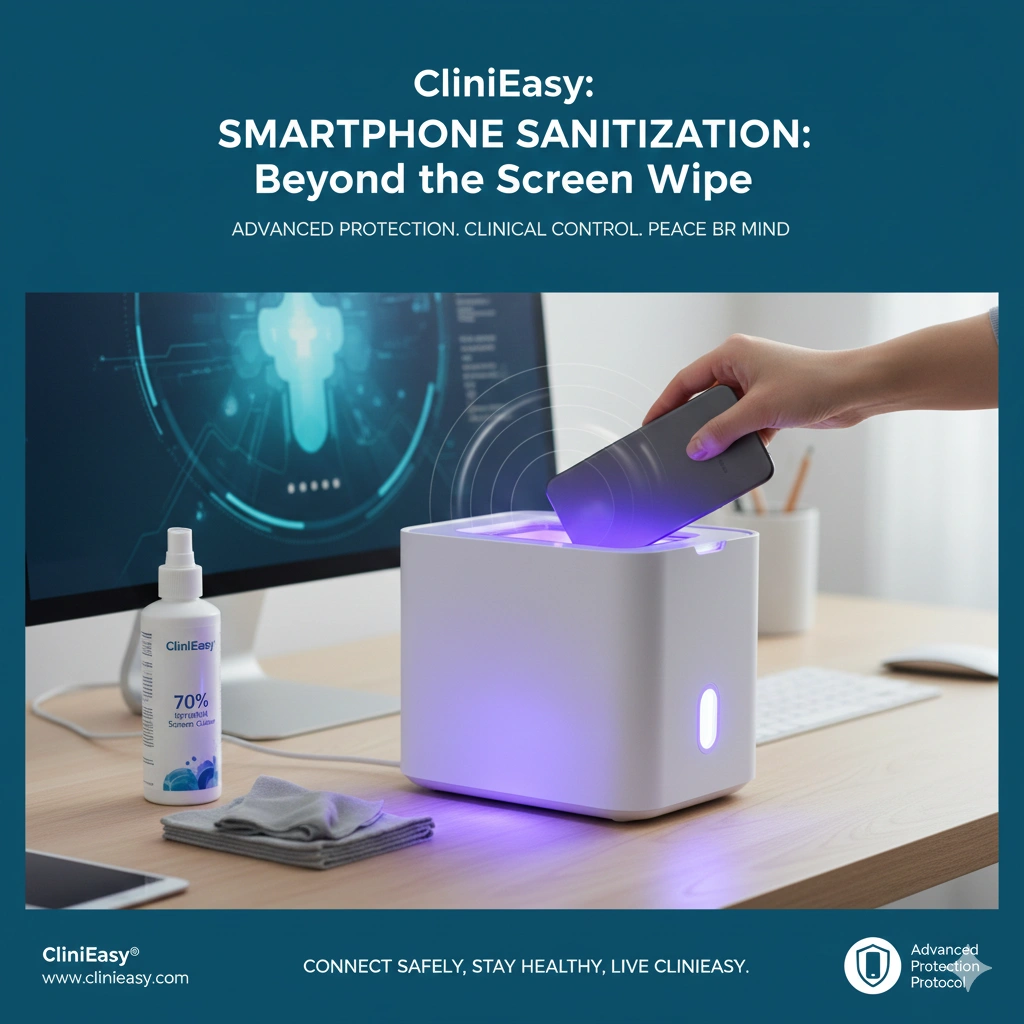
- Phone Sanitization: If you take your phone from the office to the kitchen or bedroom, you are moving a “third hand.” Sanitize it every time you sit down to work.
- Desk Surface: Clear the clutter. A minimalist desk is easier to disinfect quickly at the end of every workday.
6. The Bedroom: The Recovery Zone
The bedroom should be the cleanest air environment in the house, as this is where your immune system does its most critical work during sleep.
- Linen Rotation: Change pillowcases every 2–3 days and sheets weekly. This reduces the load of allergens and dust mites that can irritate the respiratory tract.
- The HEPA Placement: Ensure your air purifier is near the head of the bed, creating a “clean air bubble” for breathing during the night.
- No-Outside-Clothes Rule: Avoid sitting on the bed in clothes worn in public spaces (trains, offices, gyms).
7. The Laundry Room: Breaking the Cycle
The laundry room can ironically become a source of contamination if machines aren’t maintained.
- Gasket Maintenance: Check the rubber seal of your washer for black mold or slime. Wipe it down with a bleach solution monthly.
- The “Wet Laundry” Timer: Never leave wet clothes in the drum for more than an hour. If you do, re-wash them on a hot cycle to kill the rapidly multiplying mildew spores.
- Basket Sanitization: Clean your laundry baskets with a disinfectant after they have held “sick room” linens.
8. The Utility Closet & Cleaning Tools
Your cleaning tools are only as good as their own hygiene.
- Vacuum Filter Check: Does your vacuum have a HEPA filter? If not, it may be blowing fine dust and allergens back into the air. Change filters according to the manufacturer’s schedule.
- Mop Head Replacement: Traditional string mops are difficult to sanitize. Switch to removable microfiber pads that can be laundered after every use.
- Chemical Safety: Ensure all disinfectants are stored in a cool, dark place, as heat and light can degrade their active ingredients.
9. High-Traffic Transitions: Hallways and Stairs
We often clean rooms but forget the “transit” areas between them.
- Stair Handrails: These are touched by every member of the family multiple times a day. Disinfect them as part of your “High-Touch” daily sweep.
- Light Switches: If your hallways are dark, these switches are hit constantly. Make them a priority in your audit.
10. The Waste Management Audit
Finally, evaluate how pathogens are leaving your home.
- The Pedal-Bin Test: Are all your bins hands-free?
- Recycling Hygiene: Rinse food containers before putting them in the recycling bin to prevent the growth of mold and the attraction of pests.
- The Exterior Bin Path: Ensure the path to your outdoor bins is clear and that you have a way to wash your hands immediately after taking out the trash.
Conclusion: From Audit to Action
A home hygiene audit is not about finding faults; it is about finding opportunities for protection. By going room-by-room, you remove the guesswork and replace it with a professional, clinical-standard protocol.