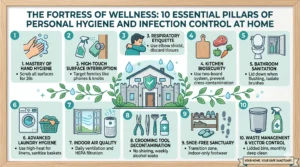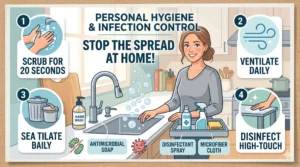

in an era where global health awareness is at an all-time high, our homes have become more than just living spaces—they are our primary sanctuaries. However, a home is only as safe as the habits practiced within its walls. Personal hygiene and infection control are not merely about “looking clean”; they are scientific approaches to breaking the chain of infection.
Maintaining a sterile-ish environment doesn’t require a laboratory setting, but it does require intentionality. By implementing these ten foundational pillars of hygiene, you can significantly reduce the viral and bacterial load in your immediate environment, protecting both yourself and your loved ones.
1. The Art and Science of Hand Hygiene
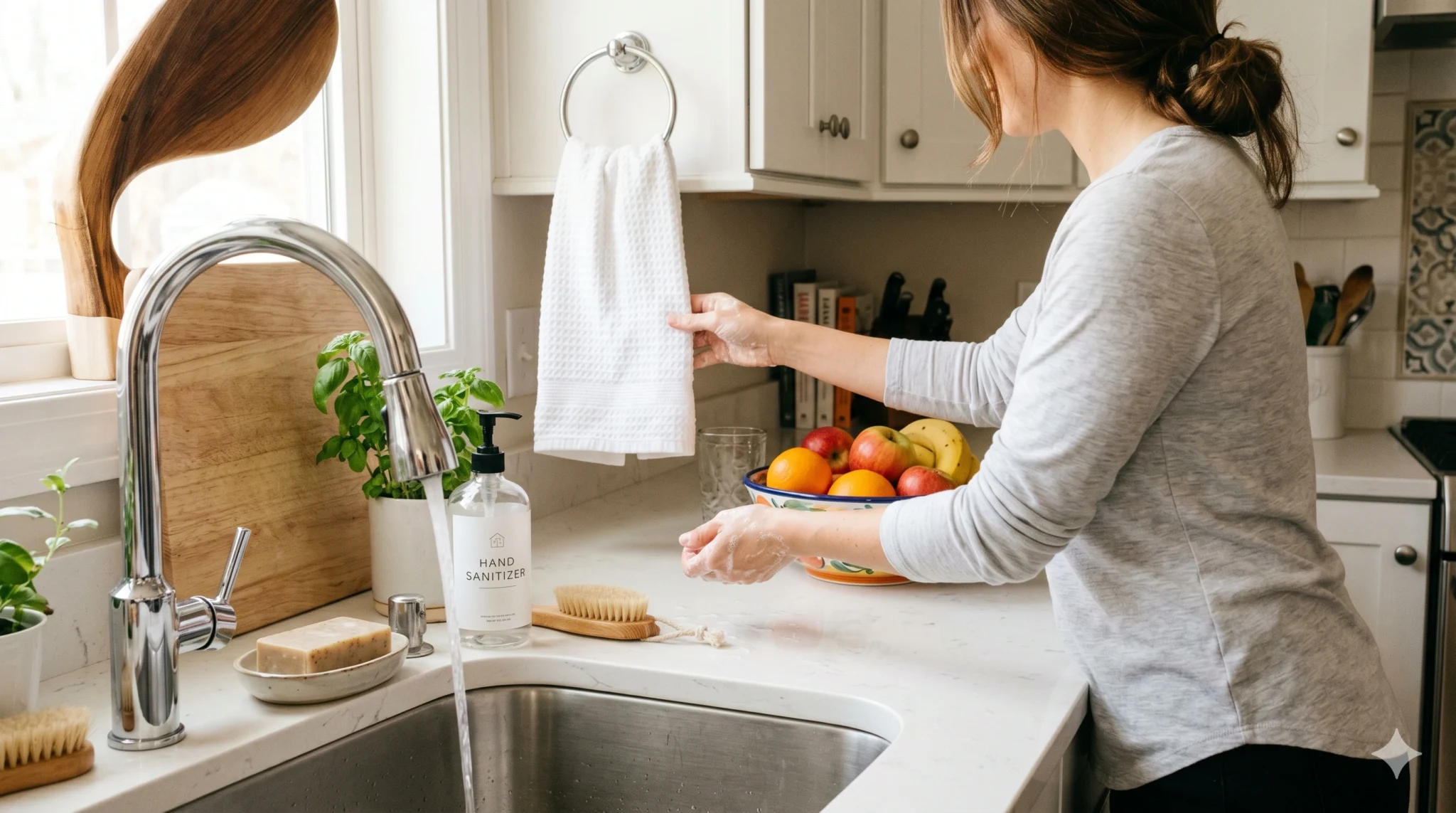
Handwashing is the single most effective way to prevent the spread of germs. It’s estimated that we touch our faces approximately 16 to 23 times per hour, providing a direct highway for pathogens from surfaces to our mucous membranes.
- The Technique: It’s not just about water; it’s about friction. Scrub for at least 20 seconds, ensuring you reach the backs of hands, between fingers, and under nails.
- The Critical Moments: Always wash after using the restroom, before preparing food, after handling pets, and immediately upon entering the house from a public space.
Medical Instruction Step By Step Infographics Of Stages Of Proper Hand Washing
2. Respiratory Etiquette: Managing the “Aerosol Zone”
Infection control is largely about managing what we exhale. Droplets from a single sneeze can travel at speeds of up to 100 miles per hour and carry thousands of germs.
- The “Sleeve” Rule: If a tissue isn’t available, sneeze or cough into your elbow—never your hands. This prevents you from transferring those germs to the next doorknob or person you touch.
- Disposal: Treat used tissues as biohazardous waste. Dispose of them immediately in a lined trash can and wash your hands.
3. High-Touch Surface Disinfection
Not all surfaces are created equal. While a dusty bookshelf is an aesthetic issue, a contaminated “high-touch” surface is a health risk.
| Surface Type | Examples | Cleaning Frequency |
| High-Touch | Doorknobs, light switches, faucet handles, remote controls. | Daily |
| Personal Tech | Smartphones, keyboards, tablets. | Twice Daily |
| Food Prep | Countertops, cutting boards, fridge handles. | After every use |
Pro Tip: Distinguish between cleaning (removing dirt) and disinfecting (killing germs). Use an EPA-registered disinfectant and allow it to stay “wet” on the surface for the recommended dwell time to ensure pathogens are actually neutralized.
4. The Kitchen Sanctuary: Food Safety Protocols
The kitchen is often the germiest room in the house. Cross-contamination is the leading cause of foodborne illnesses like Salmonellosis or E. coli infections.
- Color-Coded Cutting Boards: Use separate boards for raw meats and produce.
- The Danger Zone: Keep perishable foods out of the temperature range of 40°F to 140°F (4°C to 60°C), where bacteria multiply most rapidly.
- Sponge Hygiene: Sponges are bacterial magnets. Microwave them while damp for one minute daily, or better yet, switch to microfiber cloths that can be laundered at high temperatures.
5. Bathroom Bio-Security
Bathrooms are high-moisture environments, making them breeding grounds for mold, mildew, and enteric bacteria.
- The “Toilet Plume”: Always close the lid before flushing. Research shows that flushing an open toilet can aerosolize fecal matter, settling it on towels and toothbrushes several feet away.
- Towels: Damp towels should never be shared. Ensure they dry completely between uses, and launder them in hot water every 2–3 days.
6. Laundry Microbiology
Your clothes and linens act as filters, trapping skin cells, sweat, and environmental pathogens.
- Hot Water Loading: For items like bedsheets, underwear, and towels, use the highest temperature setting safe for the fabric.
- The “Sick Bed” Protocol: If someone in the house is ill, handle their laundry with gloves and do not “shake” the linens, as this can disperse viruses into the air.
7. Personal Grooming and Tool Hygiene
We often forget that the tools we use for grooming require their own disinfection routine.
- Toothbrush Care: Replace your toothbrush every three months or immediately after recovering from an illness. Store it upright and away from other toothbrushes.
- Nail Care: Short nails are easier to keep clean. Dirt and germs trapped under long nails are difficult to reach even with vigorous handwashing.
8. Air Quality and Ventilation
Infection control isn’t just about what you touch; it’s about what you breathe. Stagnant air allows airborne particles to linger longer.
- Natural Ventilation: Open windows for at least 15 minutes a day to flush out stale air and reduce indoor pollutant levels.
- Air Filtration: Consider using HEPA (High-Efficiency Particulate Air) filters in bedrooms. These are designed to capture 99.97% of particles as small as 0.3 microns.
9. Waste Management Strategy
Trash cans are reservoirs for bacteria and pests.
- Lidded Bins: Use foot-pedal operated bins to minimize hand contact.
- Liners: Always use bags to prevent leaks. If a leak occurs, disinfect the interior of the bin immediately.
- External Placement: Store outdoor bins away from windows and entry points to prevent flies—which carry diseases—from entering the home.
10. The “Safe Entry” Routine
Creating a transition zone between the outside world and your home environment can prevent “tracking in” contaminants.
- The Shoe Rule: Implement a “no-shoes” policy. Shoes carry everything from pesticides to animal waste. Leave them at the door.
- Disinfecting Goods: During periods of high community viral spread, wiping down grocery packaging or delivery boxes adds an extra layer of defense.
Conclusion: Consistency Over Perfection
Infection control at home is not about living in a sterile bubble; it is about building a series of “safety nets.” No single habit is foolproof, but when combined—washing hands, disinfecting surfaces, and maintaining air quality—they create a formidable barrier against illness.
By turning these ten points into subconscious routines, you transition from being reactive to proactive, ensuring that your home remains a true place of rest and recovery. Remember, hygiene is a form of self-respect and a profound act of care for those who share your space.