
In an increasingly interconnected world, the home has evolved from a simple living space into a multi-functional sanctuary. It is our office, our gym, and our primary defense against external health threats. However, a home is only as safe as the microscopic environment within it. Infection control is often perceived as a clinical task reserved for sterile hospital corridors, but the “chain of infection” is most effectively broken at the domestic level.
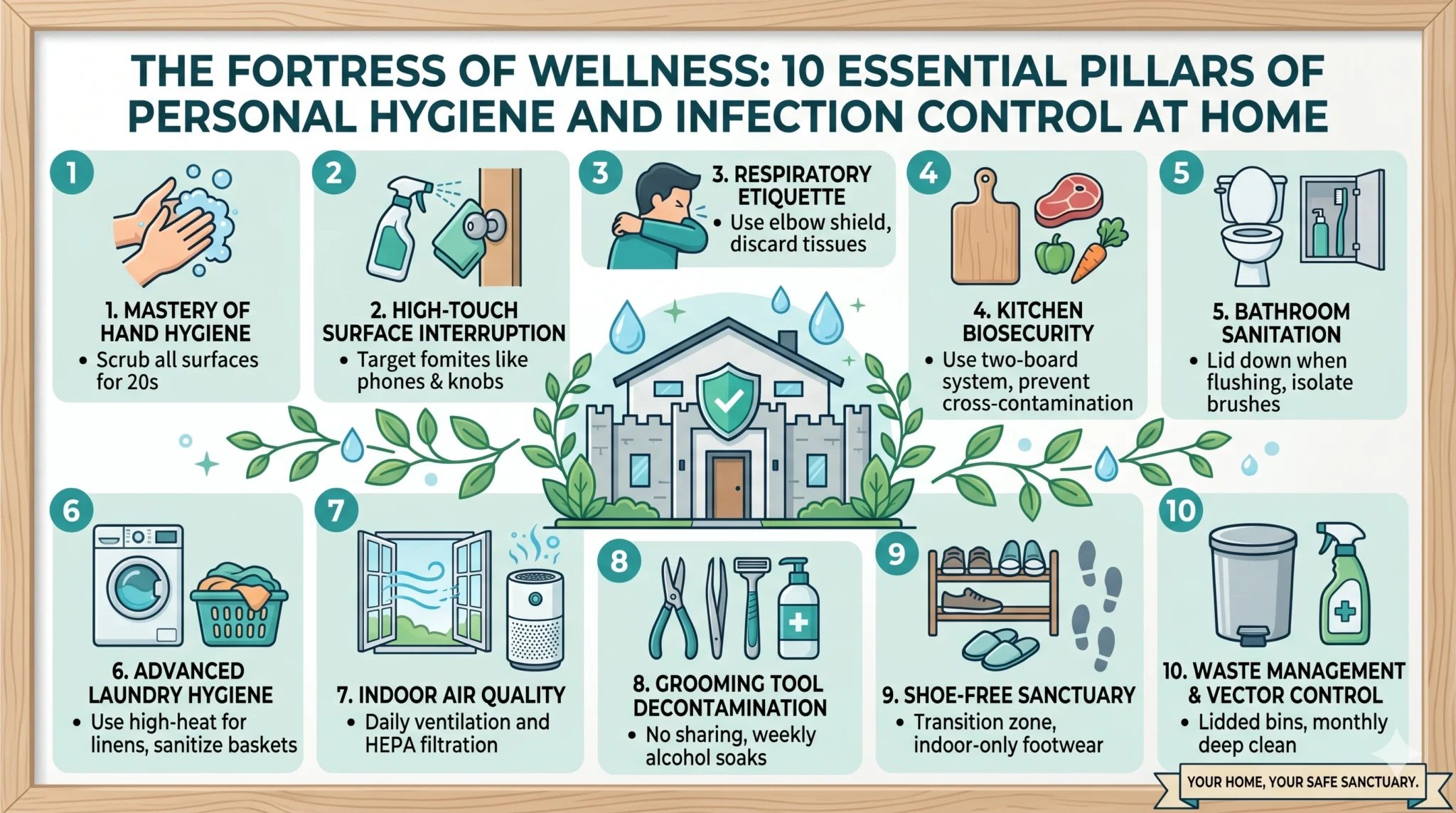
True personal hygiene is not merely a matter of aesthetic cleanliness; it is a systematic approach to biological risk management. By implementing high-quality, science-backed protocols, you can transform your home into a fortress of wellness. Below are ten critical pillars of hygiene and infection control designed to protect your household from pathogens.
1. The Science of the “Surgical” Hand Wash
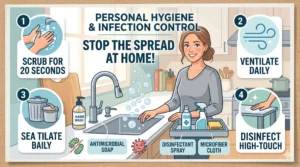
Hand hygiene is the cornerstone of preventative medicine. Throughout the day, our hands act as biological magnets, picking up transit bacteria and viruses from every surface we touch. The goal of a high-quality hand wash is not just to wet the skin, but to emulsify fats and proteins that allow germs to cling to us.
- The 20-Second Mandate: Using warm water and antimicrobial soap, you must create enough friction to reach the “hidden” areas: the cuticles, the webs between fingers, and the wrists.
- The Drying Factor: Damp hands spread 1,000 times more bacteria than dry hands. Always use a clean, dry towel or a single-use paper towel to ensure the skin barrier is completely moisture-free before touching communal surfaces.
2. High-Touch Surface Interruption
In every home, there are “fomites”—non-living objects that, when contaminated, can transfer disease to a new host. Identifying these “hot zones” allows for targeted infection control rather than aimless cleaning.
| High-Touch Zone | Common Fomites | Recommended Protocol |
| Entry Points | Doorknobs, deadbolts, doorbell buttons | Disinfect upon arrival from public spaces. |
| Tech Interfaces | Smartphones, remote controls, keyboards | Wipe with 70% isopropyl alcohol twice daily. |
| Utility Hubs | Light switches, thermostat panels | Weekly deep-clean with a residual disinfectant. |
3. Respiratory Etiquette: Managing the Bio-Cloud
When a person sneezes or coughs, they release an aerosolized cloud of droplets that can contain millions of viral particles. These particles can remain suspended in the air or settle on surfaces several feet away.
- The Elbow Shield: Coughing into your hands creates a “mobile contamination unit.” Always use the crook of your elbow or a disposable tissue.
- Immediate Disposal: Tissues should never be left on counters or tucked into pockets. Treat them as bio-hazardous waste—discard them in a lined bin and wash your hands immediately to close the loop on potential transmission.
4. Kitchen Biosecurity and Cross-Contamination
The kitchen is arguably the most hazardous room in the house due to the presence of raw proteins and moisture. Foodborne illnesses often stem from “bridge contamination”—where germs move from a raw chicken breast to a salad via a knife or cutting board.
- The Color-Code System: Adopt the professional kitchen standard. Use red boards for raw meat and green boards for vegetables.
- Thermal Lethality: Ensure your dishwasher reaches at least 150°F (65°C) to ensure that porous items like sponges or wooden spoons are truly sanitized, not just rinsed.
5. Bathroom Sanitation: The “Toilet Plume” Effect
The bathroom is a high-moisture environment that facilitates the growth of mold and enteric bacteria. One of the most overlooked aspects of infection control is the “toilet plume”—the aerosolization of microscopic waste particles during a flush.
- Lid-Down Policy: Closing the lid before flushing reduces the spread of airborne pathogens by up to 90%.
- Toothbrush Proximity: Store toothbrushes as far from the toilet as possible, ideally inside a cabinet, to prevent them from becoming “landing strips” for aerosolized bacteria.
6. Advanced Laundry Hygiene
Your clothes and linens are “soft surfaces” that trap skin cells and environmental toxins. Standard cold-water washes often fail to kill dust mites or resilient bacteria.
- The High-Heat Cycle: For bedding, towels, and underwear, use the “Sanitize” or “Heavy Duty” setting.
- The “Clean-In-Between” Rule: Never put clean clothes back into a laundry basket that was just used for dirty, damp towels. Disinfect the basket between loads to prevent “re-seeding” your clean laundry with old germs.
7. Indoor Air Quality and Pathogen Dilution
Infection control is as much about the air as it is about surfaces. Stagnant air allows viral loads to build up, especially in smaller rooms.
- Natural Cross-Ventilation: Open windows on opposite sides of the house for 20 minutes a day. This creates a “pressure flush” that replaces indoor air with fresh, oxygenated outdoor air.
- HEPA Filtration: In rooms without windows, utilize a HEPA-certified air purifier. These are designed to capture particles as small as 0.3 microns, effectively trapping many common viruses and allergens.
8. Grooming Tool Decontamination
We often remember to clean our floors but forget the tools that come into direct contact with our mucous membranes and skin barriers.
- Personal Tool Kits: Never share razors, nail clippers, or tweezers. Even within families, these items can spread fungal infections or blood-borne pathogens if a micro-cut occurs.
- Alcohol Soaks: Once a week, soak your grooming tools in a solution of rubbing alcohol for 10 minutes to dissolve built-up oils and neutralize microbial colonies.
9. The “Shoe-Free” Sanctuary
The soles of our shoes are essentially collectors for everything we walk through: bird droppings, public restroom floors, and chemical pesticides. Tracking these into the house compromises your floor hygiene, where children or pets may play.
- Transition Zones: Create a “mudroom” or a dedicated shoe rack at the primary entrance. Switching to indoor-only slippers reduces the bacterial load on your carpets and hard floors by a staggering margin.
10. Waste Management and Vector Control
Bacteria thrive in decomposing organic matter. A trash can that isn’t managed properly becomes a breeding ground for flies and other pests that can carry diseases from the bin to your food surfaces.
- Lidded and Lined: Always use a bin with a tight-fitting lid, preferably one operated by a foot pedal to minimize hand contact.
- The Bleach Rinse: Once a month, take your empty waste bins outside and scrub the interior with a diluted bleach solution to kill any lingering mold or odor-causing bacteria.
Conclusion: Hygiene as a Habitual Practice
Infection control at home is not a one-time event; it is a rhythmic practice of awareness. By mastering these ten pillars, you are not just “cleaning”—you are actively managing the health and longevity of everyone under your roof. High-quality hygiene is an investment in your immune system, ensuring that your home remains a place of true restoration and safety.