
In an era where our homes have transitioned into offices, gyms, and sanctuaries, the importance of maintaining a sterile and hygienic environment has never been more paramount. While we often think of “infection control” as something reserved for hospital wards, the reality is that the chain of infection is most frequently broken—or forged—within the four walls of our own homes.
A high-quality hygiene protocol is not about living in a state of clinical paranoia; it is about establishing a series of high-leverage habits that protect your household from invisible threats. From bacterial colonies on kitchen sponges to aerosolized droplets in the bathroom, pathogens are opportunistic. To keep them at bay, we must adopt a structured, scientific approach to domestic hygiene.
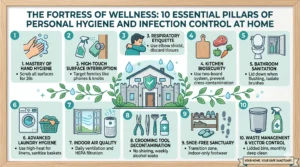
Here are the ten pillars of personal hygiene and infection control for a modern, healthy home.
1. The 20-Second Gold Standard: Mastery of Hand Hygiene
Handwashing is widely regarded by the CDC and WHO as the “do-it-yourself” vaccine. Our hands are the primary vehicles for germ transmission, moving pathogens from contaminated surfaces to our eyes, nose, and mouth.
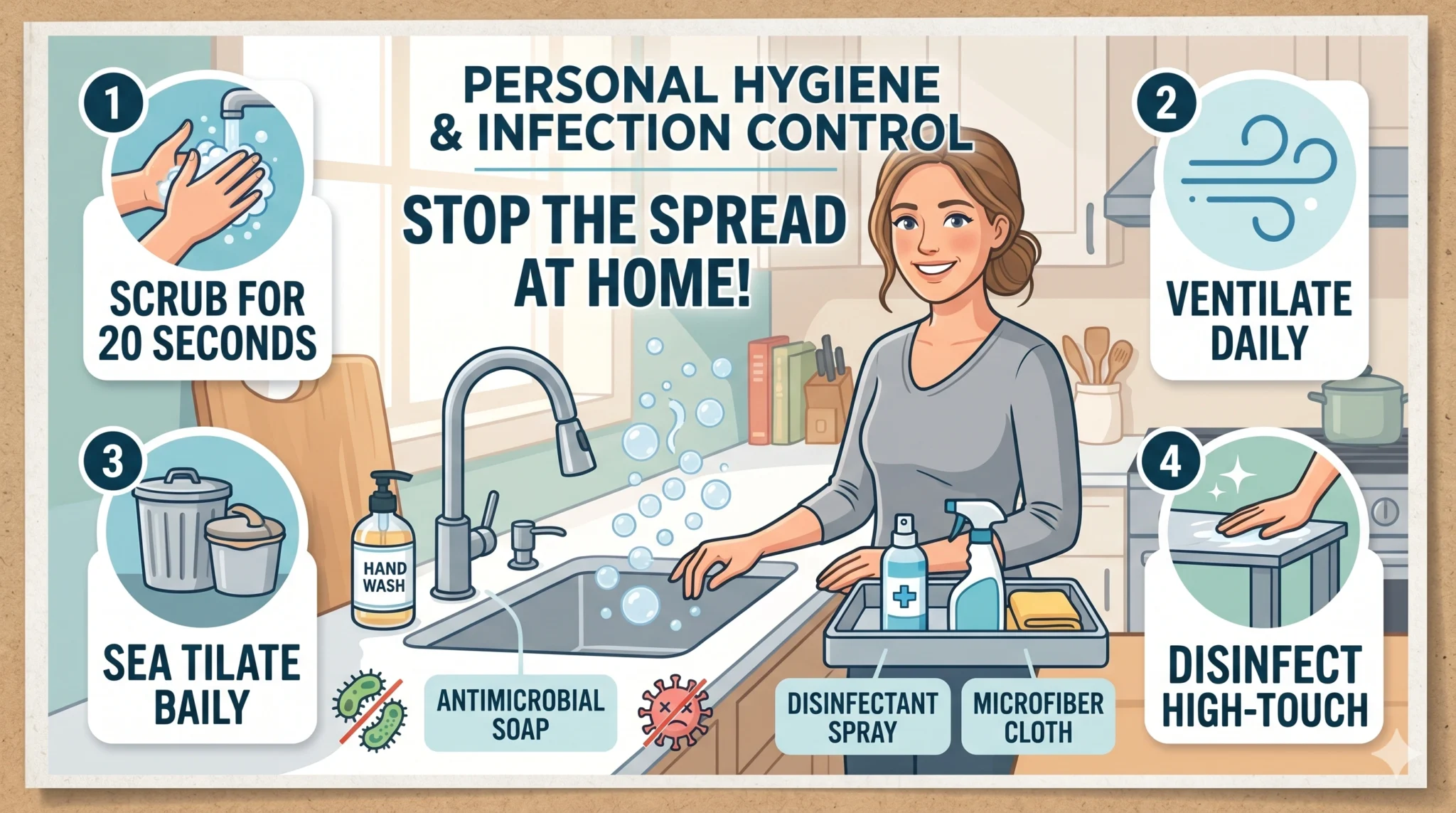
- The Technique: It is not enough to simply rinse. Effective hand hygiene requires friction, soap, and time. You must scrub the backs of your hands, between your fingers, and—most importantly—under your fingernails, which act as a reservoir for bacteria.
- The Critical Windows: To effectively control infection, you must wash your hands immediately upon entering the house, after using the restroom, before and after handling food, and after touching high-traffic communal items like remote controls or mail.
2. High-Touch Surface Disinfection (The “Hot Zone” Strategy)
Not every surface in your home needs to be bleached daily, but “high-touch” surfaces—objects touched dozens of times by multiple people—require a rigorous disinfection schedule.
| Surface Category | Examples | Recommended Action |
| Electronic Interfaces | Smartphones, tablets, keyboards | Use 70% isopropyl alcohol wipes daily. |
| Tactile Hardware | Doorknobs, light switches, cabinet pulls | Disinfect every 24 hours with an EPA-registered cleaner. |
| Plumbing Fixtures | Faucet handles, toilet flush levers | Clean after every heavy-use period (e.g., after guests leave). |
Pro Tip: Remember the difference between cleaning (removing dirt) and disinfecting (killing germs). To disinfect, the surface must remain visibly wet with the cleaner for the “dwell time” specified on the product label.
3. Respiratory Etiquette and Aerosol Management
We live in an “aerosol zone.” When we cough or sneeze, we release a cloud of droplets that can travel significant distances.
- The Elbow Rule: If you don’t have a tissue, sneeze into the crook of your elbow. This prevents your hands from becoming contaminated, which in turn prevents the spread of germs to every surface you touch afterward.
- Tissue Disposal: Treat used tissues as biohazardous material. They should be discarded immediately in a lined, lidded bin, followed by immediate hand sanitization.
4. Kitchen Biosecurity: Preventing Cross-Contamination
The kitchen is statistically the most germ-laden room in the house, often harboring more fecal bacteria than a toilet seat due to improper food handling.
- The Two-Board System: Use strictly separate cutting boards for raw proteins and fresh produce. Bacteria like Salmonella and E. coli can easily migrate if surfaces are shared.
- Sponge Hygiene: A damp sponge is a bacterial paradise. Replace sponges weekly, or sanitize them daily by putting them in the dishwasher on a high-heat dry cycle. Better yet, switch to microfiber cloths that can be laundered in hot water after a single use.
5. The “Toilet Plume” and Bathroom Sanitation
Every time a toilet is flushed with the lid open, a “toilet plume”—a fine mist of microscopic particles—is ejected into the air. These particles can settle on towels, flooring, and even your toothbrush.
- Close the Lid: This simple mechanical barrier is one of the easiest ways to contain enteric pathogens.
- Toothbrush Isolation: Store toothbrushes upright and ensure they do not touch one another. Replace your brush every three months or immediately after recovering from a viral illness to prevent reinfection.
6. Laundry Microbiology: Heat as a Disinfectant
Your clothing, bedding, and towels are essentially “filters” that catch skin cells, sweat, and environmental pathogens.
- The Temperature Factor: To truly kill bacteria and dust mites, linens should be washed at temperatures of at least 140°F (60°C).
- The Sick-Room Protocol: When a family member is ill, launder their items separately. Avoid “shaking” dirty laundry, as this can aerosolize viruses trapped in the fabric fibers.
7. Indoor Air Quality and Ventilation
Infection control isn’t just about what you touch; it’s about the air you breathe. Stagnant air allows airborne pathogens to linger and concentrate.
- The 15-Minute Flush: Open windows for at least 15 minutes daily, even in winter, to encourage air exchange.
- HEPA Filtration: Use a High-Efficiency Particulate Air (HEPA) purifier in common areas. These filters are rated to trap 99.97% of particles as small as 0.3 microns, including many viruses and bacteria.
8. Personal Grooming Tool Hygiene
We often disinfect our counters but forget the tools that touch our skin and blood.
- Clippers and Razors: Nail clippers, tweezers, and razors should be wiped with alcohol after each use. Sharing these items is a common way to spread fungal infections and skin conditions like staph.
- Makeup Brushes: These are porous and trap oils and bacteria. Wash them weekly with a gentle antimicrobial soap to prevent breakouts and eye infections.
9. Footwear and the “Outdoor Transition”
Your shoes are a primary vector for bringing outdoor toxins—pesticides, animal waste, and heavy metals—into your living space.
- The No-Shoe Policy: Establishing a “shoes-off” rule at the entryway reduces the bacterial load on your floors by up to 85%.
- Entryway Mats: If shoes must be worn, use high-quality scraper mats both outside and inside the door to minimize the tracking of contaminants.
10. Waste Management and Pest Control
Garbage is a breeding ground for pathogens and an attractant for pests (flies, cockroaches, rodents) that act as biological vectors for disease.
- Lidded Containers: Use hands-free, pedal-operated bins to avoid touching the lid.
- The “Clean Bin” Rule: Once a month, wash the actual trash can with a bleach solution or disinfectant. Leaks and spills at the bottom of the bin can create a permanent mold and bacterial colony that affects the air quality of the entire room.