
In an era where our homes have evolved into multi-functional spaces—serving as offices, gyms, and sanctuaries—the boundary between the public sphere and our private lives has blurred. While we often view “infection control” as a practice reserved for sterile hospital corridors, the reality is that the chain of infection is most frequently broken—or forged—within the four walls of our own residences.
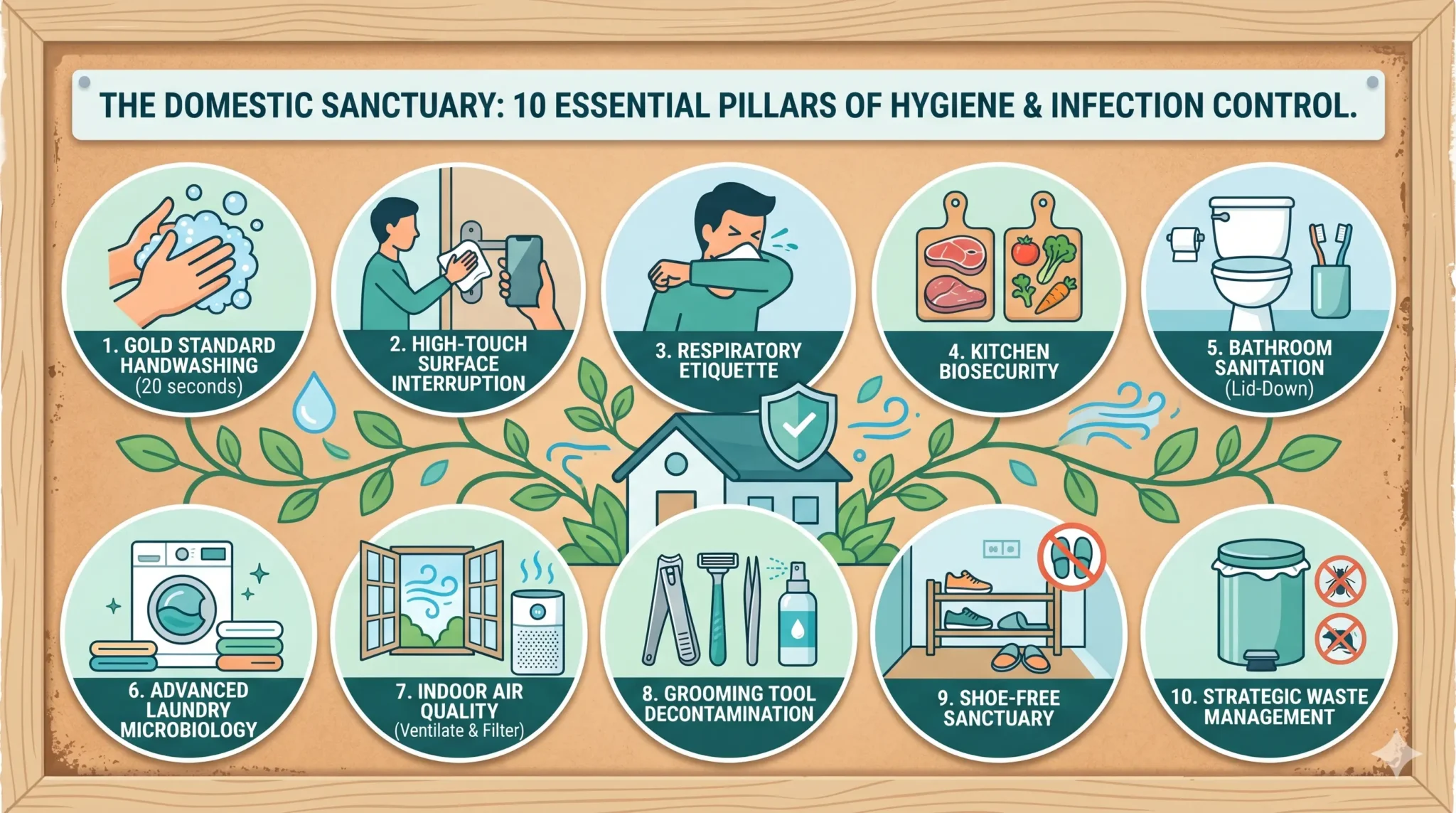
Maintaining a high-quality hygienic environment is not about living in a state of clinical paranoia; it is about establishing a systematic, science-backed defense. Pathogens are opportunistic, relying on high-traffic surfaces, stagnant air, and human habit to thrive. By implementing these ten foundational pillars, you can transform your home into a true fortress of wellness.
1. The Gold Standard of Hand Hygiene
Handwashing is the single most effective way to prevent the spread of communicable diseases. Our hands are the primary vehicles for “fomite-to-human” transmission, moving bacteria and viruses from contaminated surfaces to our eyes, nose, and mouth.
- The Technique: Effective hand hygiene requires friction, soap, and time. A quick rinse is insufficient. You must scrub for at least 20 seconds, ensuring you clean the “neglected zones”: the cuticles, the webs between fingers, and the wrists.
- The Critical Windows: To maintain a sterile home environment, hands must be washed immediately upon entering the house, before and after food preparation, after handling pets, and after using the restroom.
2. High-Touch Surface Interruption (Fomite Management)
Not every surface in your home requires daily bleaching, but “high-touch” surfaces—objects touched dozens of times by multiple people—are biological “hot zones.”
| Surface Category | Examples | Recommended Action |
| Tactile Hardware | Doorknobs, light switches, cabinet pulls | Daily disinfection with EPA-registered wipes. |
| Shared Electronics | TV remotes, game controllers, keyboards | Use 70% isopropyl alcohol to prevent moisture damage. |
| Personal Tech | Smartphones and tablets | Sanitize twice daily; these are effectively “third hands.” |
3. Respiratory Etiquette and Aerosol Containment
Respiratory hygiene is about managing the “bio-cloud” we produce. A single sneeze can release up to 40,000 droplets traveling at high speeds, potentially carrying viral loads across a room.
- The Elbow Rule: If a tissue is unavailable, cough or sneeze into the crook of your elbow. This prevents your hands from becoming contaminated and spreading germs to the next surface you touch.
- Waste Management: Treat used tissues as biohazardous material. Dispose of them immediately in a lined, lidded bin and follow up with immediate hand sanitization to close the loop on potential spread.
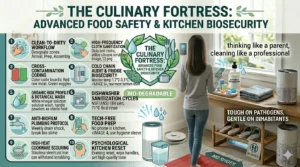
4. Kitchen Biosecurity: Preventing Cross-Contamination
The kitchen is often the most germ-laden room in a house. Foodborne illnesses like Salmonella and E. coli often spread through “bridge contamination,” where germs move from raw proteins to fresh produce via shared tools.
- The Two-Board System: Use strictly separate, color-coded cutting boards (e.g., wood for produce, non-porous plastic for raw meat).
- Sponge Hygiene: Damp sponges are bacterial breeding grounds. Replace them weekly or sanitize them daily by running them through a high-heat dishwasher cycle. Alternatively, switch to microfiber cloths that can be laundered at high temperatures after each use.
5. Bathroom Sanitation: The “Toilet Plume” Protocol
Bathrooms are high-moisture environments that facilitate the growth of mold and enteric bacteria. A major risk factor is the “toilet plume”—the aerosolization of microscopic particles during a flush.
- Lid-Down Policy: Always close the toilet lid before flushing. This simple mechanical barrier prevents the dispersal of aerosolized pathogens onto nearby towels and toothbrushes.
- Toothbrush Isolation: Store toothbrushes upright and ensure they do not touch one another. Replace your brush every three months or immediately after recovering from a viral illness to prevent auto-reinfection.
6. Advanced Laundry Microbiology
Your clothing and linens act as filters for skin cells, sweat, and environmental pollutants. Standard cold-water washes often fail to neutralize resilient bacteria or dust mites.
- Thermal Disinfection: Launder bedding, towels, and underwear at temperatures of at least 60°C (140°F) to ensure microbial death.
- The Transfer Rule: Never leave damp laundry in the machine, as mold can begin to form within hours. Disinfect your laundry basket periodically to prevent “cross-loading” clean clothes with bacteria from dirty items.
7. Indoor Air Quality and Pathogen Dilution
Infection control isn’t just about surfaces; it’s about the air we breathe. Stagnant air allows airborne particles to linger and concentrate, increasing the risk of inhalation.
- Natural Ventilation: Open windows for at least 15 minutes a day, regardless of the season, to encourage air exchange and dilute indoor pollutants.
- HEPA Filtration: Utilize High-Efficiency Particulate Air (HEPA) purifiers in high-traffic rooms. These are designed to capture 99.97% of particles as small as 0.3 microns, providing a significant layer of defense against airborne viruses.
8. Personal Grooming Tool Decontamination
The tools touching our skin, nails, and hair require their own hygiene routine, as they can harbor fungal spores and staph bacteria.
- No-Sharing Policy: Items like razors, nail clippers, and tweezers should never be shared. These tools can cause micro-abrasions that allow the transfer of infections.
- Sterilization: Once a week, wipe grooming tools with rubbing alcohol to dissolve oils and kill any accumulated bacterial colonies. Ensure hairbrushes are cleared of hair and washed in warm, soapy water monthly.
9. The Shoe-Free Sanctuary Transition
The soles of our shoes are collectors for outdoor toxins, including animal waste, pesticides, and public restroom bacteria. Tracking these into the house compromises your floor hygiene.
- Entryway Management: Establish a “transition zone” at the door. Removing shoes before entering the main living areas reduces the bacterial load on your floors by up to 85%. Provide indoor-only slippers to keep feet comfortable while maintaining a clean-floor policy.
10. Strategic Waste Management
Garbage bins are reservoirs for pathogens and attractants for pests like flies and rodents, which act as biological vectors for disease.
- Hands-Free Bins: Use foot-pedal operated bins to avoid touching contaminated lids.
- Deep Cleaning: Once a month, wash the interior of your waste bins with a bleach solution or a strong disinfectant to remove mold spores and residual bacteria that survive at the bottom of the bin despite liners.
Conclusion: Consistency Over Perfection
Achieving a healthy home environment is not about a single day of deep cleaning; it is about the consistency of daily habits. By implementing these ten pillars, you are not just cleaning—you are practicing preventative medicine.