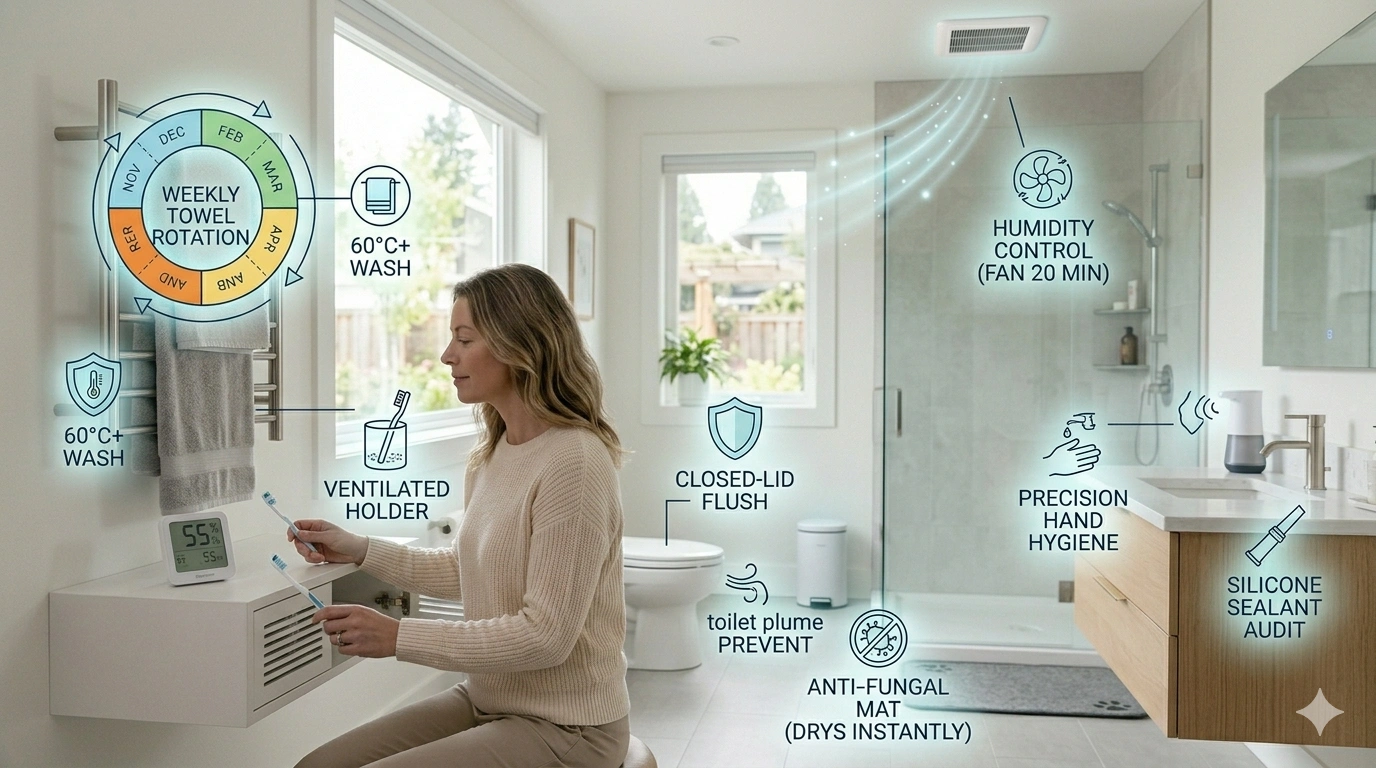

The bathroom is the most technologically challenging room in the home biome. It is a high-moisture environment where “flush plumes,” aerosolized skin cells, and fungal spores converge. Without a clinical approach to infection control, the bathroom can transition from a place of rejuvenation to a significant source of cross-contamination for the rest of the household.
Mastering “Bathroom Hygiene” requires managing the invisible—humidity, air velocity, and microbial reservoirs. Here are the ten pillars for maintaining a high-performance bathroom sanctuary.
1. The “Closed-Lid” Flush Protocol
Whenever a toilet is flushed without a lid, it creates a “toilet plume”—an invisible aerosol cloud of microscopic waste particles and pathogens that can travel up to six feet and settle on towels, toothbrushes, and counters.
- The Rule: Closing the lid before flushing is the single most effective way to prevent the aerosolization of enteric pathogens like Norovirus and E. coli.
- The Culture: If you have guests or children, a small aesthetic “nudge” (like a minimalist icon) can ensure this boundary is respected.
2. Managing the Humidity Threshold
Molds and mildews are biological opportunists that thrive in Relative Humidity (RH) above 60%.
- The Tech: Use a high-velocity exhaust fan that is rated for the square footage of the room.
- The “Over-Run” Strategy: Run the fan for at least 20 minutes after a shower to ensure the moisture load is fully evacuated from the walls and ceiling. If your bathroom lacks a fan, a standalone dehumidifier is an essential piece of hygiene hardware.
3. Oral Hygiene Sequestration
Toothbrushes are porous tools that reside in one of the most contaminated rooms in the house.
- The Vertical Storage: Store toothbrushes vertically to allow them to air-dry. Bacteria thrive in the moist base of a toothbrush holder.
- The Distance Rule: Keep toothbrushes at least 4 feet away from the toilet, and ideally inside a ventilated cabinet to protect them from any residual aerosol plumes.
4. The Towel Rotation and “Deep Dry”
Damp towels are primary reservoirs for skin bacteria and fungi.
- The 3-Use Limit: Launder bath towels after no more than three uses. Hand towels, which are used more frequently by multiple people, should be changed daily.
- The Heat Reset: Always wash towels at 60°C (140°F) to ensure that skin oils and microbial colonies are fully broken down.
5. High-Touch Disinfection: The “Wet Zone”
Faucet handles, flush levers, and door handles are touched immediately after biological tasks, making them primary sites for hand-to-surface transmission.
- The Daily Sweep: Use a 70% alcohol or stabilized hydrogen peroxide wipe on these “hot spots” every evening.
- The Foot-Pedal Bin: Use only lidded, foot-operated trash cans to ensure you never have to touch a waste receptacle with your hands.
6. Managing the Showerhead Biofilm
Over time, the interior of a showerhead develops a “biofilm”—a complex community of bacteria (including Legionella and Mycobacterium) that is aerosolized every time you turn on the water.
- The Deep Clean: Once a month, submerge the showerhead in a bag of white vinegar for 30 minutes to dissolve mineral scale and disrupt the biofilm structure.
7. Soft Surface Integrity: Bath Mats
Bath mats sit in the highest-moisture zone and often stay damp for hours, making them the most likely site for fungal growth.
- The Material Shift: Move away from thick, shaggy mats toward low-pile cotton or anti-microbial diatomaceous earth mats that dry instantly.
- The Wash: Wash fabric mats weekly with oxygen bleach to ensure they don’t become a “sink” for odors and spores.
8. The Grout and Sealant Audit
Porous grout and silicone sealants are the “entry points” for mold into your home’s structure.
- The Seal: Ensure your grout is professionally sealed. If you see black spots on silicone sealant, it is often growing behind the material; it should be stripped and replaced with an anti-fungal grade silicone to maintain the biological integrity of the room.
9. Hand Hygiene: The “Surgical” Standard
In the bathroom, hand washing is a medical necessity, not just a habit.
- The Tech: Use a touchless soap dispenser to prevent the “communal touch” of a pump.
- The Drying Factor: Ensure hands are bone-dry before exiting. Damp hands transfer up to 500 times more bacteria to the next surface (like the doorknob) than dry hands
10. Air Quality: Beyond Scent
Avoid aerosol “air fresheners,” which often use phthalates to mask odors.
- The Bio-Ethical Choice: Use an air purifier with an activated carbon filter to chemically neutralize odors. This improves the actual air quality rather than simply adding synthetic chemicals to the “biological soup” of the room.
Conclusion: The Fortress of Personal Care
The bathroom is where we prepare ourselves to face the world. By treating it with clinical discipline, you ensure that your grooming rituals take place in an environment that supports your health and protects your household. A well-managed bathroom is the ultimate hallmark of a mastered sanctuary.