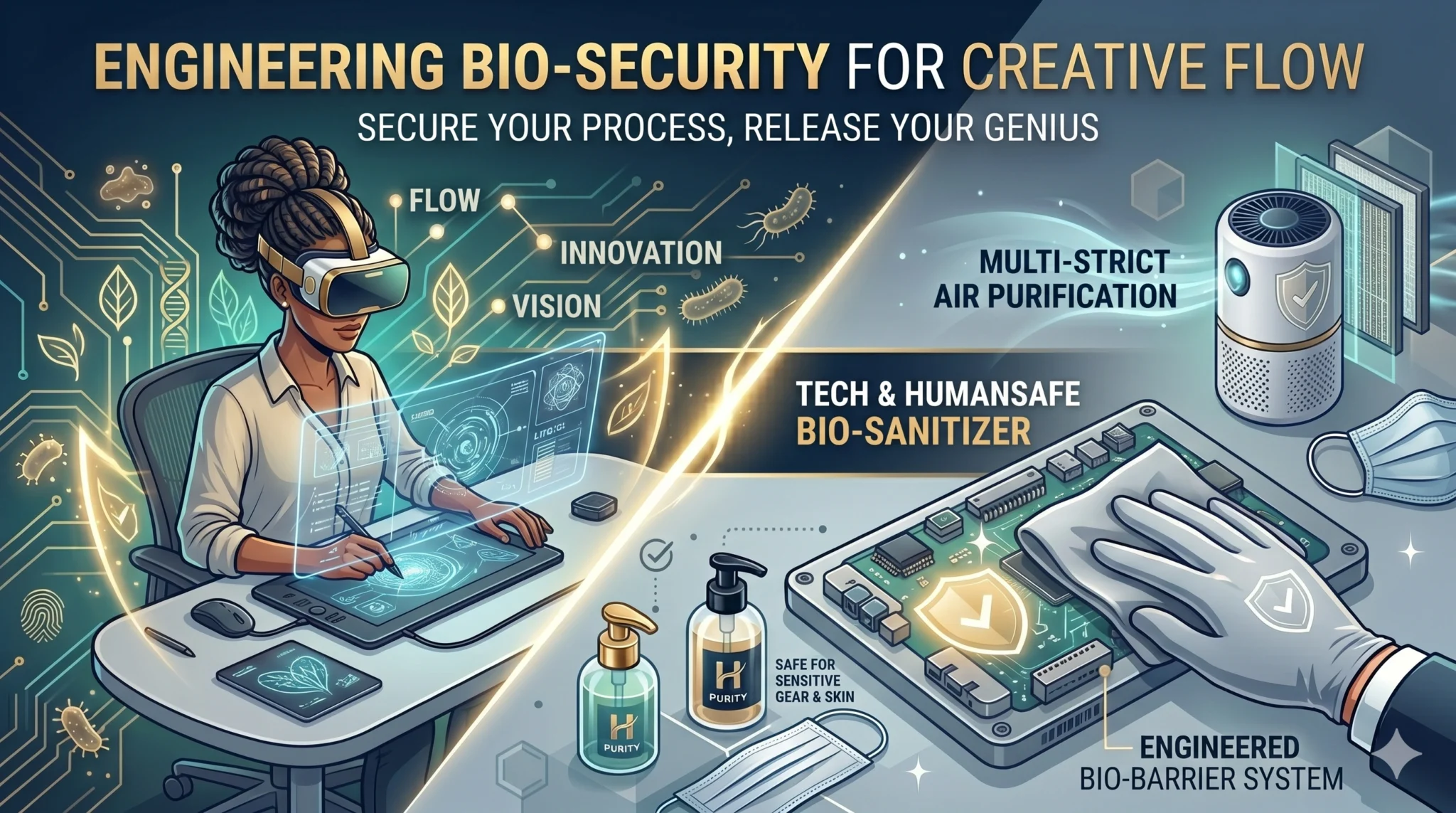

For a digital content publisher and game developer, the studio is where code, art, and strategy converge. However, high-performance hardware—the lifeblood of projects like Last Armor: King Survival—functions as a massive air filter, pulling in environmental particulates that can compromise both machine longevity and human respiratory health.
To protect your creative flow and technical assets, implement these ten pillars of studio-grade infection control and hardware maintenance.
1. Hardware Dust Sequestration
Workstations and servers generate heat and static electricity, attracting dust and dander into their internal cooling systems.
- The Audit: Perform a monthly internal cleaning of all PC intake filters and fans.
- The Benefit: This prevents hardware degradation and ensures that allergens are not recirculated back into your breathing zone during intensive development sprints.
2. Peripheral Sterilization Protocol
Keyboards, mice, and testing tablets are the primary contact points for transmission in a studio environment.
- The Daily Wipe: Sanitize all touch-surfaces with 70% isopropyl alcohol at the start of every session.
- The Logic: Regular sterilization minimizes the microbial load on your most-handled tools, protecting the “hand-to-face” transmission pathway.
3. High-CADR Air Scouring
The air in an enclosed studio can quickly become saturated with $CO_{2}$ and airborne particulates, which may impair cognitive focus.
- The Tech: Deploy HEPA air purifiers with a high Clean Air Delivery Rate (CADR).
- The Goal: Maintaining low $PM_{2.5}$ levels supports the mental clarity required for complex technical design and Python programming.
4. The “No-Phone” Creative Zone
Smartphones bridge public and private biomes, often carrying environmental pathogens into clean workspaces.
- The Sequestration: Keep personal mobile devices away from primary development desks unless they have been sanitized.
- The Reset: Use a specialized UV-C box or alcohol wipes for daily-carry tech to prevent “office microbes” from entering your creative sanctuary.
5. Managing Shared Development Labs
In shared spaces like a coaching center, hardware becomes a communal touchpoint for dozens of individuals.
- The Entryway Anchor: Place touchless hand sanitizer stations at the entrance of the lab.
- The Protocol: Require sanitization before users touch shared peripherals to maintain a baseline of bio-security across the network.
6. Thermal Health and Humidity
Proper humidity control is essential for protecting sensitive electronic components and human mucosal barriers.
- The Target: Maintain studio humidity between 40% and 60%.
- The Protection: This range prevents electrostatic discharge (ESD) risks for hardware and keeps respiratory defenses optimal for long-form coaching sessions.
7. Bio-Safe Cable Management
Tangled cables behind desks act as “dust traps” where bio-debris can accumulate undisturbed.
- The Organization: Utilize cable management trays to keep wires off the floor.
- The Maintenance: Vacuum these zones weekly with a HEPA-rated machine to ensure dust bunnies do not become reservoirs for fungal spores.
8. The “Work-Site” Transition Layer
If you are visiting a construction project or a high-traffic business site, your clothing acts as a filter for outdoor pollutants.
- The Boundary: Remove “work-site” clothing at a designated entryway “Bio-Lock”.
- The Rule: Never bring clothing exposed to external environments into the clean zones of your studio or home.
9. Nutritional Integrity for Cognitive Output
Consistent creative output relies on a high-performing biological system.
- The Fuel: Maintain your daily routine of organic nutrition and homemade juices.
- The Resilience: A nutrient-dense, low-glycemic intake prevents the metabolic fatigue that can compromise immune surveillance during launch cycles.
10. The Recovery Sanctuary Reset
The studio must remain separate from the recovery zone to ensure total system restoration.
- The Standard: Strictly ban work hardware from the bedroom.
- The Cycle: Ensure a weekly $60^{\circ}\text{C}$ bedding rotation to clear any accumulated allergens, providing a sterile environment for cellular repair.
Conclusion: Stewardship of the Creative Biome
Your studio is the engine of your digital empire. By engineering it with clinical bio-security, you ensure that your technical tools and your biological system remain in a state of peak performanc