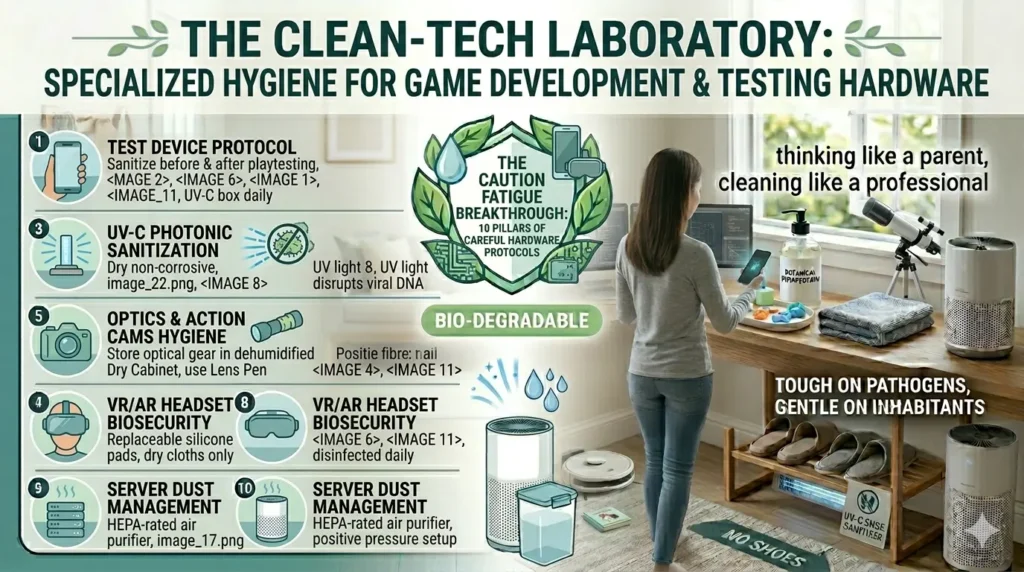

As a business owner overseeing projects like Last Armor: King Survival and managing a computer training institute, your home serves as the ultimate “Reset Zone” for your biological and cognitive systems. However, the domestic environment is a dynamic ecosystem where environmental pollutants and microbial loads can accumulate if left unmanaged.
To ensure your home remains a high-performance sanctuary that supports your entrepreneurial vitality, implement these ten pillars of domestic hygiene stewardship.
1. The Entryway “Bio-Lock” Protocol
The transition from the public sphere to your private sanctuary is the most critical point for infection control.
- The Procedure: Remove outdoor footwear and transit layers immediately upon entry.
- The Sanitization: Use 70% alcohol wipes on high-touch daily items like your phone and keys before moving deeper into the home.
2. Clinical Kitchen Standards
For a professional who prioritizes organic nutrition and daily vegetable juices, the kitchen must function as a sterile culinary lab.
- The Barrier: Keep all unsanitized digital devices away from food preparation surfaces to prevent cross-contamination.
- The Heat Reset: Ensure all cleaning cloths and reusable towels are laundered at 60°C to denature pathogens.
3. Humidity Engineering for Respiratory Health
Odisha’s climate requires active management of indoor humidity to protect your “respiratory gate”.
- The Target: Maintain relative humidity (RH) between 40% and 60%.
- The Benefit: This range keeps mucosal barriers hydrated and prevents the proliferation of mold and dust mites that thrive above 60% RH.
4. HEPA Air Scouring in Recovery Zones
Outdoor air often carries pollutants that can infiltrate your sleep and work spaces.
- The Tech: Deploy HEPA-rated air purifiers in the bedroom and studio.
- The Logic: Scrubbing the air of $PM_{2.5}$ and allergens reduces the background inflammatory load on your immune system while you sleep.
5. The $60^{\circ}\text{C}$ Bedding Rotation
The bed is a primary “bio-accumulator” of skin cells and allergens.
- The Cycle: Launder all linens weekly at a minimum of 60°C.
- The Result: This temperature is necessary to kill resilient bacteria and dust mites, ensuring your “Sleep Sanctuary” supports cellular repair.
6. Digital Hygiene in the Home Office
Tech tools in the home attract dust and microbes due to heat and static electricity.
- The Maintenance: Wipe down your home office peripherals daily and perform monthly dust sequestration for computer hardware.
- The Boundary: Strictly ban office hardware from the bedroom to keep “work microbes” out of your recovery zone.
7. Managing the “Outdoor-to-Indoor” Pipeline
If you are managing construction projects or visiting high-traffic sites, your clothing acts as a biological filter.
- The Rule: Designate specific clothing for work-sites and transit.
- The Sequestration: Place these garments in a dedicated laundry area immediately upon arrival to prevent the spread of environmental pollutants.
8. Micro-Pollution and Tech Sequestration
Even clean-looking devices can harbor a significant microbial load.
- The Standard: Use specialized UV-C sanitization or alcohol-safe wipes for daily-carry tech.
- The Habit: Sanitize your devices as part of your “arrival ritual” to protect your home’s sterile integrity.
9. Nutritional Bio-Security
Fueling your system with organic, homemade juices is a pillar of your biological defense.
- The Integrity: Use only filtered or purified water for food preparation and juicing.
- The Strategy: A nutrient-dense diet prevents the metabolic fatigue that can compromise your immune surveillance during busy business cycles.
10. The Morning “Airing Out” Ritual
Allowing the home biome to “breathe” is a simple but effective hygiene habit.
- The Protocol: Open windows for 15 minutes twice daily to encourage cross-ventilation.
- The Purpose: This flushes out stagnant air and lowers $CO_{2}$ levels, which is essential for maintaining cognitive clarity.
Conclusion: Stewardship as a Performance Strategy
Your home is the engine room of your personal resilience. By applying clinical standards to your domestic biome, you protect your health from environmental friction and ensure your system is always ready for the next entrepreneurial challenge.