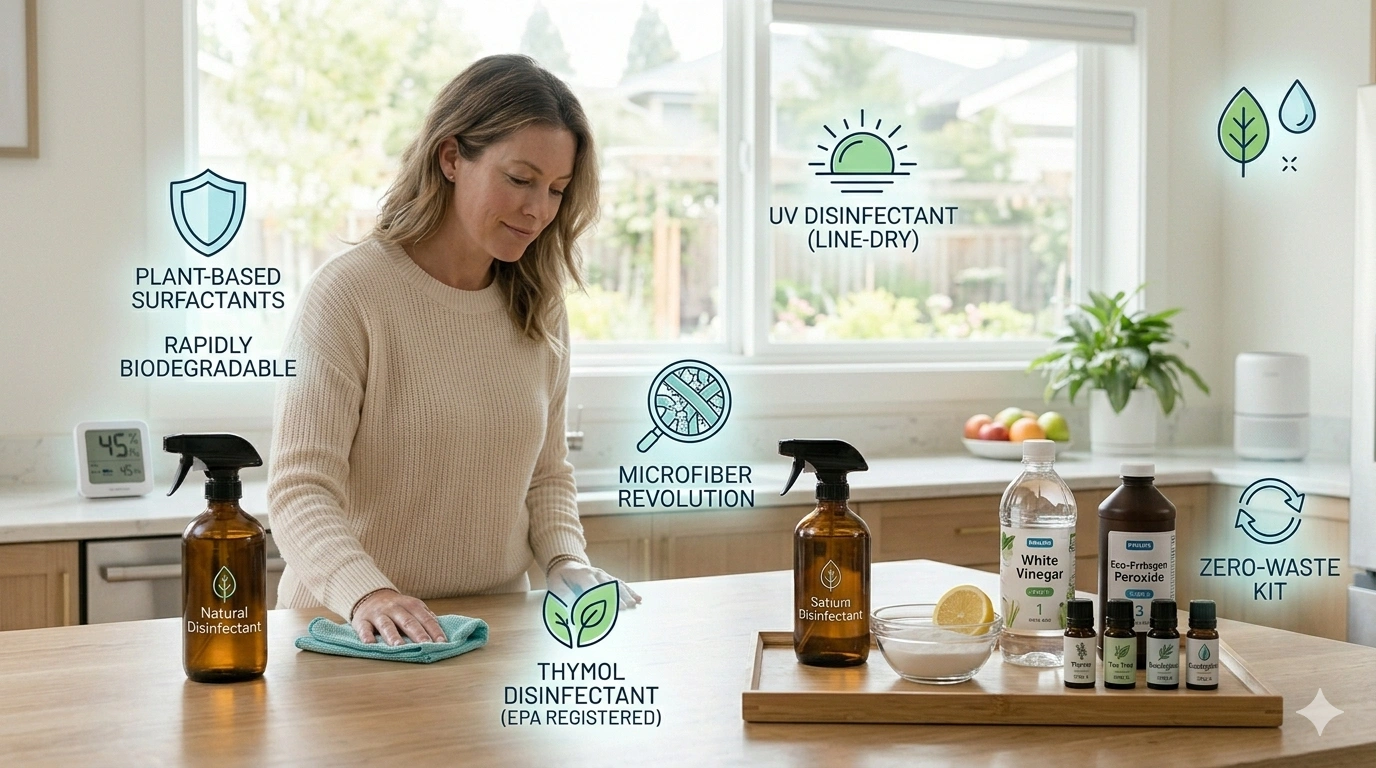

In our pursuit of a germ-free existence, we have often resorted to a “scorched earth” policy, using harsh chemicals that may harm our long-term health and the planet. However, the future of high-quality infection control lies in Bio-Ethical Hygiene—a methodology that balances clinical efficacy with ecological responsibility.
Maintaining a healthy home does not require the use of toxic endocrine disruptors or synthetic fragrances. By understanding the chemistry of natural cleaners and the biology of “beneficial” bacteria, you can create an infection-control protocol that is as safe for a newborn or a pet as it is effective against pathogens. Here are the ten pillars of sustainable, non-toxic home hygiene.
1. The Power of Acetic Acid (White Vinegar)
While often dismissed as a “folk remedy,” white vinegar is a scientifically proven acetic acid solution capable of killing many common household bacteria and molds.
- The Science: At a $5\%$ concentration, vinegar disrupts the cell membranes of many microbes. It is particularly effective against Salmonella and E. coli when given enough contact time.
- The Application: Use it as a daily spray for glass, mirrors, and hard surfaces. Note: Never use vinegar on natural stone like marble or granite, as the acid will etch the surface.
2. Sodium Bicarbonate: The Physical ScrubberBaking soda is a mild alkali that serves as an effective deodorizer and a gentle abrasive for physical “biofilm” removal.
- The Mechanism: It neutralizes acidic odors (like those from rotting organic matter) rather than just masking them. When mixed into a paste with water, it can scrub away the protective “slime” layers that bacteria use to adhere to sinks and tubs.
3. Hydrogen Peroxide: The Eco-Friendly Disinfectant
If you need a “medical grade” kill without the toxic fumes of bleach, $3\%$ hydrogen peroxide is your most powerful ally.
- The Decomposition: Unlike chlorine bleach, which can create toxic chloroform gas, hydrogen peroxide breaks down into simple water and oxygen ($H_2O_2 \rightarrow H_2O + O_2$).
- The Protocol: It is highly effective against viruses and even tough spores. Keep it in its original dark bottle, as light breaks it down, and use it for disinfecting cutting boards after handling raw meat.
4. Botanical Antimicrobials: Essential Oil Science
Certain plants have developed powerful antimicrobial compounds to survive in the wild. When used in high-quality, pure forms, these can enhance your cleaning routine.
- Thymol (Thyme Oil): A registered EPA disinfectant. It is highly effective against a broad spectrum of bacteria and viruses.
- Tea Tree and Eucalyptus: These possess natural antifungal and antiviral properties. Adding a few drops to your laundry or floor bucket provides a biological boost without synthetic “perfume” chemicals.
5. Transitioning to Plant-Based Surfactants
“Surfactants” are the chemicals that make water “wetter,” allowing it to lift grease and germs. Traditional surfactants (like SLS) can be irritating to the skin and toxic to aquatic life.
- The Alternative: Look for cleaners using alkyl polyglycosides (derived from sugars and vegetable oils). These are rapidly biodegradable and have a low toxicity profile while maintaining professional-grade cleaning power.
6. The Microfiber Revolution
Microfiber is a physical infection-control technology. The fibers are split to be 1/100th the thickness of a human hair, creating a massive surface area that physically “grabs” and holds onto bacteria.
- The Efficacy: Studies show that a high-quality microfiber cloth and plain water can remove up to $99\%$ of bacteria from a surface through physical action alone.
- Sustainable Use: By using microfiber, you drastically reduce your reliance on chemical sprays and disposable paper towels
7. Avoiding “Quats” and Triclosan
Many commercial “antibacterial” cleaners use Quaternary Ammonium Compounds (Quats) or Triclosan. These have been linked to respiratory irritation and the development of “superbugs” (antibiotic resistance).
- The Bio-Ethical Choice: Avoid products labeled “antibacterial” if they contain these chemicals. Stick to alcohol-based or plant-based disinfectants that kill through physical disruption rather than chemical poisoning.
8. Air-Purifying Plants and Natural Scenting
Instead of synthetic aerosol “fresheners” which contain phthalates, use nature to manage your home’s olfactory environment.
- The Protocol: Use activated charcoal bags to absorb odors and VOCs. For scent, use a stovetop “simmer pot” with cinnamon sticks, citrus peels, and cloves. This adds moisture to the air while providing a clean, natural fragrance.
9. Conscious Laundry: Cold Water and Oxygen Bleach
Traditional laundry practices involve heavy energy use and harsh optical brighteners.
- The Shift: Use “Oxygen Bleach” (Sodium Percarbonate) instead of chlorine bleach. It is just as effective at whitening and sanitizing but is much safer for the environment.
- The Sun’s UV: Whenever possible, line-dry linens in direct sunlight. UV radiation is a powerful, free, and $100\%$ sustainable disinfectant.
10. The Zero-Waste Hygiene Kit
The ultimate goal of bio-ethical hygiene is to reduce the “plastic footprint” of our cleaning routines.
- The Kit: Invest in high-quality glass spray bottles and buy your cleaning concentrates (like castile soap) in bulk. This reduces the number of single-use plastic bottles entering the waste stream and ensures you know exactly every ingredient being used in your sanctuary.
Conclusion: Harmony by Design
Bio-ethical hygiene proves that we do not have to choose between a sterile home and a healthy planet. By moving away from the “chemical-first” mindset and embracing the power of biology and simple chemistry, we create a home that is truly a sanctuary—not just from disease, but from the toxins of the modern world.