
We often treat sleep as a luxury—a passive state where “nothing happens.” In reality, sleep is an intense period of physiological activity. It is the time when your brain flushes out neurotoxins via the glymphatic system, your muscles repair cellular damage, and your immune system releases cytokines to fight inflammation.
Despite its importance, over 30% of adults suffer from chronic sleep deprivation. While lifestyle choices matter, the engineering of your physical environment is often the missing link between restless nights and restorative rest. Here are ten evidence-based pillars for optimizing your sleep hygiene and domestic recovery zone.
1. The Thermal Sweet Spot
Your core body temperature must drop by about $1°C$ to $2°C$ to initiate and stay in deep sleep. A room that is too warm is one of the leading causes of mid-night awakenings.
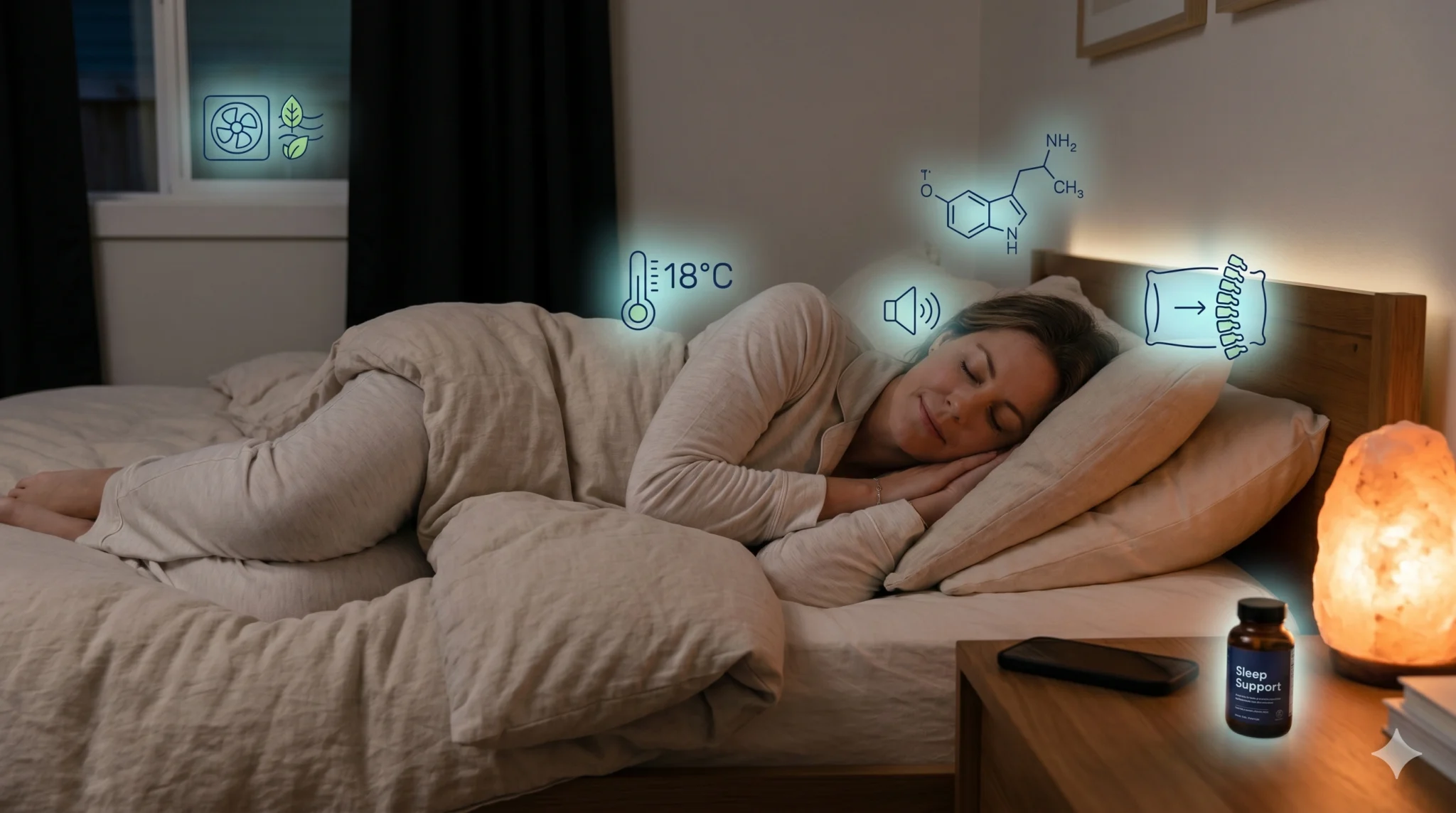
- The Ideal Range: Most sleep experts recommend a bedroom temperature between 16°C and 19°C (60°F – 67°F).
- The “Hot Feet” Paradox: Warming your feet with socks or a warm bath before bed actually helps drop your core temperature by dilating blood vessels in the extremities, allowing heat to escape the core more efficiently.
2. Eliminating Ambient Light Pollution
The pineal gland in your brain is incredibly sensitive to light. Even a small amount of light hitting your skin or eyes can signal your brain to suppress melatonin, the hormone responsible for sleep.
- Blackout Solutions: Use blackout curtains or a high-quality silk eye mask to create “cave-like” darkness.
- The LED Audit: Tape over the tiny “standby” lights on televisions, air conditioners, or chargers. These blue and green LEDs are particularly disruptive to your circadian rhythm.
3. Auditory Conditioning and Soundscapes
Sudden noises (a car honking, a dog barking) trigger a “startle response,” spiking cortisol and pulling you out of REM sleep.
- White vs. Pink Noise: Continuous sound creates a “blanket” that masks environmental spikes. While White Noise covers all frequencies, Pink Noise (like steady rain or wind) has been shown in studies to improve the stability of deep sleep and enhance memory consolidation.
4. Mattress Architecture and Spinal Alignment
You spend a third of your life on your mattress. If it is older than 7–10 years, its structural integrity is likely compromised, leading to micro-strains on your musculoskeletal system.
- Support vs. Comfort: Comfort is the soft “quilt” top; support is the core (springs or high-density foam). Ensure your mattress maintains the natural “S” curve of your spine.
- Pillow Ergonomics: Side sleepers need thicker pillows to bridge the gap between the ear and shoulder, while back sleepers need thinner ones to prevent the chin from tucking toward the chest.
5. Humidity and Respiratory Health
The quality of the air you breathe during those 8 hours determines how refreshed you feel upon waking. Dry air can irritate the nasal passages, leading to snoring and mouth-breathing.
- The Humidity Target: Aim for 40% to 60% humidity. Use a humidifier in winter and a dehumidifier in humid summers.
- Air Purification: A HEPA filter in the bedroom removes allergens like dust mites and pollen that cause nocturnal congestion.
6. The “No-Clock” Rule
One of the primary drivers of insomnia is “sleep effort”—the psychological stress of trying to force sleep.
- The Clock-Watching Trap: When you wake up at 3:00 AM and look at the clock, your brain immediately begins a mathematical calculation of how much sleep you have left. This triggers anxiety.
- The Fix: Turn your clock away from the bed. If you must use an alarm, ensure the display is dimmed or invisible until it goes off.
7. Bedding Materials and Breathability
Synthetic fabrics like polyester trap heat and moisture against the skin, leading to “night sweats.”
- Natural Fibers: Opt for long-staple cotton, linen, or bamboo. These materials are moisture-wicking and allow for better airflow, aiding the body’s natural cooling process.
- The High-Heat Wash: Bedding should be laundered at $60°C$ weekly to eliminate dust mite allergens that can cause “morning brain fog.”
8. Establishing a Ritualized Wind-Down
The transition from “high-beta” brain waves (active thinking) to “alpha” and “theta” waves (relaxation) requires a bridge.
- The 3-2-1 Rule: * 3 hours before bed: Stop eating heavy meals.
- 2 hours before bed: Stop working or high-stress conversations.
- 1 hour before bed: Turn off all screens.
9. Magnesium and Micronutrient Support
Sometimes, environmental changes aren’t enough if your internal biochemistry is lacking. Magnesium is a vital mineral that regulates neurotransmitters and helps quiet the nervous system.
- The “Relaxation Mineral”: Magnesium glycinate is highly bioavailable and less likely to cause digestive upset than other forms.
- Consultation: Always speak with a healthcare professional before adding supplements to your routine, as they can interact with other medications.
10. Consistency: The Circadian Anchor
Your body operates on a 24-hour internal clock. Inconsistency is effectively “social jetlag.”
- The Wake-Up Anchor: The time you wake up is more important than the time you go to sleep for regulating your rhythm. Try to wake up within the same 30-minute window every day, even on weekends.
- Morning Sunlight: Get 10–15 minutes of direct sunlight as soon as possible after waking. This sets a “timer” in your brain that determines when melatonin production will begin 14–16 hours later.
Conclusion: Sleep as an Investment
Optimizing your sleep environment is not an indulgence; it is a high-yield investment in your cognitive longevity and physical health. By treating your bedroom as a specialized recovery lab, you ensure that every hour spent asleep provides the maximum possible benefit.