
Introduction
Most urban professionals spend their days rushing between traffic, office buildings, crowded public spaces, and air-conditioned indoor environments. Life moves fast in modern cities. Deadlines, meetings, long commutes, and screen-heavy routines have become normal.
But while people focus on productivity, careers, and fitness, many overlook one thing they use every second of the day: breathing.
I realized this myself after spending months working long hours in crowded indoor spaces. By evening, I often felt mentally drained, tired, and strangely heavy even when I had eaten well and slept properly. At first, I blamed stress.
Later, I started paying attention to my environment.
The traffic pollution during commutes, dry office air, dust exposure, poor ventilation, and constant indoor sitting were affecting my breathing more than I realized.
And once breathing suffers, energy, focus, sleep, and overall health often suffer too.
That is why respiratory hygiene is becoming increasingly important in 2026, especially for people living and working in urban environments.
Respiratory hygiene is not just about avoiding illness anymore. It is about protecting lung health, improving air quality exposure, reducing harmful particles, and helping the body function more efficiently every single day.
For urban professionals, healthier breathing habits may quietly improve productivity, energy, mental clarity, and long-term wellness.
What Is Respiratory Hygiene?
Respiratory hygiene refers to habits and environmental practices that help protect the respiratory system from harmful pollutants, infections, irritants, and airborne particles.
It includes both personal habits and indoor environmental control.
Respiratory hygiene involves:
- Breathing cleaner air
- Reducing exposure to pollutants
- Improving ventilation
- Managing indoor humidity
- Wearing masks in high-pollution areas
- Maintaining clean indoor spaces
- Supporting lung health through healthy habits
The goal is simple.
Protect the lungs so the body and brain can perform at their best.
Why Urban Professionals Face Higher Respiratory Risks
City environments expose people to respiratory stress almost constantly.
Traffic Pollution
Urban roads release large amounts of:
- Fine dust particles
- Vehicle smoke
- Nitrogen dioxide
- Carbon emissions
- Industrial pollutants
Daily exposure during commuting may irritate the respiratory system over time.
Even short periods spent in heavy traffic can affect breathing comfort.
Poor Indoor Air Quality
Many offices look modern and clean but quietly contain unhealthy air.
Common indoor air problems include:
- Limited ventilation
- Recycled air systems
- Dust accumulation
- VOCs from furniture and cleaning products
- High carbon dioxide levels
Professionals often spend 8 to 12 hours indoors daily, making indoor air quality extremely important.
Dry Air From Air Conditioning
Constant exposure to artificial cooling systems may dry out nasal passages and airways.
Dry respiratory passages become more vulnerable to irritation and discomfort.
This is especially common in corporate office environments.
High Stress and Poor Recovery
Stress affects breathing patterns more than people realize.
Many professionals unconsciously develop shallow breathing during stressful workdays.
This may contribute to:
- Fatigue
- Reduced oxygen intake
- Tension headaches
- Mental exhaustion
Poor sleep and lack of recovery further weaken respiratory resilience.
How Respiratory Health Affects Daily Performance
Most people only notice their breathing when something feels wrong.
But healthy breathing quietly supports nearly every major system in the body.
Energy Levels
The lungs help deliver oxygen throughout the body.
When breathing quality declines, energy production may also decrease.
Poor air exposure and respiratory irritation can contribute to:
- Daytime fatigue
- Low stamina
- Mental sluggishness
- Reduced physical endurance
Clean breathing supports more stable energy throughout the day.
Focus and Mental Clarity
The brain depends heavily on oxygen.
Poor ventilation and polluted environments may reduce concentration and cognitive performance.
Many professionals notice mental fog in crowded offices or poorly ventilated meeting rooms.
Cleaner airflow often improves alertness and thinking clarity.
Sleep Quality
Respiratory comfort strongly affects sleep.
Dry air, pollutants, allergies, and congestion may disrupt nighttime breathing.
Poor sleep eventually impacts:
- Productivity
- Mood
- Immune function
- Decision-making ability
Healthy nighttime breathing supports deeper recovery.
Long-Term Wellness
Respiratory hygiene is not only about short-term comfort.
Long-term exposure to pollution and airborne irritants may gradually affect lung function and overall health.
Protecting respiratory health early may help reduce future complications.
Common Respiratory Irritants in Urban Environments
Many harmful airborne particles are invisible.
That is what makes respiratory hygiene so important.
Fine Dust and PM2.5 Particles
Tiny pollution particles known as PM2.5 are especially concerning because they can travel deep into the lungs.
These particles often come from:
- Vehicle exhaust
- Construction dust
- Industrial pollution
- Smoke
High exposure may increase respiratory irritation and inflammation.
Mold and Indoor Dampness
Poorly maintained buildings sometimes contain hidden mold.
Mold spores can spread through indoor air and affect respiratory comfort.
Common symptoms may include:
- Sneezing
- Congestion
- Headaches
- Throat irritation
VOCs and Chemical Exposure
Volatile Organic Compounds are released from:
- Paints
- Cleaning products
- Carpets
- Furniture
- Air fresheners
Poorly ventilated indoor environments may trap these chemicals indoors.
Smoke Exposure
Smoke from cigarettes, cooking, industrial areas, or traffic can affect respiratory health significantly.
Even occasional exposure may irritate sensitive airways.
The Science Behind Cleaner Breathing
Researchers continue studying how air quality affects respiratory health and overall human performance.
Studies show that poor air quality exposure may contribute to inflammation, breathing discomfort, reduced lung efficiency, and cognitive fatigue.
Environmental health experts emphasize that indoor air quality matters just as much as outdoor pollution exposure.
Some studies also suggest that prolonged exposure to polluted environments may increase oxidative stress inside the body.
Better ventilation and cleaner indoor air often improve:
- Comfort
- Concentration
- Sleep quality
- Workplace productivity
The science is becoming increasingly clear.
Cleaner breathing environments support healthier living.
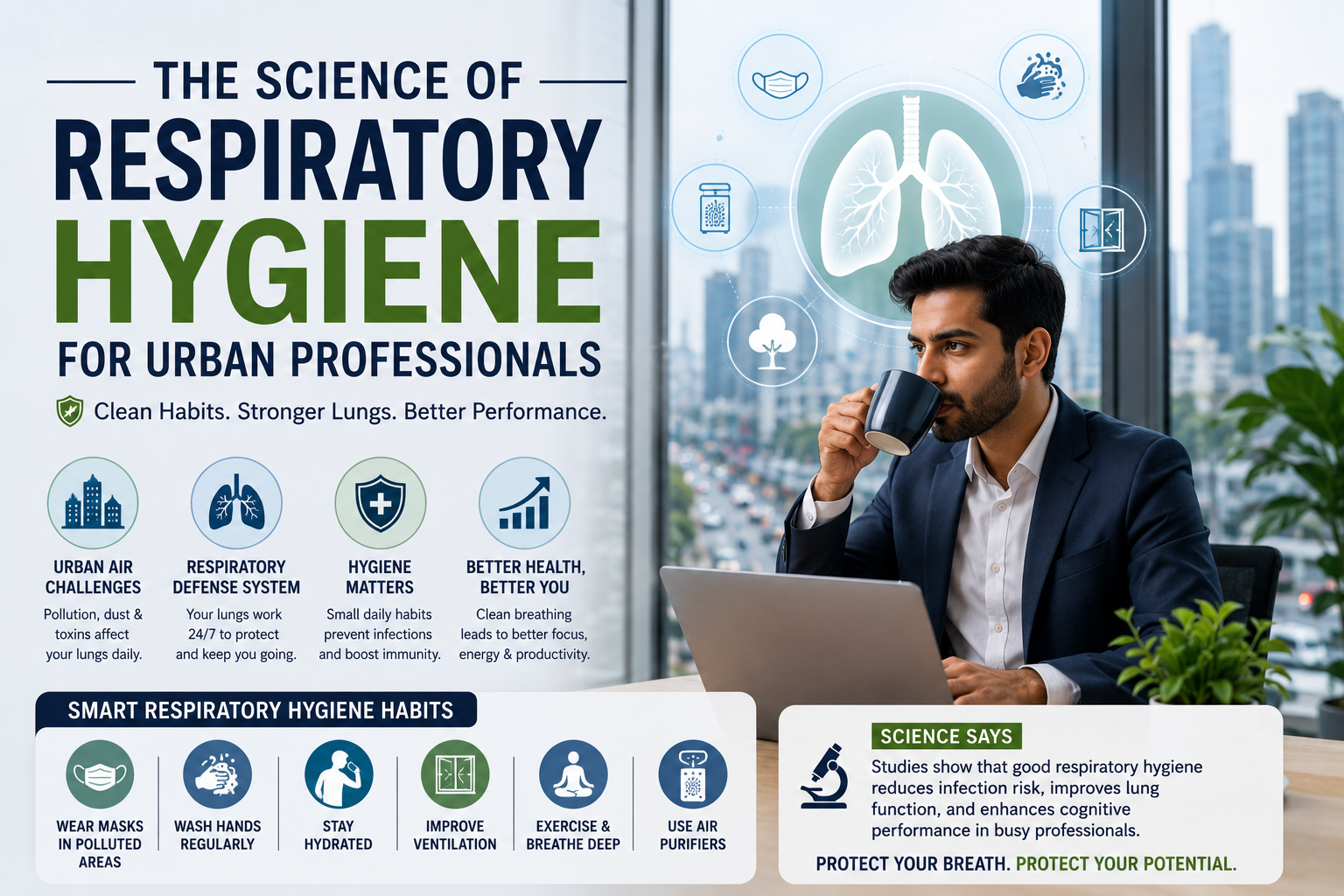
Respiratory Hygiene Habits Urban Professionals Should Follow
The good news is that small lifestyle changes can make a noticeable difference.
Improve Indoor Air Quality
Fresh airflow matters.
Whenever possible:
- Open windows regularly
- Improve ventilation
- Avoid stale indoor air
- Use exhaust systems properly
Cleaner indoor environments reduce pollutant buildup.
Use Air Purifiers
HEPA air purifiers help capture:
- Dust
- Allergens
- Smoke particles
- Fine pollutants
They are especially useful in bedrooms and office spaces.
Stay Hydrated
Hydration supports healthier respiratory passages.
Dry airways are more vulnerable to irritation.
Drinking enough water helps maintain better respiratory comfort.
Wear Masks in High-Pollution Areas
In heavily polluted urban environments, quality masks may reduce inhalation of harmful particles.
This is especially useful during:
- Traffic-heavy commutes
- Construction exposure
- Poor air quality days
Keep Indoor Spaces Clean
Dust buildup affects indoor air quality.
Regular cleaning helps reduce:
- Allergens
- Dust particles
- Mold growth
- Airborne irritants
Focus on carpets, curtains, air vents, and bedding.
Add Indoor Plants Carefully
Some indoor plants may help improve indoor freshness while creating a calming atmosphere.
Popular options include:
- Snake plant
- Areca palm
- Peace lily
Plants alone are not enough to purify indoor air completely, but they can support a healthier environment.
Practice Better Breathing Habits
Many professionals breathe shallowly during stressful workdays.
Simple breathing exercises may help improve respiratory awareness and relaxation.
Deep breathing practices may also help reduce stress levels.
Prioritize Sleep and Recovery
The respiratory system recovers during sleep.
Healthy recovery habits support stronger overall wellness.
Good sleep, cleaner air, and stress management work together.
How Workplaces Are Adapting in 2026
Modern companies are starting to take respiratory wellness more seriously.
Health-focused offices increasingly invest in:
- Better ventilation systems
- Air quality monitoring
- Cleaner workspace design
- Reduced overcrowding
- Wellness-focused architecture
Some offices now track indoor carbon dioxide levels to maintain healthier environments.
This shift reflects a growing understanding that healthy employees often perform better.
Respiratory hygiene is slowly becoming part of workplace wellness culture.
Conclusion
Urban life offers opportunity, convenience, and fast-moving careers.
But modern city environments also expose people to constant respiratory stress.
Traffic pollution, poor indoor air quality, dust, artificial ventilation, and crowded indoor spaces all affect breathing more than most people realize.
That is why respiratory hygiene matters in 2026.
Healthy breathing is not only about avoiding illness.
It supports energy, mental clarity, sleep quality, focus, productivity, and long-term wellness.
The good news is that small improvements can create meaningful results.
Cleaner indoor air, better ventilation, proper hydration, healthier breathing habits, and reduced pollutant exposure can help urban professionals feel healthier both mentally and physically.
Sometimes improving your performance starts with improving the air around you.
And in busy modern cities, learning how to protect your breathing may become one of the smartest long-term health decisions you make.
FAQ
What is respiratory hygiene?
Respiratory hygiene refers to habits and environmental practices that protect the lungs and respiratory system from pollutants and harmful airborne particles.
Why is respiratory hygiene important for urban professionals?
Urban professionals face constant exposure to pollution, indoor air problems, stress, and crowded environments that may affect respiratory health.
Can poor air quality affect productivity?
Yes. Poor air quality may reduce focus, energy, comfort, and mental performance.
Are air purifiers helpful in offices and homes?
HEPA air purifiers may help reduce dust, allergens, smoke particles, and airborne pollutants indoors.
How can I improve respiratory health naturally?
Improve ventilation, stay hydrated, reduce pollution exposure, clean indoor spaces regularly, and maintain healthy sleep habits.