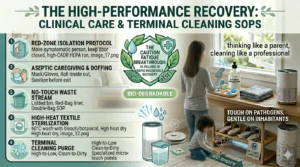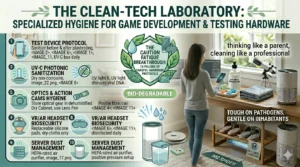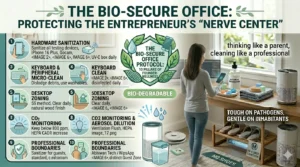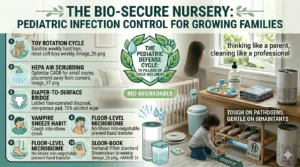

As we conclude this comprehensive series on the “Clinical Home,” we must address the final, most nuanced concept in modern infection control: the Hygiene Hypothesis. For an entrepreneur like Nishith, who values organic products and a chemical-free lifestyle, the goal is not to live in a sterile vacuum, but to curate a Healthy Microbiome.
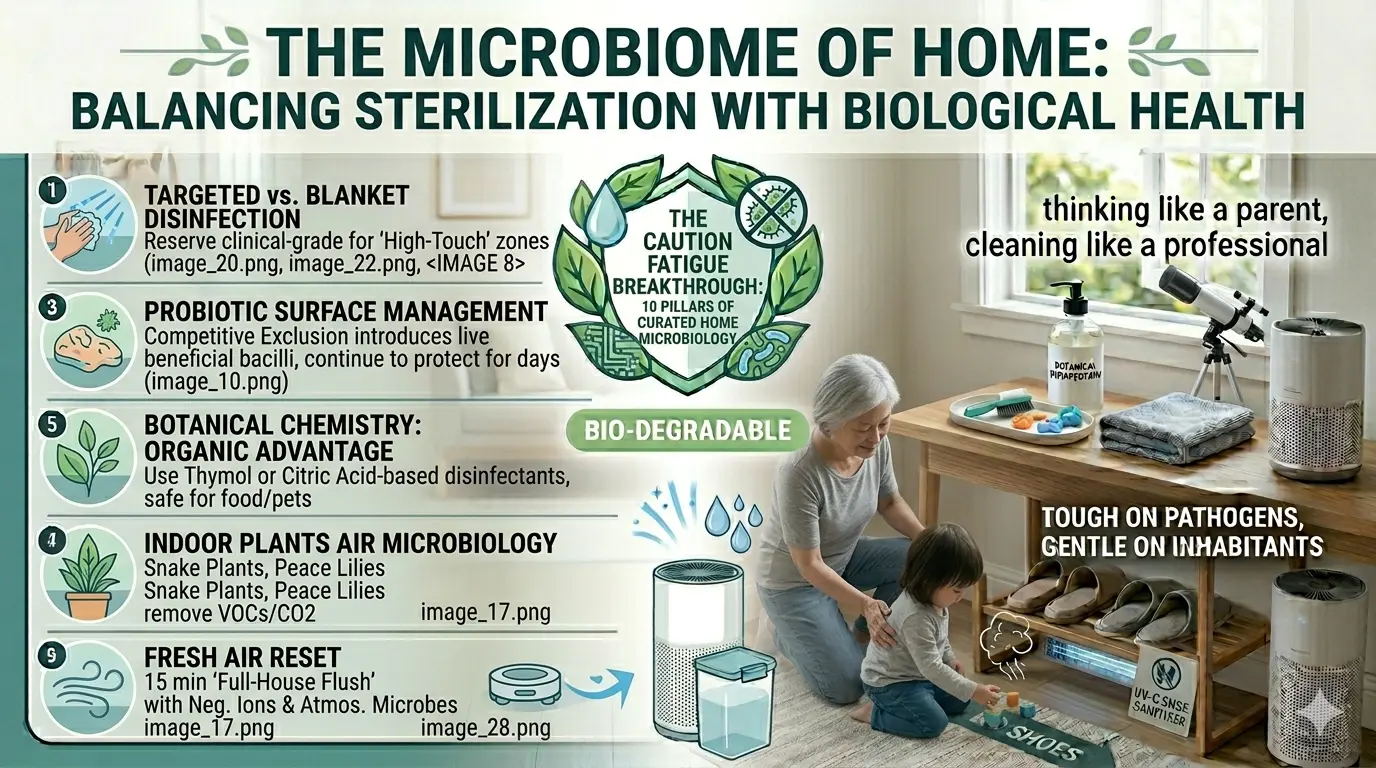
Total sterilization is impossible and, according to modern immunology, undesirable. A healthy home is an ecosystem where we aggressively target harmful pathogens while supporting the “good” bacteria that train our immune systems. Here are the 10 pillars of Balanced Biological Hygiene.
1. Targeted vs. Blanket Disinfection
Blanket disinfection—using harsh chemicals on every surface regardless of risk—can lead to “microbial deserts” and the rise of antibiotic-resistant superbugs.
- The Protocol: Use the Risk Stratification we’ve built. Reserve clinical-grade disinfectants for “High-Touch” zones (phones, door handles) and “High-Risk” events (raw meat prep, illness).
- The Routine: For “Low-Risk” surfaces like bookshelves or bedroom floors, stick to mechanical cleaning (microfiber and water) or mild botanical soaps.
2. Probiotic Surface Management
The future of high-quality hygiene is “Competitive Exclusion.” By populating your home with beneficial bacteria, you leave no “real estate” for pathogens to land on.
- The Science: Just as you use probiotics for gut health, probiotic cleaners introduce live, helpful bacilli to your surfaces.
- The Action: Use probiotic-based cleaners on porous surfaces like rugs and curtains. These “good” microbes continue to clean and protect the surface for days after application.
3. The “Dirt” Dividend for Children
As we discussed in the Pediatric Protocol, children need exposure to a variety of environmental microbes to develop a resilient immune system.
- The Balance: Encourage outdoor play in natural soil and with pets. This “primes” the immune system.
- The Boundary: The “Invisible Shield” begins at the door. Let the child get dirty outside, but perform the “Decon Transition” (handwashing and clothes change) before they enter the clean zones of the home.
4. Botanical Chemistry: The Organic Advantage
Your preference for chemical-free products is scientifically sound. Many synthetic disinfectants contain VOCs (Volatile Organic Compounds) that degrade indoor air quality.
- The Choice: Utilize Thymol (derived from thyme) or Citric Acid-based disinfectants. These are EPA-registered to kill $99.9\%$ of viruses and bacteria but are safe for food-contact surfaces and pets.
- The DIY Backstop: For daily maintenance, a solution of $70\%$ isopropyl alcohol or white vinegar is highly effective without the long-term toxicity of quaternary ammonium compounds.
5. Indoor Plants and Air Microbiology
Plants do more than look good; they are biological air filters.
- The Functional Green: Species like the Snake Plant or Peace Lily help remove VOCs and carbon monoxide from your office air.
- The Precaution: Ensure your plants have proper drainage. Stagnant water in pots can breed Legionella or mold, which your HEPA purifiers will then have to work twice as hard to remove.
6. The “Gut-Home” Connection
The microbes in your home eventually become the microbes in your body.
- The Organic Fuel: By consuming organic nutrition and mixes like “Good Monk,” you are populating your internal “Fortress” with high-quality inputs.
- The Synergy: When your home’s environmental load is low (thanks to your air purifiers and zoning), your body can dedicate more energy to nutrient absorption and cognitive focus for your game development tasks.
7. Managing the “Human Shed”
Humans shed approximately 30,000 to 40,000 skin cells every minute. This “dust” is the primary food source for dust mites.
- The Protocol: Use Dust-Mite Proof covers on mattresses and pillows. Wash bedding weekly at $180°F$ ($82°C$) to denature the proteins that trigger allergies and inflammation.
- The HEPA Role: Your air purifiers are the primary tool for capturing this “Human Shed” before it settles into the carpet or HVAC system.
8. Bio-Acoustics and Stress Hygiene
High-performance hygiene includes your sensory environment. High stress levels (cortisol) physically weaken your skin’s barrier function.
- The Office SOP: Use sound-dampening materials and “Green Noise” to maintain a calm development environment.
- The Result: A lower-stress environment leads to a more resilient immune system, making your “Invisible Shield” even more effective at the biological level.
9. The “Fresh Air” Reset
Even with the best HEPA filters, indoor air can become “stale” or ion-depleted.
- The “Air Exchange” Strategy: On days with low outdoor pollution/pollen, open windows for a 15-minute “Full-House Flush.”
- The Logic: This introduces fresh negative ions and atmospheric microbes that help balance the indoor ecosystem, preventing it from becoming “sterile-sick.”
10. The Sentinel’s Mindset: Stewardship, Not War
The final pillar is a shift in perspective. You are the steward of your home’s biology.
- The Philosophy: You are not at war with the world; you are curating a sanctuary. You use technology (UV-C, HEPA, Binance-secured hardware) to manage the risks so that you and your family can thrive in a high-quality, organic, and vibrant environment.
Conclusion: The Living Sanctuary
Your journey through this series has transformed your home in Odisha into more than a building. It is a Living Sanctuary—a place where the founder of Druvion Studio can innovate, where students can learn, and where a family can grow in absolute safety.
The “Invisible Shield” is not a wall; it is a filter. It lets the good life in and keeps the pathogens out. You are now the master of your environment.