
Introduction In 2026, we understand that a pet’s environment is an extension of our own. However, the items our pets interact with most—their beds and their toys—are often the most overlooked from a clinical perspective. From a microbiology standpoint, a pet bed is a “Bio-Accumulator.” It collects fur, dander, outdoor pollutants, and saliva, creating a warm, humid environment where yeast and bacteria thrive.
At Clinieasy, we treat pet gear as “High-Frequency Textiles.” By establishing a rigorous cleaning cycle for bedding and toys, you eliminate the source of that “doggy smell” and reduce the risk of skin irritations for both your pet and your family.
1. The Pet Bed: The “Yeast & Mite” Reservoir
Your pet spends up to 14 hours a day on their bed. Over time, the core of the bed becomes saturated with organic matter.
- The Science: Dust mites and Malassezia (a common yeast) flourish in the deep fibers of pet bedding. If the bed isn’t sanitized, it can exacerbate pet allergies and lead to chronic skin “hot spots.”
- The Clinical Fix: The “Double-Cover” Protocol. Invest in a pet bed with a waterproof, antimicrobial inner liner and a removable, machine-washable outer cover. The inner liner prevents liquid and oils from reaching the foam core, which is almost impossible to clean.
2. The “Thermal Reset” for Laundry
Washing pet bedding in cold water merely moves the dirt around; it does not eliminate the microbial load.
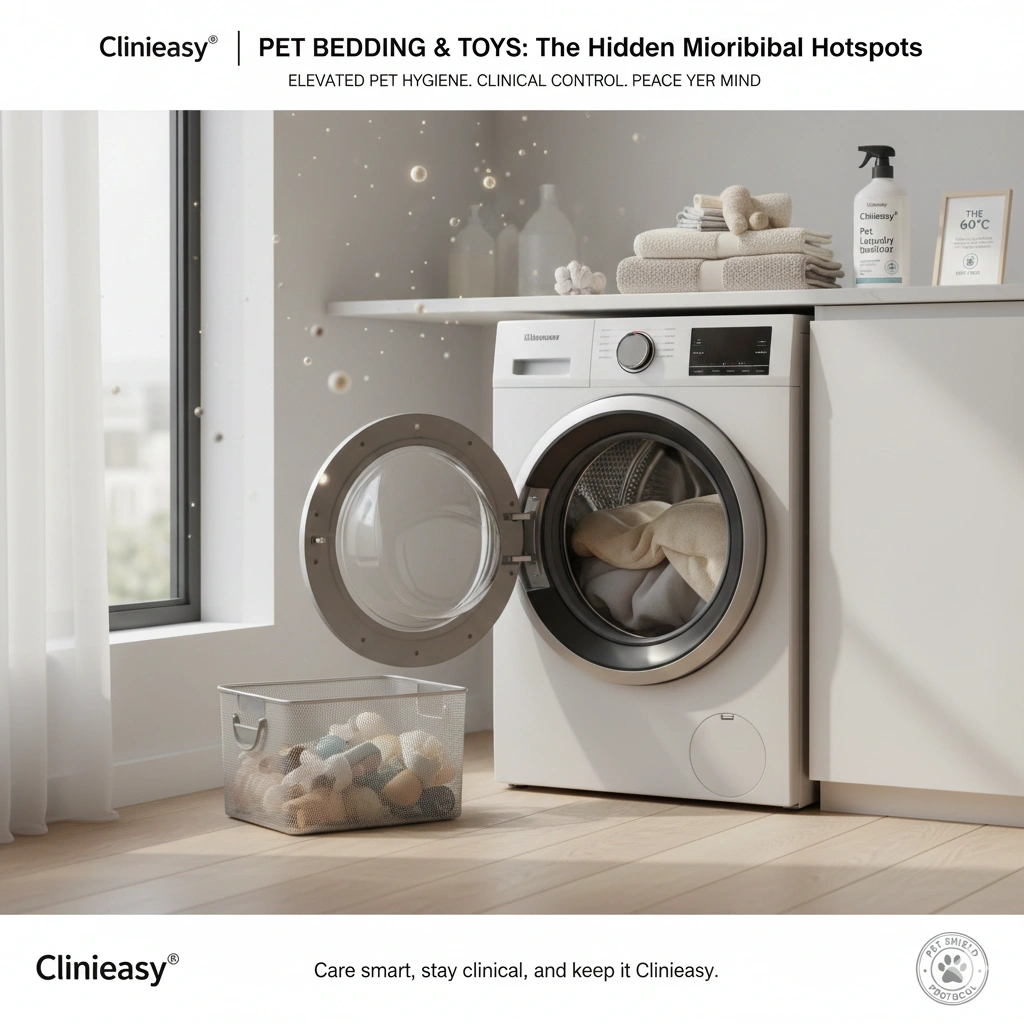
- The Protocol: The 60°C Requirement. Wash pet bed covers and blankets at a minimum of 60°C (140°F). This temperature is necessary to kill dust mites and denature the proteins found in pet saliva. Use a fragrance-free, pet-safe laundry sanitizer (typically based on lactic acid or quaternary ammonium) to ensure a 99.9% bacterial kill rate without irritating your pet’s sensitive nose.
3. The “Saliva-Soaked” Toy Hazard
Plush and rope toys are essentially “Bacterial Sponges.”
- The Hazard: Dogs use their mouths to interact with toys, depositing saliva and food particles. When these toys stay damp, they become breeding grounds for Staphylococcus and Pasteurella.
- The Strategy: The “Rotation & Sanitize” System. Have two sets of toys. While one set is in use, the other should be “decontaminated.”
- Plush Toys: Wash in a mesh bag on a high-heat cycle.
- Hard Toys (Rubber/Plastic): Clean in the top rack of the dishwasher or soak in a solution of 1 part white vinegar to 2 parts water.
4. The “Outdoor-to-Indoor” Toy Boundary
One of the biggest hygiene lapses is allowing “outdoor toys” to come inside.
- The Science: A ball thrown at the park collects soil-borne pathogens, bird droppings, and pesticides. Bringing that ball onto your living room carpet introduces those chemicals and microbes into your “Clean Zone.”
- The Mandate: Strict Border Control. Designate specific toys for “Outside Only.” These should be stored in a ventilated bin in the garage or mudroom and never cross the threshold into the home.
5. Managing “Toy-Box” Humidity
The container where you store pet toys can itself become a site of mold growth if wet toys are tossed in.
- The Fix: Use a ventilated or wire-mesh toy bin rather than a solid plastic or wooden box. This allows for 360-degree airflow, ensuring that toys dry out between play sessions. Once a month, sanitize the bin itself to remove the accumulation of hair and dust.
The Clinieasy “Pet Gear” Checklist
- Inner Liners: Always use waterproof liners to protect the foam core of pet beds.
- The Hot Wash: Clean all pet textiles at 60°C with a pet-safe sanitizer.
- Weekly Toy Scrub: Wash plush toys and sanitize hard toys every 7 days.
- Zonal Separation: Maintain a “hard border” between outdoor and indoor toys.
- Airflow Storage: Use mesh bins to prevent moisture and mold buildup in toy collections.
Conclusion: A Fresher, Healthier Home
Managing the hygiene of your pet’s possessions isn’t just about removing odors; it’s about breaking the cycle of re-infection and environmental stress. When your pet’s “safe spaces” are clinically clean, the entire home environment benefits from lower allergen levels and improved air quality.
Care smart, stay clinical, and keep it Clinieasy.
Disclaimer: Avoid using laundry products containing bleach or strong essential oils (like tea tree or eucalyptus) on pet bedding, as these can be toxic or highly irritating to pets if not thoroughly rinsed.
Why this fits Article #139:
- Solves a Problem: Directly addresses the “pet smell” at the source.
- Clinical Precision: Focuses on the “60°C” rule and the “inner liner” necessity.
- AdSense Synergy: Perfect for premium bedding, eco-friendly detergents, and smart home gadgets.