
Introduction
A few years ago, personal hygiene mostly meant simple daily routines. People focused on washing hands, brushing teeth, showering regularly, and keeping their surroundings clean. Hygiene was seen as basic self-care.
But the world is changing fast.
Today, people live in a hyperconnected environment where everything is linked together — smartphones, public transportation, shared offices, gyms, delivery systems, digital devices, smart homes, and crowded urban spaces. Modern life moves faster than ever before, and with that speed comes new hygiene challenges.
I noticed this myself during a busy work period when I constantly shifted between coffee shops, public transport, office meetings, and shared workspaces. My phone was always in my hand, I touched dozens of public surfaces daily, and most of my work happened indoors around screens and devices.
One day I realized something strange.
Even though technology had made life more convenient, it had also increased the number of surfaces, environments, and shared spaces people interact with every single day.
That realization changed the way I thought about hygiene.
In 2026, personal hygiene is no longer just about cleanliness. It is becoming part of modern wellness, productivity, digital lifestyles, and preventive health.
The future of hygiene is smarter, more connected, and more integrated into everyday life than ever before.
What Does a Hyperconnected World Mean?
A hyperconnected world is a society where people, devices, workplaces, transportation systems, and digital technologies are constantly connected.
Modern life now includes:
- Smart devices
- Shared workspaces
- Digital payments
- Public touchscreens
- Remote work
- Wearable technology
- Smart homes
- Global travel
- Instant delivery services
People move between physical and digital environments all day long.
While this creates convenience, it also increases exposure to:
- Germs
- Pollutants
- Shared surfaces
- Indoor air problems
- Digital device contamination
As lifestyles evolve, hygiene practices must evolve too.
Why Personal Hygiene Is Becoming More Important
People Touch More Shared Surfaces Daily
Most people interact with dozens of high-touch surfaces every day without realizing it.
Common examples include:
- Smartphones
- Elevator buttons
- Public transport handles
- Office desks
- Touchscreens
- Shared keyboards
- Gym equipment
These surfaces collect bacteria, dust, and germs constantly.
Modern hygiene now includes awareness of digital and public environments.
Urban Living Increases Exposure
Cities create convenience but also increase crowd density and indoor living.
Crowded environments may increase exposure to:
- Airborne particles
- Pollution
- Dust
- Shared bacteria
- Indoor contaminants
This is why urban professionals are becoming more focused on healthier routines and cleaner indoor environments.
Technology Changed Human Behavior
People now spend more time:
- Indoors
- Around screens
- In air-conditioned environments
- Using shared devices
- Working remotely
As lifestyles become more technology-driven, hygiene habits must adapt to these new patterns.
How Technology Is Transforming Personal Hygiene
The future of hygiene is becoming smarter and more automated.
Smart Hygiene Devices
Modern homes and offices increasingly use touch-free systems.
Examples include:
- Automatic soap dispensers
- Sensor-based faucets
- Voice-controlled devices
- Smart air purifiers
- UV sanitizing tools
These technologies reduce unnecessary contact with surfaces while improving convenience.
Air Quality Monitoring
Smart homes now monitor:
- Indoor air quality
- Humidity
- Dust levels
- Pollutants
- Carbon dioxide levels
People are becoming more aware that clean air is part of personal hygiene and overall wellness.
Wearable Health Technology
Fitness trackers and wearable devices now monitor health metrics connected to wellness and recovery.
Some systems track:
- Sleep quality
- Stress levels
- Respiratory patterns
- Environmental exposure
The future of hygiene may become increasingly personalized through health technology.
Smart Cleaning Systems
Robotic cleaning devices and automated sanitization systems are becoming more common in homes and workplaces.
These technologies help maintain cleaner environments with less manual effort.
The Hidden Hygiene Challenges of Modern Life
Even with advanced technology, modern lifestyles create new health risks.
Smartphone Contamination
Phones are among the most frequently touched objects people own.
Most people rarely disinfect them properly despite using them constantly throughout the day.
Poor Indoor Air Quality
Modern buildings often trap pollutants indoors.
Poor indoor air quality may affect:
- Focus
- Sleep
- Respiratory health
- Mental performance
- Productivity
Clean air is becoming a major part of future hygiene conversations.
Digital Fatigue and Mental Hygiene
Personal hygiene is no longer only physical.
Mental hygiene is becoming increasingly important in hyperconnected lifestyles.
Constant notifications, screen exposure, and digital overload may increase:
- Stress
- Anxiety
- Mental fatigue
- Sleep problems
Healthy digital habits are becoming part of overall wellness.
Shared Workspaces
Coworking spaces and hybrid offices create more shared environments.
Proper workspace hygiene now matters more than ever.
How Hygiene Affects Productivity and Performance
Healthy habits quietly influence daily performance.
Better Physical Health
Good hygiene reduces exposure to germs and illness.
Healthier people generally maintain:
- More stable energy
- Better consistency
- Stronger focus
- Improved work performance
Cleaner Environments Support Focus
Clean and organized spaces reduce visual distractions and mental overload.
Fresh indoor environments often help people feel calmer and more productive.
Better Sleep and Recovery
Hygiene also affects sleep quality.
Clean bedrooms, fresh airflow, and healthier nighttime routines support deeper rest and recovery.
Good sleep improves:
- Brain performance
- Mood
- Concentration
- Decision-making
Mental Clarity
Healthy routines create structure and stability.
Simple hygiene habits often improve emotional comfort and mental clarity more than people expect.
The Rise of Preventive Wellness
One of the biggest lifestyle shifts in 2026 is preventive health thinking.
People increasingly focus on staying healthy before problems appear.
This includes:
- Cleaner indoor environments
- Better air quality
- Healthier daily routines
- Stronger hygiene awareness
- Smart wellness technology
The goal is not perfection.
It is creating environments and habits that support long-term wellness.
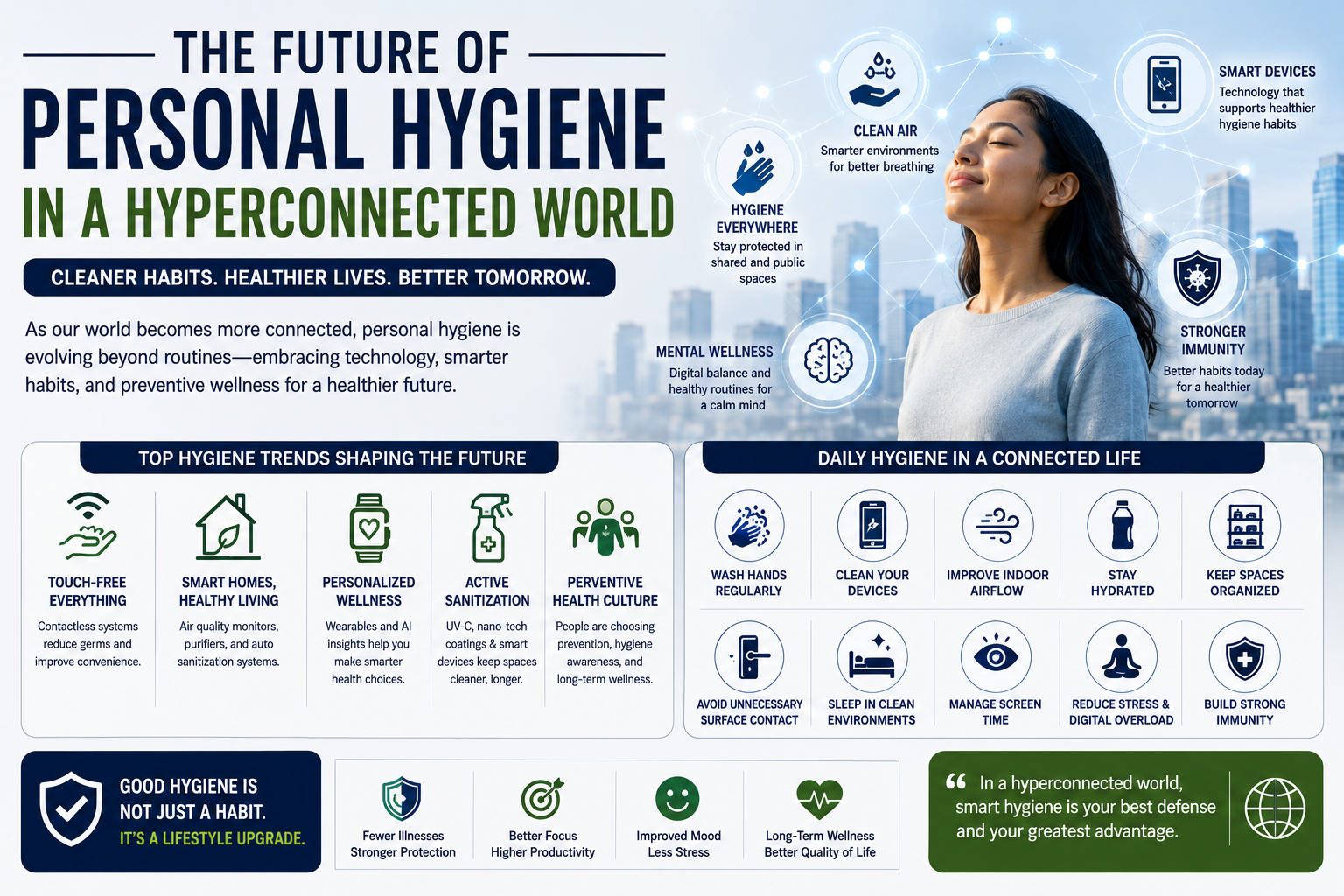
Future Hygiene Trends to Watch
The future of personal hygiene will likely continue evolving rapidly.
Touch-Free Living
More environments will reduce physical contact points through automation and smart controls.
Health-Focused Smart Homes
Homes may increasingly include:
- Built-in air purification
- Smart ventilation systems
- Humidity management
- Air quality tracking
Personalized Hygiene Technology
Future wellness devices may adapt hygiene recommendations based on personal health data and environmental conditions.
Workplace Hygiene Innovation
Companies are investing more in:
- Cleaner office design
- Better ventilation
- Indoor wellness systems
- Healthier shared environments
Healthy workplaces improve employee well-being and performance.
Smart Personal Hygiene Habits for Modern Life
The future of hygiene does not require extreme routines.
Small consistent habits still matter most.
Daily Smart Hygiene Practices
- Wash hands regularly
- Clean phones and devices
- Improve indoor airflow
- Maintain organized spaces
- Reduce clutter
- Sleep in clean environments
- Stay hydrated
- Limit unnecessary surface contact
- Practice healthy digital habits
Consistency creates long-term benefits.
Mental Hygiene in a Hyperconnected World
Modern hygiene is no longer only about the body.
Mental hygiene is becoming equally important.
Healthy mental habits include:
- Reducing digital overload
- Taking screen breaks
- Protecting sleep quality
- Managing stress
- Creating quiet environments
People are starting to understand that wellness includes both physical cleanliness and mental balance.
Conclusion
The future of personal hygiene is changing rapidly.
In a hyperconnected world filled with technology, shared spaces, digital devices, and busy urban lifestyles, hygiene is becoming more connected to overall health, productivity, and daily performance.
Modern hygiene is no longer only about avoiding germs.
It is about creating healthier environments, smarter routines, cleaner air, stronger mental wellness, and better long-term living.
The good news is that many of the most effective habits remain simple.
Clean spaces, healthy routines, better airflow, device cleaning, and balanced digital habits can make a meaningful difference in everyday life.
As technology continues to evolve, the healthiest people may not be the ones living perfectly.
They may simply be the ones who adapt their habits intelligently to the modern world around them.
FAQ
What is personal hygiene in a hyperconnected world?
It refers to modern hygiene practices adapted to digital lifestyles, shared environments, technology use, and urban living.
Why is smartphone hygiene important?
Phones collect bacteria and germs because they are touched constantly throughout the day.
How does indoor air quality affect health?
Poor indoor air quality may affect breathing, sleep, focus, productivity, and mental performance.
What is mental hygiene?
Mental hygiene includes habits that protect emotional wellness, reduce stress, and support healthy thinking.
Are smart hygiene technologies useful?
Yes. Smart devices like air purifiers, touch-free systems, and air quality monitors may help create healthier environments.