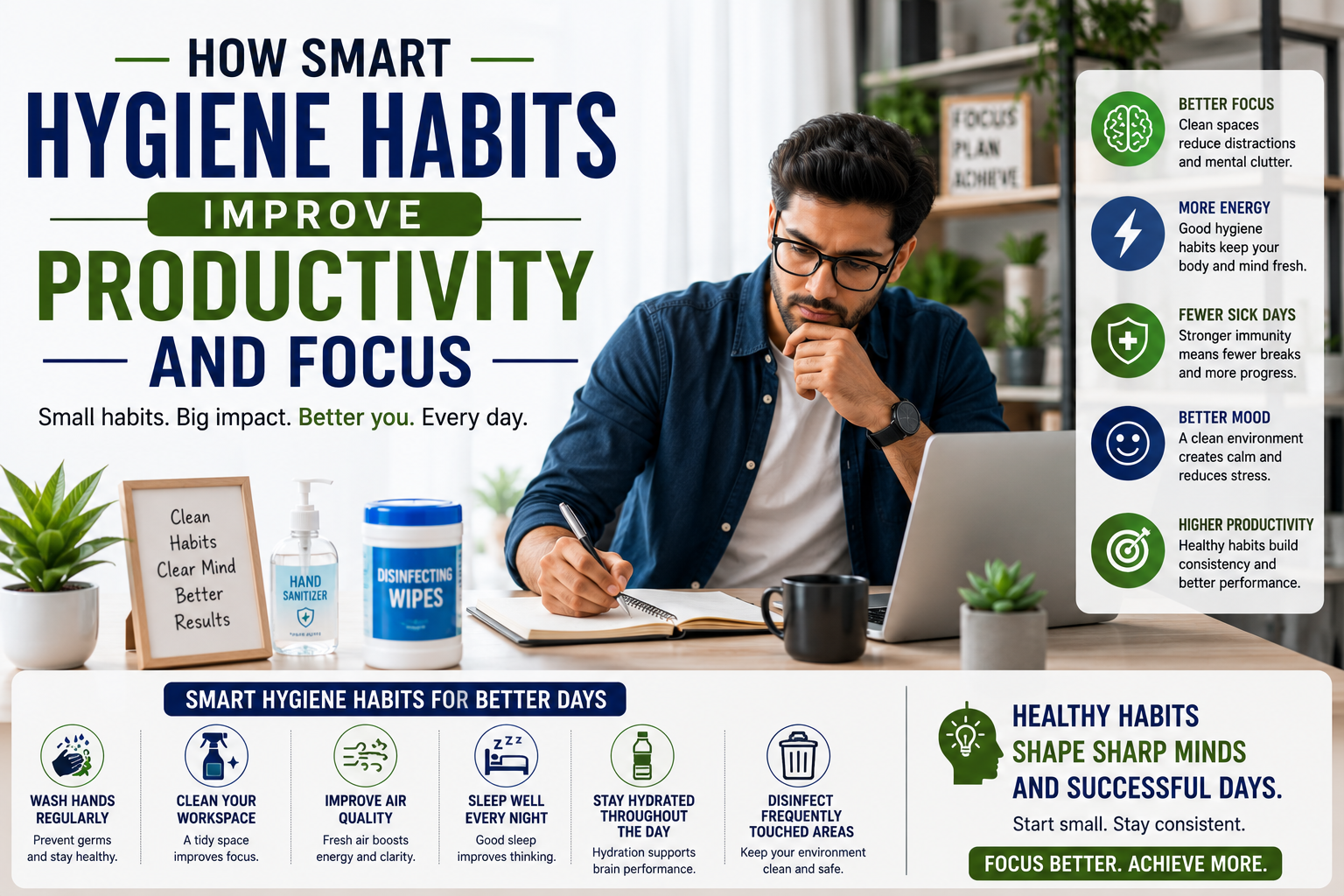

Introduction
Most people think hygiene is only about staying clean or avoiding illness. But in 2026, the conversation around hygiene is changing. People are starting to realize that smart hygiene habits do much more than protect physical health. They also affect productivity, focus, energy, mood, and mental clarity.
I noticed this during a period when my daily routine became messy. My workspace was cluttered, my sleep schedule was inconsistent, and I barely paid attention to small habits like handwashing, room ventilation, or cleaning my desk regularly. Slowly, I started feeling mentally exhausted. Even simple tasks took longer than usual.
At first, I blamed stress and workload.
But once I improved my environment and daily hygiene routines, something surprising happened. My focus became sharper, I felt more energized, and work became easier to manage.
That experience made me realize something important:
Small hygiene habits quietly shape how the brain and body perform every day.
Modern science now supports this idea. Clean environments, healthy routines, and better personal hygiene can reduce stress, improve concentration, support brain health, and create a more productive lifestyle.
For students, remote workers, office professionals, and business owners, smart hygiene is no longer just about cleanliness. It has become part of high-performance living.
What Are Smart Hygiene Habits?
Smart hygiene habits are simple daily practices that improve cleanliness, health, comfort, and overall well-being.
They are not extreme or complicated.
Instead, they focus on creating healthier environments and healthier routines that support both physical and mental performance.
Examples include:
- Washing hands regularly
- Keeping workspaces clean
- Improving indoor air quality
- Maintaining personal cleanliness
- Sleeping in clean environments
- Reducing clutter
- Managing ventilation
- Cleaning frequently touched surfaces
- Staying hydrated
These habits may seem small individually, but together they create a major impact on daily performance.
The Connection Between Hygiene and Brain Performance
The brain performs best in healthy, comfortable environments.
When hygiene is ignored, the body often experiences hidden stress. Dust, clutter, germs, poor air quality, and unhealthy surroundings can quietly affect concentration and mental energy.
Smart hygiene habits help reduce these distractions.
Reduced Mental Overload
Cluttered or dirty spaces can overload the brain visually and mentally.
Messy environments often make people feel:
- Distracted
- Unmotivated
- Mentally tired
- Less organized
Clean environments help the brain process information more calmly and efficiently.
This is one reason many productive people prefer organized workspaces.
Better Air Quality Improves Focus
Indoor air quality directly affects concentration and mental clarity.
Poor ventilation and dust buildup may lead to:
- Brain fog
- Headaches
- Fatigue
- Reduced focus
Fresh airflow and cleaner indoor spaces help improve oxygen flow and comfort levels, supporting better productivity throughout the day.
Lower Stress Levels
Good hygiene habits create a sense of control and stability.
Simple routines like cleaning your desk, organizing your room, or washing your hands regularly may reduce mental stress more than people realize.
A cleaner environment often feels calmer and safer psychologically.
How Smart Hygiene Habits Improve Productivity
Productivity is not only about motivation. Environment and physical well-being matter too.
Fewer Sick Days
One obvious benefit of hygiene is reduced illness.
Regular handwashing, cleaner surfaces, and healthier indoor spaces help reduce exposure to germs and infections.
Healthier people naturally perform better and maintain more consistent routines.
More Energy During Work
Dirty, poorly ventilated environments often feel draining.
By improving hygiene habits, people may experience:
- Better comfort
- Reduced fatigue
- Improved alertness
- More stable energy levels
This becomes especially important for professionals working long hours indoors.
Improved Time Management
Organized environments reduce wasted time.
People often lose focus searching for items in cluttered spaces or dealing with unnecessary distractions.
A clean and organized workspace supports smoother workflows and better concentration.
Better Workplace Performance
Modern companies increasingly understand the importance of workplace hygiene.
Clean offices often improve:
- Employee satisfaction
- Mental comfort
- Productivity
- Team morale
Healthy work environments also create a more professional atmosphere.
Hygiene Habits That Directly Support Focus
Some hygiene habits have a surprisingly strong effect on concentration and cognitive performance.
Cleaning Your Workspace Daily
Dust and clutter create visual noise that distracts the brain.
Taking just a few minutes to clean your desk can improve mental clarity significantly.
Simple habits include:
- Wiping surfaces
- Organizing cables
- Removing unnecessary clutter
- Cleaning keyboards and screens
Washing Hands Regularly
Hand hygiene remains one of the most effective ways to reduce illness transmission.
Healthy routines help maintain consistent energy and productivity levels.
Improving Ventilation
Fresh air matters more than most people realize.
Poor indoor airflow may reduce focus and increase tiredness.
Opening windows or improving ventilation often helps create a fresher, more productive environment.
Keeping Devices Clean
Phones, keyboards, and office equipment collect bacteria and dust constantly.
Regular cleaning improves both hygiene and comfort.
Maintaining Personal Hygiene
Simple habits like bathing regularly, wearing clean clothes, and maintaining oral hygiene affect confidence and mental readiness.
Feeling physically fresh often improves motivation and focus.
The Science Behind Hygiene and Cognitive Performance
Researchers continue studying how environment and hygiene affect brain function and productivity.
Studies show that cleaner environments may improve concentration and reduce mental fatigue.
Environmental psychology research suggests that cluttered spaces increase cognitive overload, making it harder for the brain to focus efficiently.
Scientists also emphasize the importance of indoor air quality. Poor indoor air may affect oxygen flow, comfort, and mental performance.
Sleep researchers have found that clean sleeping environments may improve sleep quality, which directly affects focus and productivity the next day.
In workplaces, companies with better hygiene standards often report improved employee wellness and reduced absenteeism.
The science is becoming increasingly clear:
Healthy environments support healthier thinking.
Smart Hygiene Habits for Remote Workers
Remote work has changed how people think about productivity.
Since many people now work from home, personal environments play a huge role in performance.
Create a Dedicated Clean Workspace
Working from beds or cluttered spaces may reduce mental focus.
A dedicated workspace helps the brain switch into work mode more effectively.
Improve Indoor Air Quality
Use:
- Air purifiers
- Indoor plants
- Open windows
- Proper ventilation
Cleaner air supports better concentration during long work sessions.
Avoid Eating at the Desk Constantly
Food crumbs and spills increase mess and bacteria buildup.
Keeping eating and work areas separate often improves cleanliness and focus.
Clean Frequently Touched Items
Remote workers often use the same devices continuously.
Regularly clean:
- Phones
- Headphones
- Keyboards
- Mouse devices
- Desk surfaces
How Hygiene Affects Mental Health
Hygiene and emotional well-being are more connected than many people realize.
Clean environments often create feelings of:
- Calmness
- Control
- Comfort
- Mental clarity
Meanwhile, dirty or disorganized environments may increase stress and overwhelm.
This is especially important during busy or high-pressure work periods.
Healthy hygiene routines can also support stronger daily discipline and structure.
Small routines help people feel mentally grounded.
Practical Smart Hygiene Tips for Daily Life
The best part about smart hygiene habits is that they do not require expensive tools or major lifestyle changes.
Small improvements can create meaningful results.
Daily Smart Hygiene Checklist
- Open windows for fresh airflow
- Wash hands regularly
- Clean your workspace daily
- Disinfect high-touch surfaces
- Keep rooms organized
- Change bedsheets regularly
- Stay hydrated
- Reduce indoor dust
- Improve sleep hygiene
- Maintain personal cleanliness
Consistency matters more than perfection.
Conclusion
Productivity and focus are not only controlled by motivation or discipline.
The environment around us matters deeply.
Smart hygiene habits help create healthier spaces that support better thinking, stronger energy, improved mood, and sharper concentration.
Clean air, organized environments, healthier routines, and proper personal hygiene all work together to improve daily performance.
The most successful routines are often built on small habits repeated consistently.
And sometimes, the difference between feeling mentally exhausted and feeling productive starts with something surprisingly simple:
A cleaner environment and smarter daily habits.
FAQ
Can hygiene habits really improve productivity?
Yes. Healthy environments and cleaner routines may improve focus, reduce distractions, lower stress, and support better overall performance.
How does indoor air quality affect focus?
Poor indoor air quality may reduce concentration, increase fatigue, and contribute to brain fog.
Why does a clean workspace improve concentration?
Organized spaces reduce visual distractions and help the brain process information more efficiently.
What are the most important hygiene habits for remote workers?
Maintaining clean workspaces, improving ventilation, cleaning devices regularly, and practicing good personal hygiene are highly important.
Can hygiene habits improve mental health?
Yes. Cleaner environments often reduce stress and create a stronger sense of calm and control.