
Introduction In 2026, our pets are cherished family members, but clinically, they are also “Microbial Carriers.” Every interaction—from a sloppy kiss to a shared couch—is a potential “Zoonotic Exchange.” While the benefits of pet ownership for mental and physical health are undeniable, the challenge lies in managing the unique bacterial, viral, and parasitic load they introduce into our homes.
From Salmonella on their raw food to Campylobacter from their feces and Bartonella (Cat Scratch Fever), pets bring a distinct “Wild Microbiome” into our controlled environments. At Clinieasy, we believe you can have a deeply loving relationship with your pet and a clinically clean home.
1. The “Paw Print” Protocol
Your pet’s paws are the primary vector for outdoor pathogens entering your home.
- The Science: Paws track everything from fecal coliforms to pesticide residues and environmental fungi (like ringworm spores) from outside directly onto your floors and furniture.
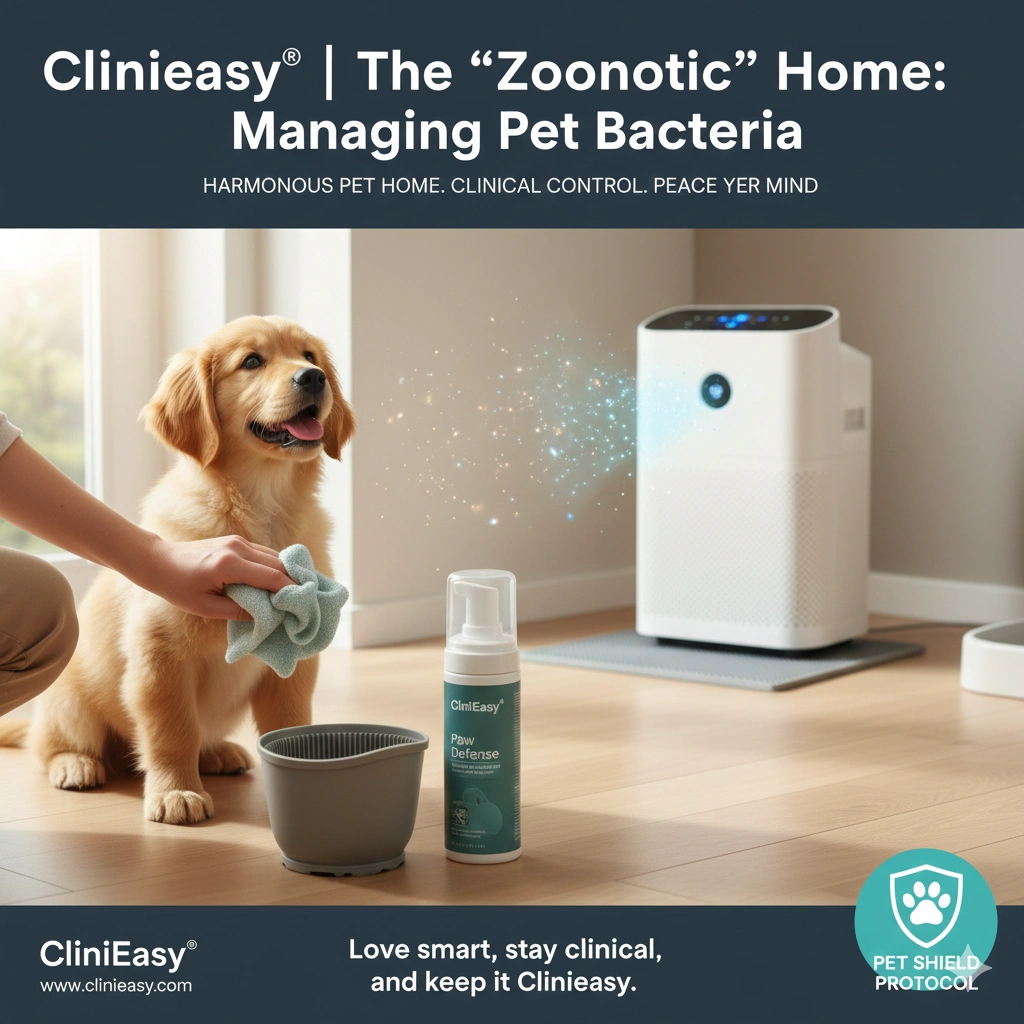
- The Clinical Fix: The “Paw Decon” Station. Establish an entryway ritual. Use a specialized paw cleaner (silicone cup with soft bristles) filled with pet-safe antimicrobial foam, or simply a damp microfiber cloth with a dilute pet-safe disinfectant. Wipe paws thoroughly before your pet enters the main living areas.
2. The “Food & Water Bowl” Biofilm
Pet bowls are often the dirtiest items in the home, surpassing even toilet seats in bacterial load.
- The Hazard: Residual food and saliva create a “Biofilm” on the bowl’s surface. This gooey layer protects bacteria like E. coli, Salmonella, and Staphylococcus, which can then transfer to your pet’s mouth and, indirectly, to your hands.
- The Protocol: Daily Disinfection. Wash food and water bowls daily with hot, soapy water, or run them through the dishwasher. For raw-fed pets, use a separate, dedicated cleaning brush that never touches human dishware, and sanitize the sink after each wash.
3. “Fecal-Oral” Prevention: The Litter Box & Waste Bag
Managing pet waste is paramount for preventing the spread of parasites and bacteria.
- The Science: Cat litter boxes are notorious for Toxoplasma gondii, a parasite particularly dangerous to pregnant women. Dog feces contain Giardia and Salmonella.
- The Strategy: The “Glove & Wash” Mandate. Always wear gloves when cleaning litter boxes or picking up dog waste. Wash hands thoroughly with soap and water for at least 20 seconds afterward. For litter boxes, scoop daily and use a “Clumping” litter to minimize airborne dust. Wash the entire litter box with a dilute bleach solution weekly.
4. “Dander & Allergen” Management
Even if you don’t have a “pet allergy,” pet dander (microscopic skin flakes) can exacerbate general respiratory irritation.
- The Science: Pet dander is tiny and lightweight, remaining suspended in the air for longer than human dander. It also carries pet saliva, which contains allergenic proteins.
- The Fix: The “HEPA Zone.” Place a high-efficiency HEPA air purifier in the rooms your pet frequents most (living room, bedroom). Vacuum frequently with a pet-specific HEPA-filtered vacuum. Bathe your pet regularly with a hypoallergenic, antimicrobial shampoo to reduce shedding and dander.
5. “Kissing Zone” Protocol
For many, sharing kisses with a pet is an act of love. From a clinical perspective, it’s a direct microbial transfer.
- The Hazard: Pet mouths contain a diverse microbiome, including species like Pasteurella and Capnocytophaga canimorsus, which can cause severe infections in immunocompromised individuals.
- The Mandate: The “Avoid Facial Mucosa” Rule. Avoid allowing pets to lick your mouth, nose, or any open wounds. Encourage “forehead kisses” or hand licks instead, followed by hand washing.
The Clinieasy “Pet Shield” Checklist
- Paw Decon: Use an entryway station to clean paws before pets enter the home.
- Daily Bowls: Disinfect food and water bowls every single day.
- Glove Protocol: Always wear gloves for waste management, followed by hand washing.
- HEPA Air: Use air purifiers and pet-specific vacuums to manage dander.
- No Facial Licks: Limit pet kisses to hands, not mucous membranes.
Conclusion: Love Without Limits, Hygiene Without Compromise
Our pets are family, and their well-being is intertwined with ours. By adopting a clinical approach to pet hygiene, you protect both your beloved animal and every human member of your household from preventable zoonotic illnesses.
Love smart, stay clinical, and keep it Clinieasy.
Disclaimer: If you or your pet develop recurring skin rashes, gastrointestinal issues, or open wounds that become infected, consult a veterinarian and a medical doctor simultaneously, as some infections can be passed back and forth (e.g., Ringworm).
Why this fits Article #138:
- High Emotional Value: Pets are a sensitive topic, framed with care.
- Practical & Specific: “Paw Decon Station” and “Glove Protocol” are actionable.
- AdSense Synergy: Perfect for advanced pet products and home cleaning solutions.