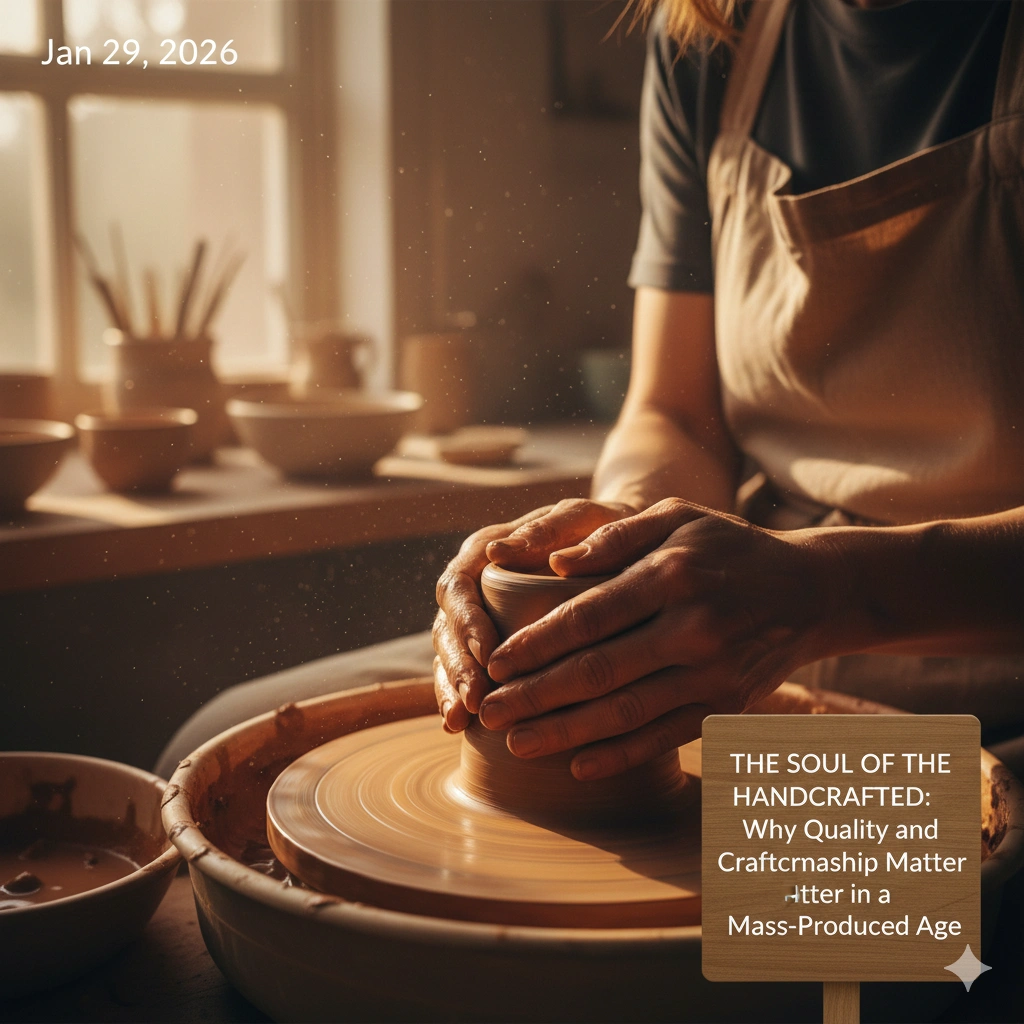

In an era of instant gratification and disposable goods, there is a quiet but powerful movement returning to the slow, the deliberate, and the durable. “The Soul of the Handcrafted” explores why we are increasingly drawn to objects and experiences that bear the mark of human hands. This article isn’t just about woodworking or pottery; it’s about the “artisan’s philosophy”—a commitment to quality, patience, and the belief that the process is just as important as the final product.
The Human Trace
When you hold a handcrafted object, you aren’t just holding a tool or a decoration; you are holding a piece of someone’s time, focus, and expertise. In a world of sterile, machine-perfect items, the subtle “imperfections” of a handmade bowl or a hand-sewn garment are what make it truly perfect. They provide a “human trace” that connects the maker to the user.
Three Pillars of the Artisan Mindset:
- The Virtue of “Slow Work”:
- In our productivity-obsessed culture, the artisan chooses to go slow. They understand that mastery cannot be rushed and that some results are only possible through repetitive, focused effort. Embracing “slow work” in any field allows for a level of detail and care that speed inherently destroys.
- Material Intimacy:
- An artisan deeply understands their medium—the grain of the wood, the temper of the steel, or the weight of the paper. This “material intimacy” fosters a sense of respect for the natural world and the resources we use, leading to more sustainable and thoughtful creation.
- Resilience Through Repair:
- Artisanal goods are built to last, but they are also built to be repaired. This contrasts with the “planned obsolescence” of modern manufacturing. Learning to maintain and mend what we own is a radical act of sustainability and a way to deepen our bond with the objects in our lives.
Crafting a Meaningful Life
You don’t have to be a professional maker to be an artisan. By applying the artisan’s focus and dedication to your daily tasks—whether it’s writing code, preparing a meal, or gardening—you infuse your life with a sense of pride and purpose that no mass-produced experience can replicate.
What’s Coming Next…
In our next installment, “The Apprenticeship of the Mind,” we’ll explore how to cultivate new skills with the patience and humility of a traditional apprentice.