
Introduction In 2026, our desire for collective experiences—music festivals, sporting events, and massive conventions—is stronger than ever. However, from a clinical perspective, these events represent a “Pathogen Pulse.” When tens of thousands of people from different geographic regions congregate in a confined space, the “Viral Load” of the environment spikes.
Between shared surfaces, aerosolized respiratory droplets, and the “Festie-Flu” that often follows, large events require a specialized hygiene strategy. At Clinieasy, we don’t want you to skip the show; we want you to be the one who doesn’t get sick afterward.
1. The “Aerosolized Crowd” Reality
At a concert or stadium, you are often standing in a “Cloud of High-Exhalation.”
- The Science: Intense cheering, singing, and shouting increase the volume of respiratory droplets expelled into the air by up to 10 times compared to normal breathing. In outdoor settings, wind helps, but in indoor arenas, the air can become saturated.
- The Clinical Fix: Stay on the “Windward” side of a crowd if outdoors. If indoors, try to position yourself near the perimeter rather than the center of the “mosh pit” or the densest part of the floor. The Air Exchange Rate (ACH) is significantly higher near aisles and exits.
2. The “Hydration Pack” Hygiene
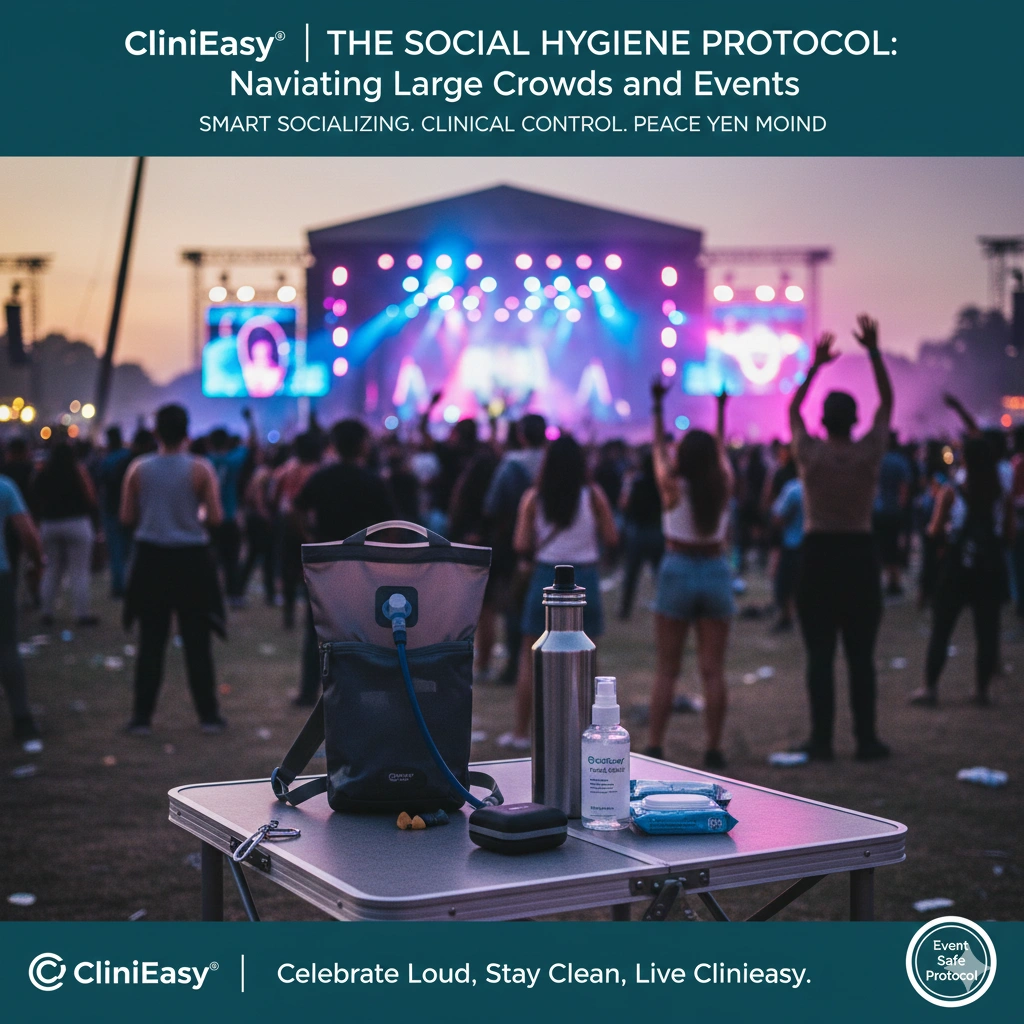
For festivals, the hydration pack (CamelBak style) is essential, but it is also a major hygiene risk.
- The Hazard: “Backwash Contamination.” The bite valve is exposed to the dusty environment and your own saliva, while the warm reservoir against your back becomes a greenhouse for bacteria.
- The Protocol: Use a bite-valve cover to keep environmental dust and other people’s splashes off the mouthpiece. Every night after the event, rinse the reservoir with a tablet of effervescent bottle cleaner. Never share your mouthpiece—this is the fastest way to transmit Streptococcus or Meningitis.
3. Shared Surface Strategy: Concessions & Railings
Stadium railings and concession counters are “high-perseveration” touchpoints.
- The Strategy: Avoid the “Palm-Grip.” If you need to steady yourself on a railing, use your forearm or a closed fist—surfaces that are less likely to come into contact with your face.
- The Food Rule: Never eat “finger foods” (fries, nachos) at a stadium without first using a high-alcohol hand sanitizer. In 2026, we recommend the “Wrapper Shield”: handle your food only through its packaging or a clean napkin.
4. The “Ear-Health” Connection
Hygiene isn’t just about germs; it’s about protecting your sensory “barriers.”
- The Science: High-decibel environments cause physical trauma to the ear’s internal structures, which can lead to inflammation. This inflammation makes the ear canal more susceptible to fungal infections (Otomycosis).
- The Fix: Wear high-fidelity earplugs. In 2026, these are sleek and actually improve the sound quality. Clean them with an alcohol wipe before and after the event to ensure you aren’t inserting stadium dust directly into your ear canal.
5. The “Post-Event Decon” Ritual
The “Festival Flu” is often caused by the sheer volume of environmental stressors hitting your body at once.
- The Protocol: 1. The Nasal Rinse: Upon returning home, use a saline nasal spray or Neti-pot to flush out the dust and aerosolized particles settled in your sinuses. 2. The Clothing Quarantine: Your “Event Clothes” are covered in the microbiome of 50,000 strangers. Bag them immediately and wash them at 60°C. 3. Immune Support: Focus on Sleep and Zinc for the 48 hours following the event to support the immune system while it processes the high pathogen exposure.
The Clinieasy “Event Shield” Checklist
- Aisle Positioning: Stand near aisles for better air circulation in indoor venues.
- Valve Covers: Keep your hydration pack mouthpiece covered and sanitized.
- The Wrapper Shield: Never touch food directly with “stadium hands.”
- Sanitize Earplugs: Clean your hearing protection before and after use.
- Sinus Flush: Perform a saline rinse the moment you get home from a crowd.
Conclusion: Celebrate Without the Consequences
Life’s best moments happen in crowds, but they shouldn’t be followed by a week of illness. By maintaining a clinical boundary—managing your air, your touchpoints, and your post-event recovery—you can enjoy the energy of the crowd with none of the biological debt.
Celebrate loud, stay clean, and keep it Clinieasy.
Disclaimer: If you develop a fever or persistent cough within 3-5 days of a large event, monitor your symptoms closely and consider a rapid test for common respiratory viruses to prevent further spread to your household.
Why this fits Article #110:
- High Engagement: Connects to the massive “Experience Economy.”
- Proactive Advice: Shifts the focus from “germaphobia” to “tactical enjoyment.”