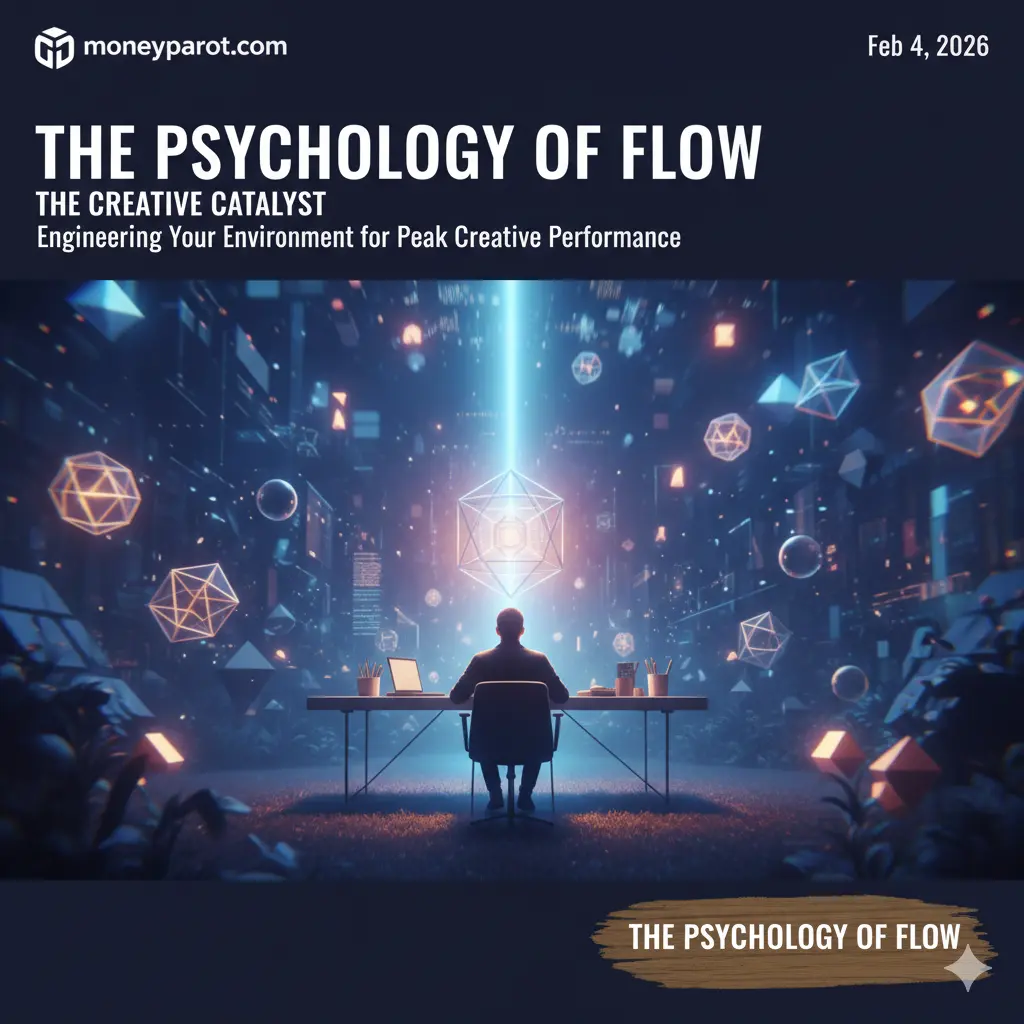

In both game development and high-stakes content creation, there is a mental state known as “Flow”—a period of deep immersion where time seems to disappear, and your productivity skyrockets. Whether you are balancing the game mechanics of Battle Lines or mapping out a complex SEO cluster for moneyparot.com, reaching this state is the difference between struggling and succeeding. “The Psychology of Flow” argues that inspiration isn’t something you wait for; it is something you engineer through environmental design and disciplined habits.
The Anatomy of a High-Output Zone
Flow doesn’t happen by accident. It requires a specific set of conditions: a balance between the challenge of the task and your current skill level, a lack of distractions, and clear, immediate goals. If a task is too easy, you get bored; if it’s too hard, you get anxious. The “Sweet Spot” is where the most valuable digital assets are born. By treating your workspace and your schedule as “sacred geometry,” you can trigger this state on demand.
Three Triggers for a Creative Catalyst:
- The Ritual of Entry:
- Your brain needs a signal that it’s time to move from “admin mode” into “creative mode.” This could be as simple as a specific playlist, a fresh glass of your morning banana shake, or even a five-minute visualization of your project’s end goal. By repeating this ritual, you create a psychological “shortcut” to deep focus.
- The Single-Tasking Fortress:
- In the digital age, multitasking is the enemy of Flow. To reach peak performance, you must build a “fortress” around your primary task. Close the HDFC banking tabs, silence the game dev discord, and ignore the AdSense notifications. When you give 100% of your attention to one problem, you solve it with 400% more efficiency.
- The “Gamified” Milestone:
- High-level creators stay motivated by breaking massive projects into “micro-wins.” Treat your work like your game levels. Instead of “Writing a 1000-word article,” your goal is “Completing the H2 section.” Each micro-win provides a small hit of dopamine that keeps the momentum of Flow moving forward.
Sustaining the Spark
True creativity is a marathon, not a sprint. By understanding the psychology behind your focus, you ensure that your “Creative Catalyst” remains active even when the initial excitement of a new project wears off. You aren’t just a developer or a writer; you are a mental athlete, and your environment is your training ground.
What’s Coming Next…
In our next installment, “The Collaborative Edge,” we’ll discuss how to maintain your creative vision while managing the “developer-client” dynamic to get the best possible results for your budget.