Advertisement
The dream of working from a beach in Bali or a cafe in Lisbon has become a reality for millions. But the rise of the digital nomad lifestyle brings with it unique ethical considerations. "The Ethics of the Digital Nomad" explores how to leverage the freedom of remote work while remaining connected to local communities, minimizing negative impacts, and fostering genuine cultural exchange rather than creating a transient, exploitative presence. Beyond the Instagram Filter: Realities of Remote Work The glossy images of laptops on hammocks often hide a complex reality. Digital nomads can inadvertently drive up local living costs, create cultural friction, and remain isolated in expat bubbles. Ethical nomading requires conscious effort to integrate responsibly. Three Principles for Ethical Digital Nomading: "Local First" Economic Integration: Beyond simply living in a place, make an active effort to support the local economy. Patronize local small businesses, learn basic phrases of the local language, and seek out local service providers rather than always relying on international chains or expat-run businesses. Mindful Consumption and Footprint: Be acutely aware of your environmental and resource consumption. This means choosing accommodations with sustainable practices, minimizing waste, conserving water and energy, and understanding the local recycling and waste management systems. Your presence should not strain local resources. Community Engagement (Beyond the Co-Working Space): While co-working spaces offer community among nomads, make an effort to connect with local residents. Volunteer, participate in local events, join a local sports club, or learn a skill from a local teacher. True immersion builds bridges, not barriers. Redefining "Home" Ethical digital nomading isn't about escaping your roots, but about expanding them. It’s about understanding that every place you choose to work from becomes, in some small way, a temporary home, and with that comes a responsibility to treat it as such. What’s Coming Next... In our next installment, "The Art of Analog Disconnection," we'll explore the deliberate act of turning off devices to reconnect with the world and ourselves.
  • Personal Hygiene
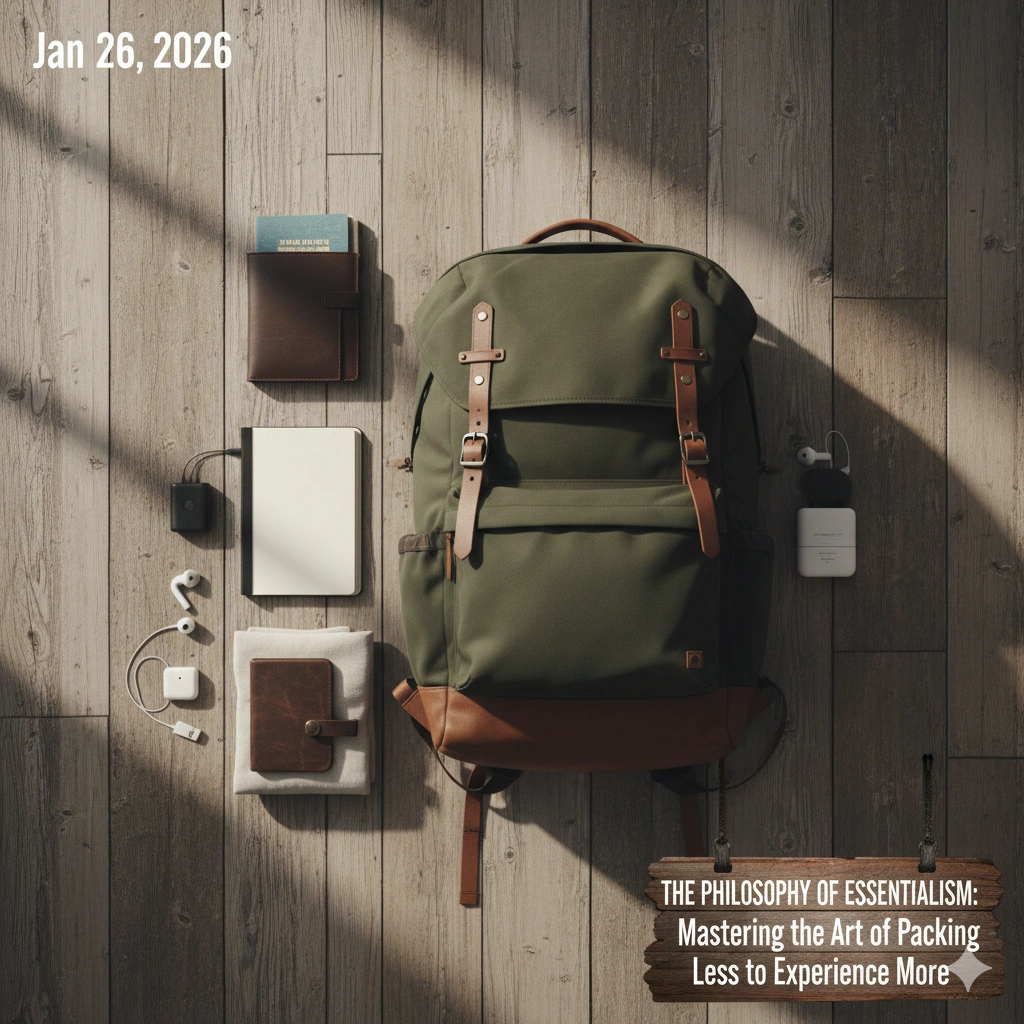
  • The Philosophy of Essentialism

    Every traveler has felt the weight of an overpacked suitcase—not just the physical strain, but the mental clutter of too many choices. “The Philosophy of Essentialism” isn’t just about fitting everything into a carry-on; it’s a mindset that prioritizes freedom, agility, and presence. By stripping away the “just in case” items, we make room for the unexpected.

    The Weight of “What If”

    We often pack for our anxieties rather than our adventures. We carry extra clothes, gadgets, and toiletries because we fear being unprepared. However, the most resilient travelers know that the best tool you can carry is your own resourcefulness.

    Three Pillars of the Essentialist Toolkit:

    1. The Versatile Wardrobe:
      • Instead of packing outfits, pack a “system.” Every piece of clothing should serve at least two purposes and coordinate with everything else. Natural fibers like merino wool or linen are the explorer’s secret weapon—they regulate temperature, resist odors, and dry quickly.
    2. Digital Minimalism:
      • Your phone is a powerful tool, but it can also be a barrier. Audit your travel apps before you leave. Keep the essentials for navigation and communication, but remove the distractions that pull you back into your life at home. A minimalist home screen leads to a more focused mind.
    3. The “One In, One Out” Rule:
      • To prevent physical and mental clutter during a journey, adopt a policy of replacement. If you buy a beautiful handcrafted textile, consider gifting a piece of clothing you no longer need. This keeps your load light and ensures that everything you carry has a purpose.

    Light Body, Open Mind

    When you aren’t burdened by heavy luggage or a cluttered itinerary, you move through the world with a different energy. You are more likely to take the crowded local bus, walk the extra mile to a hidden viewpoint, and say “yes” to a spontaneous invitation.

    What’s Coming Next…

    In our next installment, “The Ethics of the Digital Nomad,” we’ll explore how to work from anywhere without losing our connection to the local community or our own well-being.


    Leave a Reply

    Your email address will not be published. Required fields are marked *

    2 mins