
In 2026, we view our pets as integral members of the family. However, from a clinical perspective, a pet is a “Mobile Environmental Vector.” When a dog walks in the park or a cat uses a litter box, they collect thousands of microbes that do not naturally belong in a human indoor environment.
The goal of a Clinical Pet Protocol isn’t to create a sterile environment—that’s impossible and unfair to the animal. Instead, it is about managing the “Zoonotic Bridge”—the points where pet biology and human biology intersect, such as the kitchen, the bed, and the air we breathe. At Clinieasy, we help you maintain the bond without the bacteria.
1. The “Biofilm” Bowl: A Hidden Reservoir
The pet food and water bowl is statistically one of the top five most contaminated items in the home, often ranking higher than a toilet seat.
- The Science: Saliva, leftover food bits, and stagnant water create a thick Biofilm. This slime protects pathogens like Serratia marcescens (the pink mold) and Salmonella.
- The Clinical Fix: Use Stainless Steel or Ceramic bowls; plastic develops micro-scratches that harbor bacteria. Most importantly, pet bowls must be washed with hot soapy water ($60°C+)$ daily. A quick rinse is not a sanitization protocol.
2. The “Entryway Decon”: Paw Hygiene
Your dog’s paws are the primary source of “Urban Grime” entering your home.
- The Hazard: Soil-borne parasites (hookworms), fecal matter from other animals, and lawn chemicals are tracked directly onto your carpets and furniture.
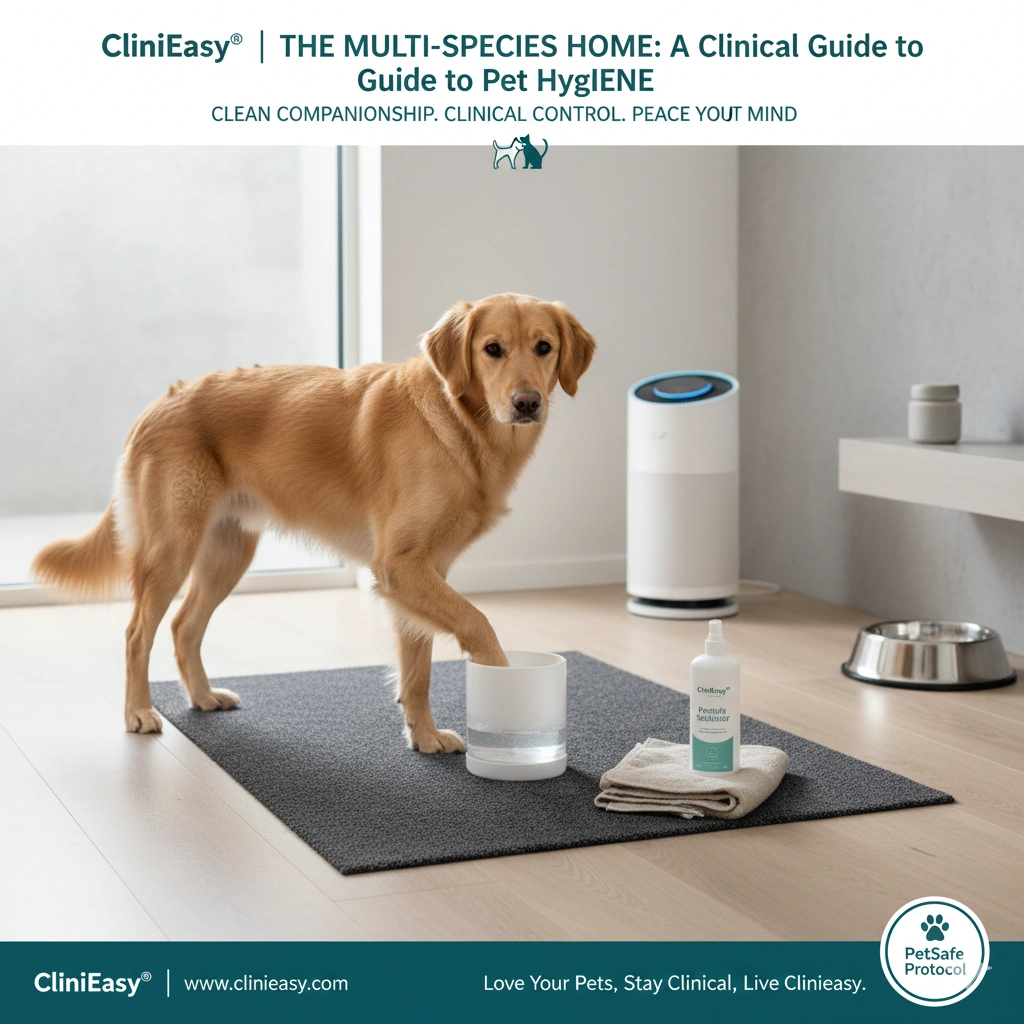
- The Protocol: Establish an Entryway Station. Use a portable paw cleaner or specialized pet-safe antiseptic wipes for every “re-entry.” If your pet sleeps in your bed, this protocol is a non-negotiable clinical requirement.
3. The “Litter-Box Air” Quality
For cat owners, the litter box is a localized source of dust, ammonia, and potential parasites like Toxoplasma gondii.
- The Science: When a cat scratches in the litter, it aerosolizes fine particulates and dried fecal matter.
- The Strategy: Use a HEPA-grade air purifier within 3 feet of the litter box. Opt for low-dust, fragrance-free litters. In 2026, Self-Cleaning Litter Boxes are recommended because they remove waste into a sealed compartment immediately, reducing the “exposure window” for the household.
4. Bedding and the “Dander Load”
Pet bedding is a concentrated source of dander and “Outdoor Allergens” that the pet has collected in their fur.
- The Hazard: Dust mites thrive in the warmth of pet beds, and the accumulated dander can trigger respiratory inflammation in humans even if they aren’t “allergic” to pets.
- The Fix: Use pet beds with removable, machine-washable covers. Launder these weekly at 60°C to kill mites and denature allergens. If your pet shares your bed, use a dedicated “Pet Throw” on top of your duvet that can be washed more frequently than your heavy bedding.
5. The “Kitchen Boundary”
The most important clinical rule for a multi-species home is the Spatial Boundary.
- The Protocol: Keep pets off kitchen counters. Period. A cat’s paws, having just been in a litter box, should never touch the surface where you prepare food. Use “Positive Reinforcement” or physical barriers to ensure the kitchen remains a Human-Only Hygiene Zone.
The Clinieasy “Pet Shield” Checklist
- Daily Bowl Decon: Wash food and water bowls in the dishwasher or with 60°C water daily.
- Paw Wipes: Sanitize paws at the door to prevent “Urban Tracking.”
- HEPA Near Litter: Use air filtration to catch aerosolized litter dust.
- Weekly Bedding Wash: Launder all pet fabrics at 60°C to manage the dander load.
- Counter Lockdown: Maintain a strict “No Paws” policy for kitchen surfaces.
Conclusion: Harmony Through Hygiene
The joy of pet ownership shouldn’t be compromised by hygiene concerns. By establishing a clinical routine—focusing on the “Entryway” and “Kitchen” boundaries—you protect both your family and your pets. You aren’t just cleaning; you are ensuring a healthy, long-term relationship with your companions.
Love your pets, stay clinical, and keep it Clinieasy.
Disclaimer: If your pet shows signs of persistent itching, hair loss, or digestive distress, consult a veterinarian. Zoonotic transfer is most common when the animal’s own health is compromised.
Why this fits Article #115:
- High Emotional Engagement: Pet owners are a dedicated, high-spend demographic.
- Niche Authority: Explains “Zoonotic Bridges” and “Biofilm” in bowls.
- AdSense Synergy: Perfect for high-margin pet tech, air purifiers, and cleaning products.