Advertisement
In an age of GPS, real-time tracking, and meticulously planned itineraries, the act of "getting lost" has become a lost art. We often view a wrong turn as a mistake or a waste of time. However, some of the most profound discoveries in travel—and in life—happen when we step off the curated path. "The Art of Getting Lost" is about trading the safety of a plan for the magic of serendipity. The Beauty of the Unplanned When you stop following a blue dot on a screen, your senses sharpen. You begin to notice the smell of a hidden bakery, the intricate carvings on a local doorway, or the sound of children playing in a courtyard. You move from being a "consumer of destinations" to an "explorer of moments." Three Reasons to Wander Without a Destination: Breaking the "Efficiency" Trap: Modern life demands that we take the shortest route. Travel gives us permission to take the long way. By intentionally wandering, you break the cycle of constant "doing" and enter a state of "being," which is where creativity and reflection flourish. The Serendipity Factor: A map can show you the famous cathedral, but it can’t show you the local artisan who will invite you in for tea, or the secret viewpoint that isn't on any blog. These "happy accidents" become the stories you tell for the rest of your life. Building Intuitive Confidence: There is a unique power in realizing that even if you are lost, you are okay. Navigating your way back using landmarks, intuition, and the help of strangers builds a deep, grounded confidence that no guidebook can provide. The "Planned" Wander You don't have to be reckless to get lost. Set aside a "day of no plans." Pick a neighborhood, leave the phone in your bag, and let your curiosity be your guide. Follow the colors, the sounds, and the interesting alleyways. You might just find exactly what you didn't know you were looking for. What’s Coming Next... In our final installment, "The Journey Home," we’ll explore the challenge of integration—how to bring the lessons of the road back into your "normal" life without losing the traveler's spirit.
  • Personal Hygiene
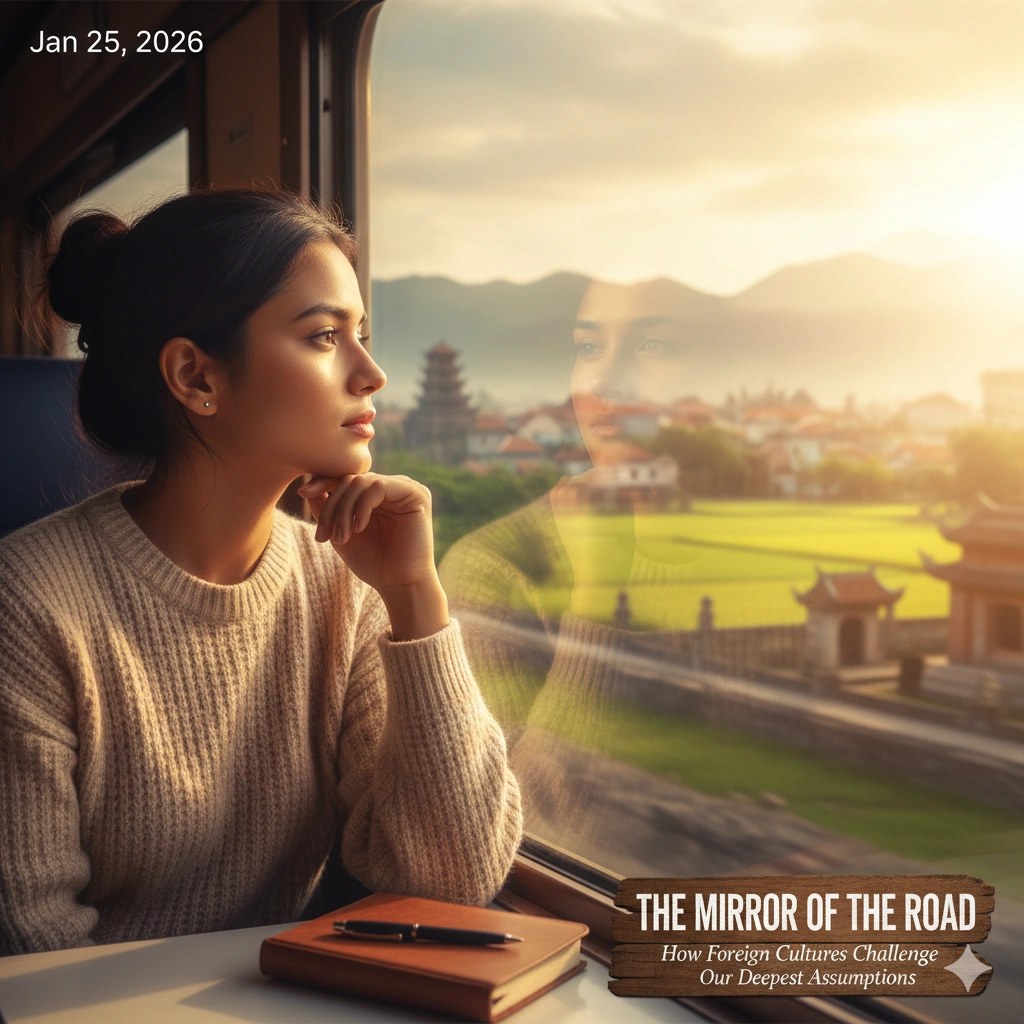
  •  The Mirror of the Road

    We often travel to see the world, but the most profound thing we end up seeing is ourselves. When we step into a culture that operates on a completely different set of values—regarding time, family, success, or even silence—our own cultural defaults are suddenly laid bare. The “Mirror of the Road” forces us to realize that the way we live isn’t the “right” way; it’s just one way.

    Deconstructing the “Normal”

    At home, our habits are invisible. We don’t think about why we rush to meetings or why we value individual achievement above all else. However, when you spend a month in a “slow-living” Mediterranean village or a collectivist society in Southeast Asia, your internal clock and ego are put to the test. This friction is where the magic happens.

    Three Ways Travel Refines Your Identity:

    1. Questioning the “Hustle”:
      • In many cultures, a mid-day nap or a three-hour lunch isn’t “lazy”—it’s a priority. Seeing other people live full, happy lives without the constant pressure of a 24/7 productivity cycle can force you to re-evaluate your own relationship with work and worth.
    2. Redefining Personal Space and Community:
      • In densely populated or highly communal cultures, the western concept of “privacy” can seem like “loneliness.” Being part of a society where neighbors are family and life is lived in the street can challenge your assumptions about independence and what it truly means to be supported.
    3. The Shift from “Consumer” to “Observer”:
      • We are often conditioned to “consume” experiences—to check off landmarks and take the perfect photo. But when you stay long enough to observe the daily struggles and joys of a local community, you shift from a consumer to a witness. This builds a deeper sense of global citizenship and humility.

    Returning with New Eyes

    The ultimate goal of the “Mirror” is not to make you adopt every custom you encounter, but to give you the freedom to choose which parts of your own culture you want to keep. You return home not just with stories, but with a more intentional way of being.

    What’s Coming Next…

    In our next installment, “The Art of Getting Lost,” we’ll discuss why throwing away the map is often the best way to find exactly what you were looking for.


    Leave a Reply

    Your email address will not be published. Required fields are marked *

    2 mins