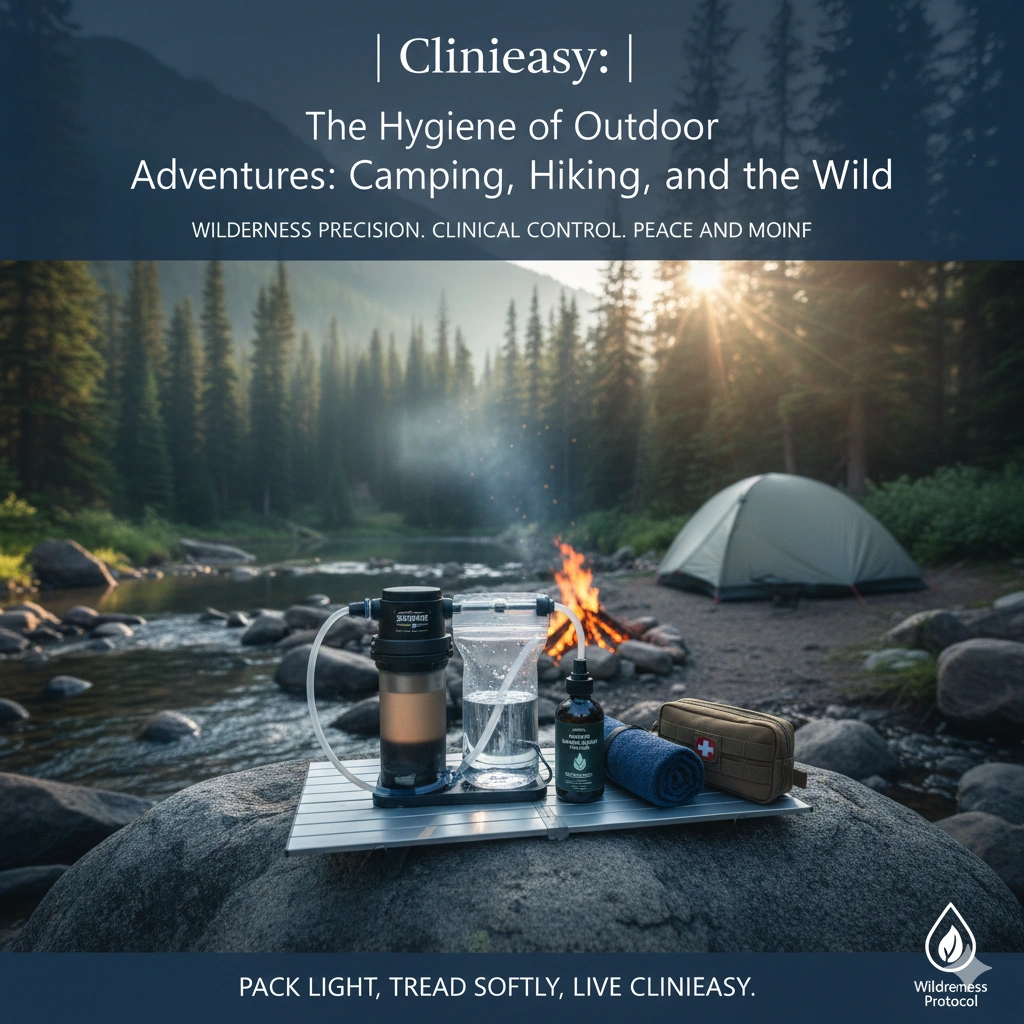

Introduction Stepping into the wilderness is a pursuit of purity, but from a clinical perspective, it is a transition into an environment where standard hygiene infrastructure is non-existent. In the backcountry, “Pathogen Management” is the difference between a life-changing expedition and a dangerous medical emergency. Whether you are on a weekend hike or a month-long thru-hike, maintaining a “Clinical Baseline” prevents the two biggest threats to an adventurer: gastrointestinal collapse and skin infection.
In 2025, we practice “Leave No Trace” Hygiene. This means protecting yourself without poisoning the ecosystem. At Clinieasy, we provide the protocol for staying “Trail-Clean” while respecting the wild.
1. The “Water Hierarchy” and Giardia Prevention
In the wild, the clearest mountain stream can be a reservoir for Giardia lamblia or Cryptosporidium—microscopic parasites that cause debilitating gastrointestinal distress.
- The Science: These “cysts” are hardy and can survive in cold water for months. Simple “dipping and drinking” is a clinical gamble.
- The Clinical Fix: Always employ a dual-layer treatment. Use a 0.1-micron hollow-fiber filter to remove bacteria and protozoa, followed by UV-C light or chlorine dioxide tabs if you suspect viral contamination (common in high-traffic or downstream areas).
- The “Dirty Hand” Rule: Designate one bottle as your “Dirty” (unfiltered) vessel and never allow its rim to touch your “Clean” (filtered) vessel or your mouth.
2. Hand Hygiene in a “Water-Scarce” Zone
When water is heavy and limited, you cannot afford to use 2 liters a day for hand washing.
- The Strategy: The “Sanitizer-Friction” Dual Method. Use a high-alcohol gel (60%+) to kill most pathogens, but once a day—ideally before your main meal—perform a “Mechanical Wash” using a small amount of biodegradable soap and a dampened microfiber cloth. This removes the “Bio-Film” of trail dirt and pine resin that gel alone cannot penetrate.
3. The “200-Foot” Soap Rule
Even “biodegradable” soap is a pollutant to fragile aquatic ecosystems. It requires soil bacteria to break down.
- The Protocol: Never wash directly in a lake or stream. Carry water 200 feet (60 meters) away from the source. Dig a small “cat hole” to dispose of soapy greywater, allowing the soil to act as a natural filter. This protects the local “Micro-Biome” while ensuring your personal hygiene.
4. Managing the “Trail Skin” Barrier
Hiking involves repetitive friction (chafing) and exposure to environmental irritants like poison ivy or oak.
- The Hazard: Chafing creates “Micro-Abrasions.” Combined with sweat and trail dust, this is a recipe for Staph-related skin infections.
- The Fix: Apply a silicone-based anti-chafe stick to “high-friction” zones (thighs, feet, underarms) before you start. At night, use “Body Wipes” to remove salt and sweat from these areas, followed by a light application of a zinc-based cream to promote barrier repair while you sleep.
5. Foot Hygiene: The “Dry-Sock” Mandate
In the wilderness, your feet are your primary mode of transport. Trench foot and fungal infections are “expedition-enders.”
- The Clinical Protocol:
- The Mid-Day Air-Out: Take off your boots and socks during lunch. Let your feet dry completely in the sun.
- The Sleeping Socks: Always keep one pair of socks in your sleeping bag that never gets wet or dirty. These are your “Clinical Recovery” socks.
- The Toe Audit: At night, inspect for “Hot Spots” (pre-blisters). Apply Leukotape or moleskin immediately; never wait for a blister to form.
The Clinieasy “Wilderness” Checklist
- Filter & Purify: Never trust “raw” water, no matter how clear it looks.
- 200-Foot Wash: Keep all soaps and greywater far from natural water sources.
- Mechanical Friction: Use a cloth to remove “Bio-Film” dirt that gel can’t touch.
- The Dry-Sock Rule: Ensure feet are bone-dry every night in “Recovery Socks.”
- Sanitized Cooking: The person cooking should have the highest hygiene standard in the camp to prevent “Group Outbreaks.”
Conclusion: Adventure with Clinical Confidence
Nature is rugged, but your hygiene routine should be precise. By maintaining your personal “Microbial Border,” you ensure that your focus remains on the summit, not on your stomach. A clean hiker is a resilient hiker.
Pack light, tread softly, and keep it Clinieasy.
Disclaimer: If you develop a fever accompanied by persistent diarrhea after an outdoor trip, seek medical attention and specify that you were in the backcountry. Giardia symptoms can take 1–3 weeks to appear.
Why this fits Article #90:
- High Engagement: Outdoor enthusiasts love technical protocols.
- E-E-A-T: Discusses “0.1-micron filters” and the chemistry of biodegradable soap.
- Product-Heavy: Perfectly positioned for affiliate marketing of water filters, soaps, and tech-apparel.