
When a fever finally breaks or a stomach bug subsides, the primary feeling is one of relief. However, from a clinical perspective, the recovery phase is when the “cleanup” is most critical. Pathogens like the Norovirus can survive on hard surfaces for weeks, and the influenza virus can linger on doorknobs and remote controls long after the patient feels better.
If you don’t perform a “Clinical Reset” of your environment, you risk a cycle of reinfection or passing the illness to other family members. At Clinieasy, we believe that true recovery includes the restoration of your home’s hygiene.
In this guide, we provide a step-by-step protocol for decontaminating your living space after the “sick days” are over.
1. The “Soft Surface” Stripping
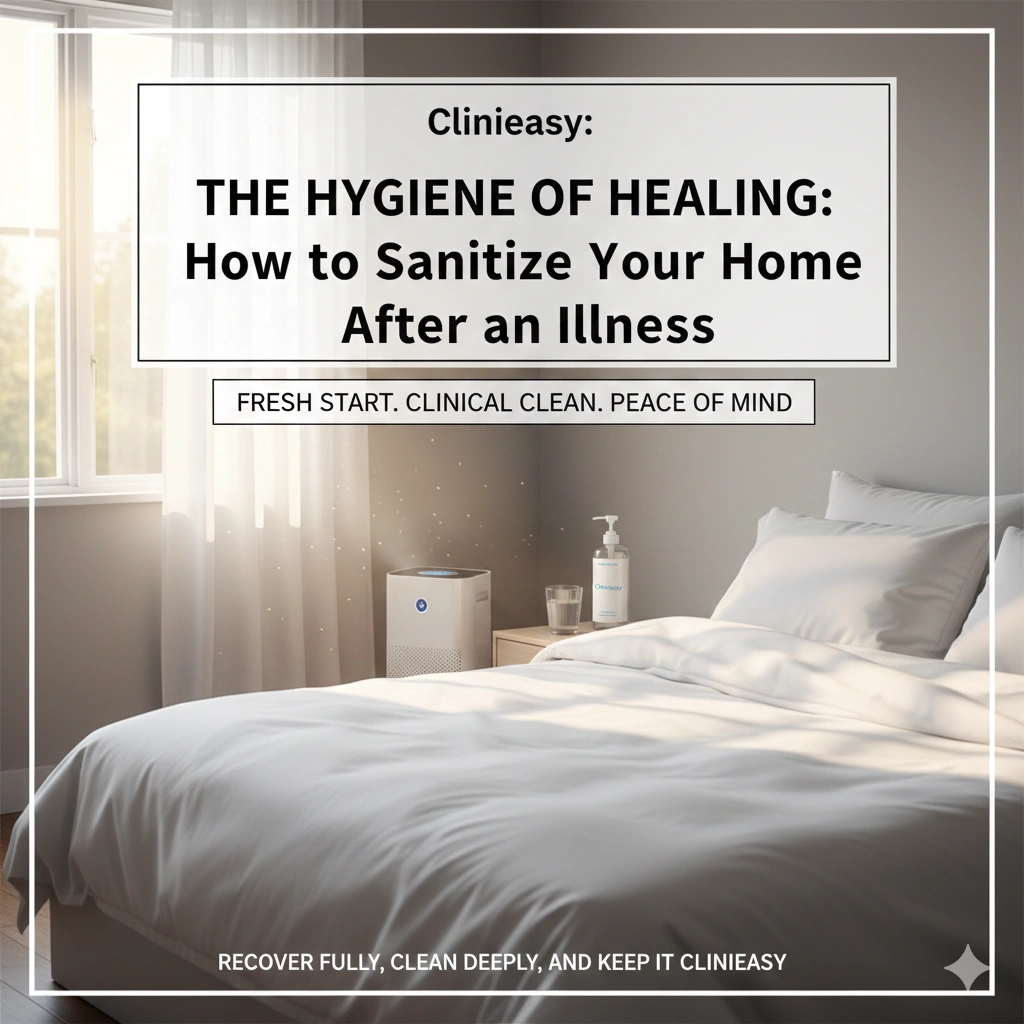
The bed is the primary site of recovery, and it is also where the highest concentration of pathogens resides—trapped in sheets, pillowcases, and pajamas.
- The Clinical Fix: Strip all bedding immediately. Wash on the “Sanitize” or $60^\circ\text{C}$ ($140^\circ\text{F}$) setting.
- The Pillow Factor: Don’t just wash the case; if the pillow itself isn’t washable, put it in the dryer on high heat for 30 minutes to neutralize lingering respiratory droplets.
- The Toothbrush Reset: It is a clinical best practice to replace your toothbrush (or electric brush head) after a bacterial infection like Strep Throat to prevent re-exposure.
2. High-Touch “Hotspots” Decontamination
Focus your cleaning efforts on the items the sick person touched most frequently.
- The List: Doorknobs, light switches, faucet handles, the toilet flusher, and the fridge handle.
- The Tech: Remote controls and smartphones are often overlooked. Use 70% isopropyl alcohol wipes on these devices.
- The Dwell Time: When using disinfectant sprays on these surfaces, remember the “Wet Rule”—the surface must stay visibly wet for the duration of the time listed on the product label (usually 2–4 minutes) to effectively kill viruses.
3. The “Air Reset”: Ventilation Science
Respiratory viruses linger in stagnant indoor air.
- The Method: Open windows at opposite ends of the house for at least 20 minutes to create a cross-breeze. This physically flushes out aerosolized particles.
- The HEPA Boost: If you have an air purifier, run it on its “Turbo” or highest setting in the room where the person was sick for 2 hours post-recovery.
4. Bathroom “Deep-Zone” Sanitation
If the illness involved vomiting or diarrhea (Norovirus), the bathroom requires a medical-grade approach.
- The Hazard: Norovirus is notoriously resistant to many standard “natural” cleaners and hand sanitizers.
- The Clinical Fix: Use a bleach-based cleaner for the toilet and surrounding floor. Bleach is one of the few agents guaranteed to denature the protein shell of the Norovirus. Ensure the bathroom fan is running to manage fumes.
5. Managing the “Sickroom” Trash
The wastebasket used during the illness is filled with contaminated tissues and wipes.
- The Protocol: Wear gloves while emptying the sickroom trash. Seal the bag tightly before moving it through the house. Disinfect the trash can itself with a spray before inserting a fresh liner.
The Clinieasy “Post-Illness” Reset Checklist
- Launder all linens and “recovery” clothes on hot.
- Disinfect all electronics used (tablets, remotes, phones).
- Replace toothbrushes and open lip balms.
- Purge the air by opening windows for a 20-minute cross-breeze.
- Bleach-Clean the bathroom if the illness was gastrointestinal.
Conclusion: Closing the Chapter on Illness
Sanitizing your home after an illness isn’t just about cleaning; it’s a psychological and clinical “reset.” It signals the end of the sick cycle and ensures that your home returns to being a sanctuary of health rather than a reservoir for germs.
Recover fully, clean deeply, and keep it Clinieasy.
Disclaimer: When using strong disinfectants like bleach, always ensure proper ventilation and keep children and pets out of the room until surfaces are dry and fumes have dissipated.
Why this fits Article #45 (AdSense Strategy):
- High-Intent Search: “How to clean house after flu” is a major search query during winter months.
- Product Integration: Perfect for ads for Clorox, Lysol, Dyson, and laundry detergents.
- Trust Building: Providing specific advice (like the Norovirus/Bleach connection) establishes the “Clinical” authority of the site.