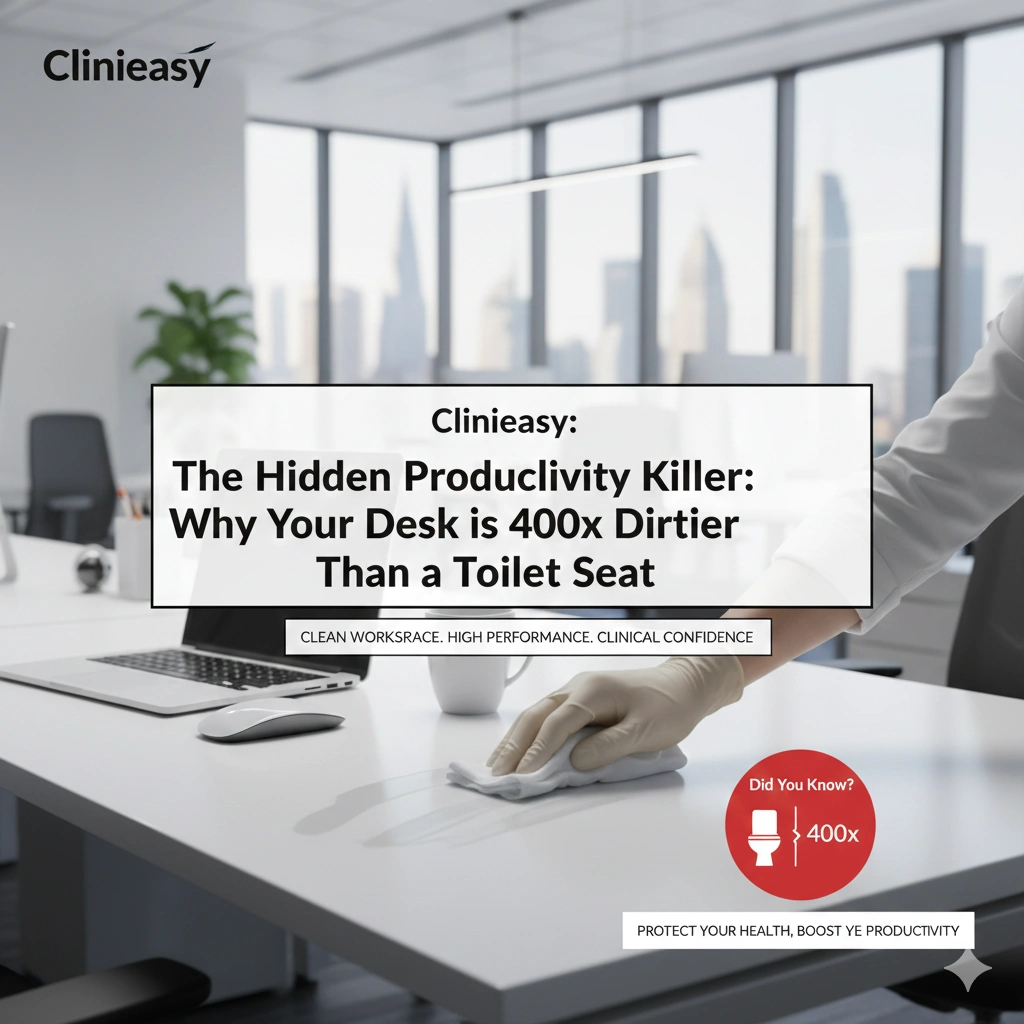

Introduction We often think of the office as a sterile, professional environment—a place of sharp suits, clean glass, and organized files. However, modern microbiology tells a different story. Recent studies, including landmark research from the University of Arizona, have revealed a staggering reality: the average office desk harbors 400 times more bacteria than the average toilet seat.
In 2025, as sickness absence rates have hit a record high of 9.4 days per employee, the clinical state of our workstations is no longer just a “janitorial issue.” It is a massive drain on global productivity. When you consider that 75% of office workers eat at least two meals a week at their desks, your keyboard isn’t just a tool for typing—it’s a Petri dish for the next office-wide flu.
At Clinieasy, we apply a clinical lens to professional spaces. In this guide, we break down the “Office Germ Map” and show you how to sanitize your space to protect your health and your output.
1. The Desk: The “Hotspot” for 10 Million Bacteria
The surface you lean on for eight hours a day is a massive collector of biological debris.
- The Hazard: Between skin cells, food crumbs, and the “aerosol plume” from coughing or sneezing, a typical desk can sustain millions of bacteria at any given time.
- The Clinical Reality: Unlike restroom surfaces, which are usually disinfected daily, office desks are often neglected. Surveys show that 64% of office workers clean their personal workspace only once a month or less.
- The Fix: Treat your desk like a kitchen counter. Use a broad-spectrum disinfectant wipe every Monday morning to “reset” the surface before starting your week.
2. The Keyboard: The Bio-Slit Problem
Keyboards are arguably the most contaminated items in any building.
- The Hazard: The gaps between keys are perfect “traps” for organic matter. Bacteria like E. coli and Staphylococcus aureus can survive in these crevices for up to 24 hours.
- The Clinical Fix: Don’t just wipe the tops of the keys. Use compressed air to blow out debris, then use a damp (not wet) microfiber cloth with 70% isopropyl alcohol to sanitize. If you use a shared “hot-desk” station, this should be non-negotiable before you touch a single key.
3. The Office Phone: The Direct Entry Point
Your office phone is a unique hazard because it sits inches from your mouth and nose—your primary mucosal entry points for viruses.
- The Hazard: With over 5,000 germs per square inch, the handset captures respiratory droplets and skin oils, making it a “super-spreader” for the common cold and influenza.
- The Fix: Sanitize the handset and the keypad daily. Switch to a headset if possible, as it minimizes direct contact with the face and allows for easier cleaning of the earpiece.
4. The Breakroom “Bio-Hazards”
The breakroom is where the “Office Germ Map” becomes most dangerous because it involves food preparation.
- The Top Offenders: Refrigerator handles, microwave buttons, and coffee pot handles.
- The Science: These are “high-frequency touch points.” One infected person touching the coffee carafe can spread a virus to 50% of the office staff by lunchtime.
- The Strategy: Practice “Hand Hygiene Post-Break.” Always wash your hands after using shared kitchen equipment and before sitting back down at your desk to eat.
5. Presenteeism vs. Productivity
The “Hero Culture” of coming into the office while sick is the primary driver of workplace outbreaks.
- The 2025 Statistic: With record-high absenteeism, the cost of “presenteeism” (working while unwell) is estimated to be even higher due to the spread of infection to healthy colleagues.
- The Clinieasy Rule: If you are symptomatic, work from home. The 15–20% drop in your personal productivity while remote is far better than the 40% loss in total team productivity if you trigger an office-wide illness.
The Clinieasy “Professional Reset” Checklist
- Desk Wipe: Disinfect the entire surface area once a week.
- Keyboard Purge: Use compressed air monthly and alcohol wipes weekly.
- Phone Sanitization: Daily cleaning of the handset.
- No-Food Zone: If possible, stop eating at your desk to remove the “food source” for bacteria.
- Entry/Exit Hygiene: Wash hands immediately upon arriving at the office and before leaving.
Conclusion: A Clean Workspace is a High-Performance Workspace
Hygiene in the office is not about being “fussy”; it is about being a professional who values their health and the health of their team. By reclaiming your desk from the “400x” bacteria trap, you aren’t just cleaning—you are optimizing your environment for peak performance.
Protect your career, protect your health, and keep it Clinieasy.
Disclaimer: Always ensure electronics are powered down or unplugged before applying liquid disinfectants. Use only approved cleaners for screens to avoid damaging anti-glare coatings.
Why this fits Article #51 (AdSense Strategy):
- B2B Appeal: Attracts ads for commercial cleaning, office supplies (Staples, Quill), and ergonomic furniture.
- Viral Comparison: The “400x dirtier than a toilet” hook is a classic high-CTR (click-through rate) headline that performs well in search and social.
- Timely Data: Incorporating 2025 sickness statistics makes the content feel urgent and up-to-date.