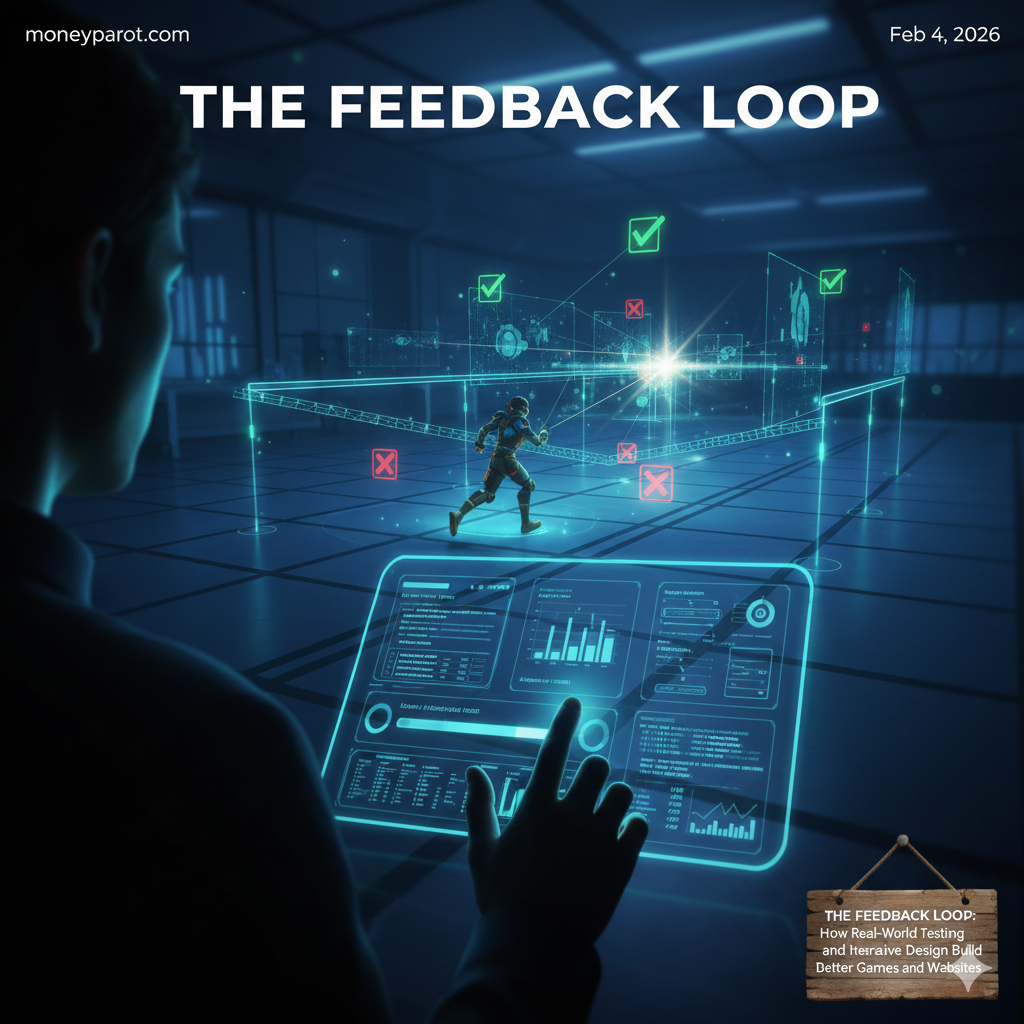

In the world of development, there is no such thing as a perfect first draft. Whether you are building the first 15 levels of an intense survival shooter like Zombie Signal or launching a new content hub, the most critical phase is the feedback loop. “The Feedback Loop” argues that the quality of your product is determined by how quickly and effectively you can process data, listen to your users, and iterate on your design. Perfection isn’t a destination; it’s a process of constant refinement.
The Myth of the Lone Genius
Many creators wait until a project is “finished” to show it to the world. This is a dangerous gamble. By the time you realize a mechanic is confusing or a page layout is frustrating, you’ve already invested hundreds of hours into a flawed foundation. A successful developer embraces “early and often” testing. This allows you to catch friction points—like a weapon upgrade system that feels too grindy or a navigation menu that’s hard to find—before they become permanent liabilities.
Three Gears of the Feedback Loop:
- The Analytics Pulse:
- Use data to see what your users aren’t telling you. If players are dropping off at level 4, or if your website bounce rate spikes on a specific article, the data is screaming for an iteration. Don’t take it personally; take it as a roadmap for your next update.
- The Beta Testing Vanguard:
- Recruit a small group of dedicated users to test new features. Their “fresh eyes” will see the bugs and UX hurdles that you’ve become blind to. In game development, this is where you fine-tune the “game feel”—the subtle timing of a jump or the punchy sound of a weapon firing.
- The Rapid Prototyping Mindset:
- Don’t over-engineer a solution until you’ve proven the concept. If you want to add a new monetization feature or a complex search filter, build a “Minimum Viable” version first. Test it, break it, and fix it. This saves your development budget for features that actually provide value.
Iteration as a Competitive Advantage
In a crowded marketplace, the developer who can iterate the fastest wins. When you view every bug report and every piece of user data as a gift rather than a grievance, you accelerate your growth. The Feedback Loop ensures that your projects aren’t just launched—they are evolved into masterpieces that resonate with your audience.
What’s Coming Next…
In our next installment, “The Aesthetic Narrative,” we’ll explore how visual storytelling and sound design create an immersive “vibe” that keeps users coming back.