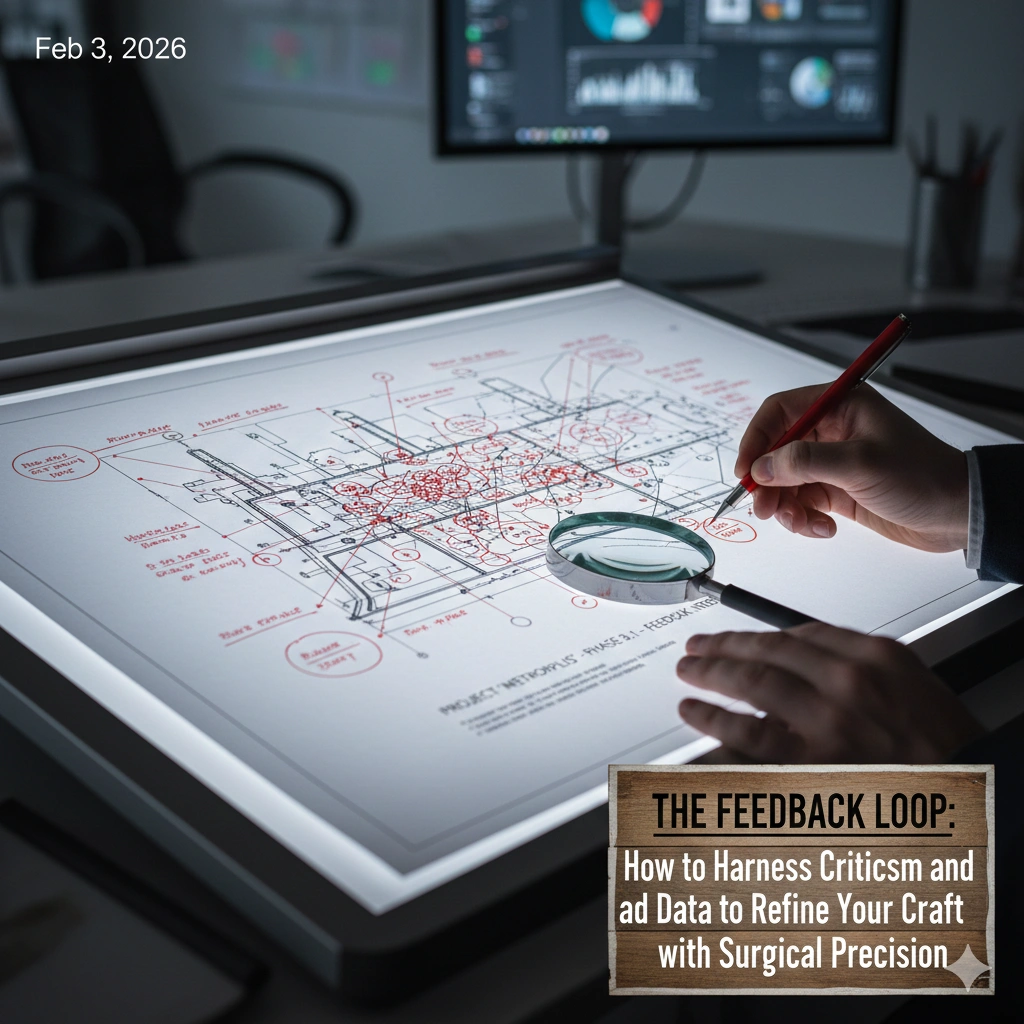

Many people dread feedback, associating it with judgment or failure. But for anyone striving for mastery, “The Feedback Loop” is not a threat; it’s a gift. This article delves into the art of actively seeking, intelligently processing, and skillfully applying criticism and data to relentlessly improve your performance. It’s about moving beyond ego and emotional defensiveness to embrace feedback as the fastest, most direct route to accelerating your learning and refining your craft.
The Blind Spots of Self-Perception
We all have blind spots—areas where our self-perception doesn’t align with reality. Without external input, these blind spots can hinder our progress indefinitely. Whether it’s a bug in your code, a flaw in your business strategy, or a weakness in your communication style, feedback acts like a mirror, revealing what you cannot see on your own. True masters don’t just tolerate feedback; they crave it because they understand it’s the only way to expose and eliminate these hidden weaknesses.
Three Strategies for an Effective Feedback Loop:
- Seek Specific, Actionable Feedback:
- Don’t just ask, “How was it?” Instead, ask targeted questions like: “What was one thing in this presentation that confused you?” or “If you could change one element of this game, what would it be and why?” Specific questions yield specific answers you can act on.
- Separate the Message from the Messenger:
- It’s easy to dismiss feedback if you don’t like the person giving it, or if it’s delivered poorly. Practice listening for the underlying message, regardless of its packaging. Focus on the content of the criticism, not the tone or delivery. Consider whether the feedback holds merit, even if it stings.
- Implement, Test, and Re-Evaluate:
- Feedback isn’t meant to be filed away; it’s meant to be acted upon. Choose one or two key pieces of feedback, implement changes, and then intentionally seek more feedback on those specific changes. This creates a continuous cycle of improvement, turning every critique into a stepping stone for growth.
The Engine of Excellence
Mastering the feedback loop transforms criticism from a personal attack into rocket fuel for your development. It teaches you humility, accelerates your learning curve, and ensures that your path to mastery is guided by objective reality, not just your own assumptions. Embrace the mirror, however imperfect, and watch your skills sharpen with surgical precision.
What’s Coming Next…
In our final installment, “The Art of the Reset,” we’ll explore how to strategically disengage and recharge to maintain peak performance and avoid burnout over the long term.