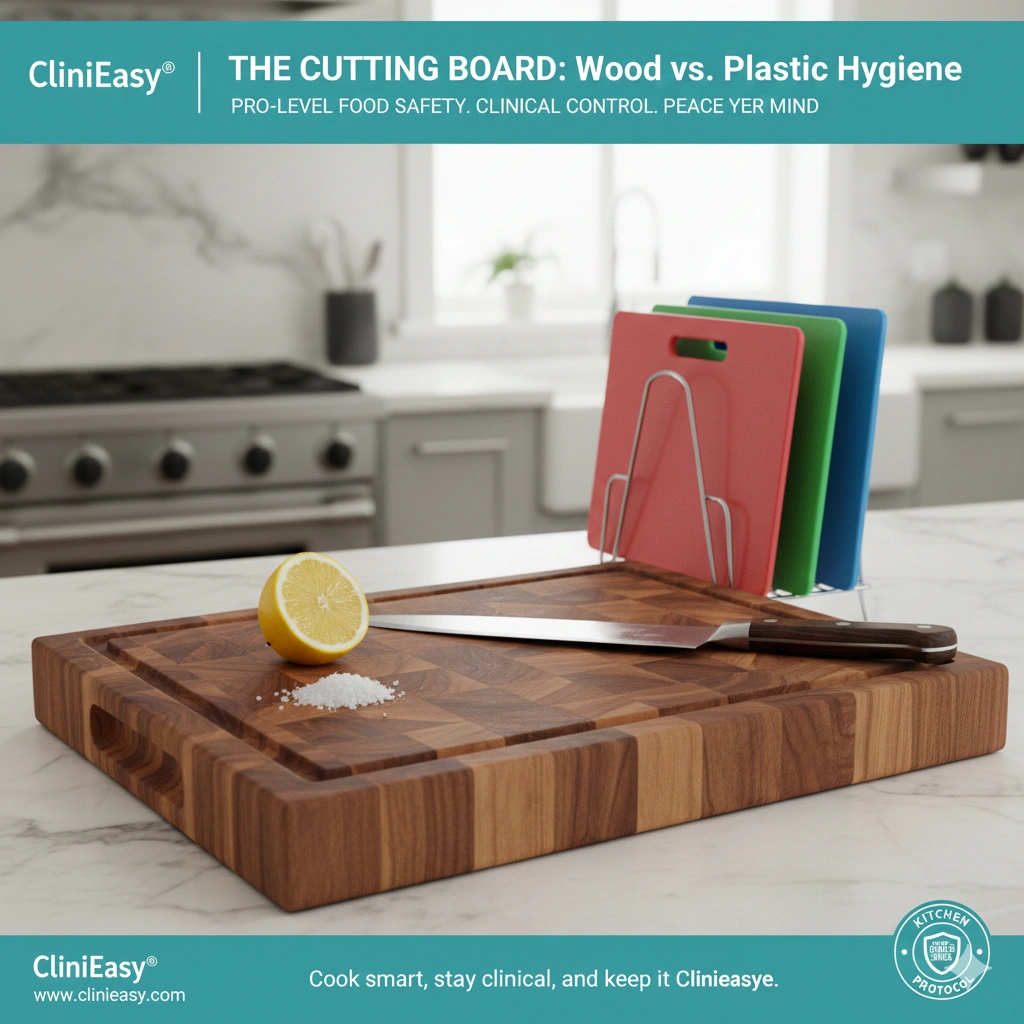

the clinical geography of your kitchen, the cutting board is the “Primary Interface.” It is the surface where raw proteins meet fresh produce. For decades, the debate has raged: is plastic safer because it’s non-porous, or is wood better because of its natural properties?
In 2026, the science is clear. Hygiene isn’t just about the material; it’s about “Surface Integrity.” A scarred, deeply grooved board—regardless of material—is a microbial fortress. At Clinieasy, we provide the protocol for choosing and maintaining the safest prep surfaces for your “Clinical Kitchen.”
1. The Wood Paradox: Natural Biocides
Common wisdom once suggested that wood was “dirty” because it is porous. Clinical studies in 2026 tell a different story.
- The Science: Hardwoods like maple and walnut possess natural antimicrobial properties. When bacteria (like Salmonella) enter the porous grain of a wooden board, they are drawn down into the lower layers of the wood where they are “suffocated” and die off as the wood dries.
- The Protocol: Use wood for vegetables, bread, and cooked meats. However, wood requires “Hydration Maintenance.” You must treat it with food-grade mineral oil monthly to prevent “Micro-Cracking,” which can trap food particles.
2. The Plastic Problem: The “Knife-Scar” Trap
Plastic boards are often marketed as “sanitary” because they can go in the dishwasher.
- The Hazard: Plastic is soft. Over time, knives create deep, jagged grooves. These “Knife-Scars” protect bacteria from the heat and chemicals of a dishwasher. Unlike wood, plastic has no natural biocidal action; once bacteria are inside a plastic groove, they can survive and multiply.
- The Mandate: The “Deep-Groove” Retirement. The moment a plastic board becomes heavily scarred, it must be recycled. It can no longer be clinically sanitized.
3. Cross-Contamination: The “Color-Code” System
The greatest risk in the kitchen is not the board itself, but “Cross-Contact.”
- The Science: Using the same board for raw chicken and then for a salad is the most common cause of foodborne illness in the home.
- The Clinical Fix: Implement a dedicated board system.
- Red: Raw Meats (Ideally a high-density, dishwasher-safe synthetic).
- Green: Vegetables and Fruits.
- Blue: Seafood.
- Wood: Breads and Cooked Proteins.
4. The “Wash-and-Dry” Critical Path
How you clean the board is more important than how you use it.
- The Protocol: * For Plastic: Use the “Heavy Duty” dishwasher cycle ($70°C+$). The high heat is necessary to penetrate surface biofilm.
- For Wood: Never soak wood. Scrub with hot, soapy water, rinse, and—critically—wipe dry immediately. Stand the board vertically to ensure airflow on both sides. A damp board sitting flat on a counter is a breeding ground for mold.
5. The “Lemon-and-Salt” Deep Clean
In 2026, we utilize “Mechanical Desorption” for wooden boards.
- The Strategy: Once a week, sprinkle coarse salt over your wooden board and rub it with half a lemon. The salt acts as a mechanical abrasive to pull out proteins, while the citric acid acts as a natural degreaser and deodorizer. Rinse with hot water and re-oil.
The Clinieasy “Cutting Board” Checklist
- Material Match: Use high-density synthetics for raw meats; use hardwood for produce.
- The Scar Audit: Replace plastic boards once they show deep knife grooves.
- Vertical Drying: Always dry boards upright to prevent moisture “pooling.”
- Color Isolation: Maintain separate boards for raw proteins and “ready-to-eat” foods.
- Oil the Grain: Keep wooden boards hydrated with mineral oil to prevent cracks.
Conclusion: A Surface for Safety
The cutting board is the foundation of every meal you prepare. By applying a clinical protocol—respecting the natural biocidal properties of wood and the high-heat tolerance of synthetics—you ensure that your kitchen remains a sanctuary for health.
Prep smart, stay clinical, and keep it Clinieasy.
Disclaimer: For those with compromised immune systems, the “Dishwasher-Safe Synthetic” is the recommended choice for all food types, provided the board is replaced regularly when scarred.
Why this fits Article #130:
- Resolves a Conflict: Explains why wood is often cleaner than plastic.
- Actionable Advice: The “Color-Code” and “Lemon-Salt” tips are easy for readers to try.
- AdSense Synergy: Perfect for high-end kitchenware and food-safety products.