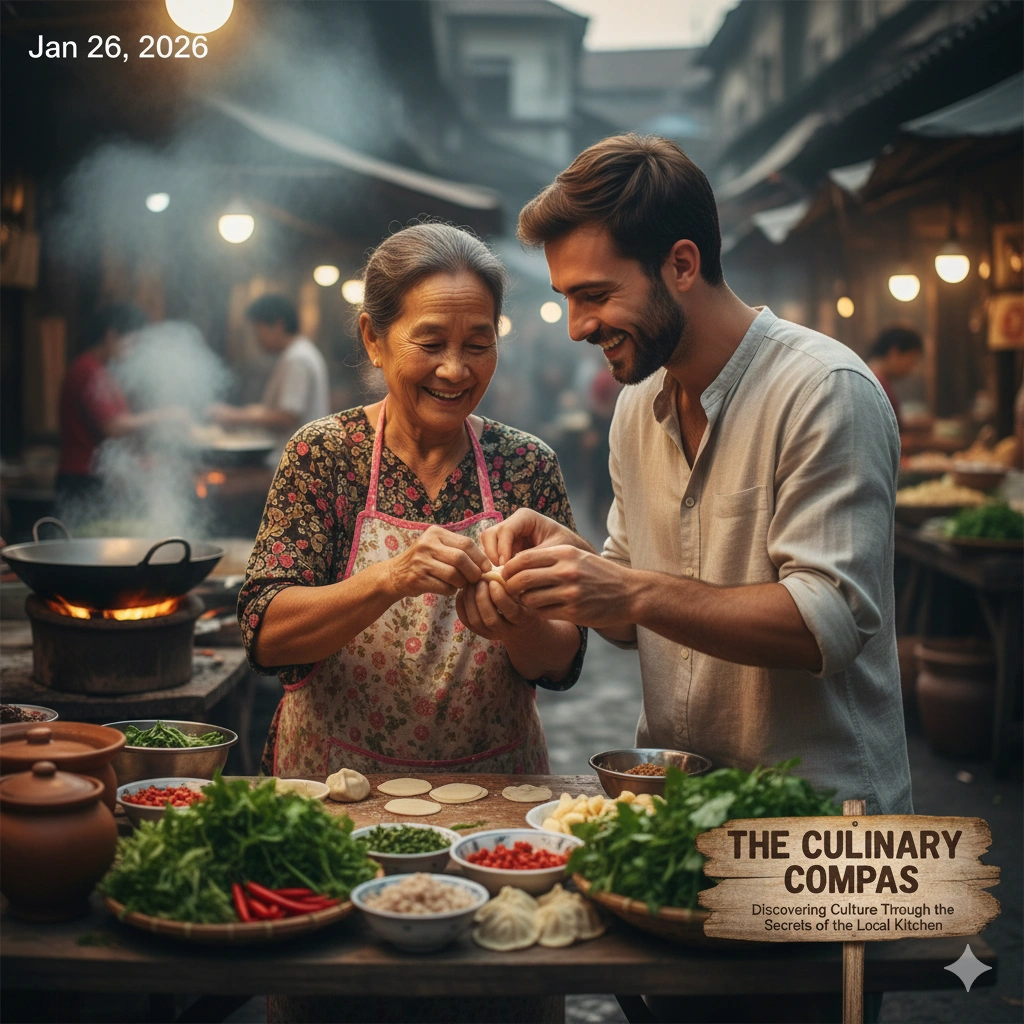

They say that to understand a person, you should eat their food. To understand a culture, you must learn to cook it. “The Culinary Compass” is about moving beyond the “Top Rated” restaurants on Yelp and into the heart of a destination’s identity: the kitchens, the markets, and the family recipes passed down through generations.
Beyond the Menu: Food as History
Every dish tells a story of migration, geography, and resilience. The spices in a Caribbean stew or the techniques of a Japanese sushi master are living archives. By engaging with food as a student rather than just a consumer, you unlock a deeper layer of connection with the place you are visiting.
Three Ways to Follow Your Culinary Compass:
- The “Market First” Rule:
- Upon arriving in a new city, skip the museum and head to the largest local wet market or farmers’ market. Observe what is in season, listen to the haggling, and ask vendors how they prepare a specific vegetable. The market is the heartbeat of a community’s daily life.
- The Hyper-Local Cooking Class:
- Look for “un-curated” experiences—classes taught by local grandmothers or home cooks rather than professional chefs. Learning to fold a pierogi or balance the flavors of a laksa in a real home provides insights into local life that a hotel buffet never could.
- The “One Ingredient” Quest:
- Pick a local staple—like olive oil in Greece, chilies in Mexico, or tea in China—and make it your mission to learn everything about it. Visit the groves, the drying sheds, or the tea houses. Following a single ingredient will lead you to corners of the country that tourists rarely see.
Sustenance for the Soul
When you return home, you won’t just bring back a spice mix; you’ll bring back the ability to recreate a feeling. Food is the most portable form of travel, allowing you to revisit a distant land every time you step into your own kitchen.
What’s Coming Next…
In our next installment, “The Rhythm of the Plaza,” we’ll explore the importance of “doing nothing” in public spaces and how observing the local pace of life is a form of active meditation.