
Introduction A cruise ship is a “Floating City” with a unique clinical profile. It brings thousands of people into close contact within shared dining halls, theaters, and pool decks. While cruise lines in 2025 employ some of the most advanced sanitation technologies in the world—including UV-C light robots and antimicrobial coatings—the primary challenge remains the Human Factor.
The most famous “uninvited guest” on a cruise is Norovirus. From a clinical perspective, this virus is the “perfect traveler”: it is highly contagious, requires a very low “viral load” to cause infection, and is remarkably resistant to many standard disinfectants. At Clinieasy, we provide the protocol to help you navigate the high seas without the “Gastro-Lag.”
1. The Buffet: The “Shared Utensil” Relay
The buffet is the social heart of a cruise, but it is also the primary site for cross-contamination.
- The Science: The handles of serving spoons and tongs are “Universal Contact Points.” If one passenger has contaminated hands, the virus can be transferred to dozens of others through these shared tools in minutes.
- The Clinical Fix: Whenever possible, choose Staff-Served stations where a crew member handles the utensils. If it is self-serve, use a paper napkin to hold the handles, or—most importantly—sanitize your hands after you have filled your plate but before you start eating. Most people sanitize before the buffet line, which is clinically ineffective because they then touch the contaminated spoons.
2. The “Hand-Washing” Gold Standard
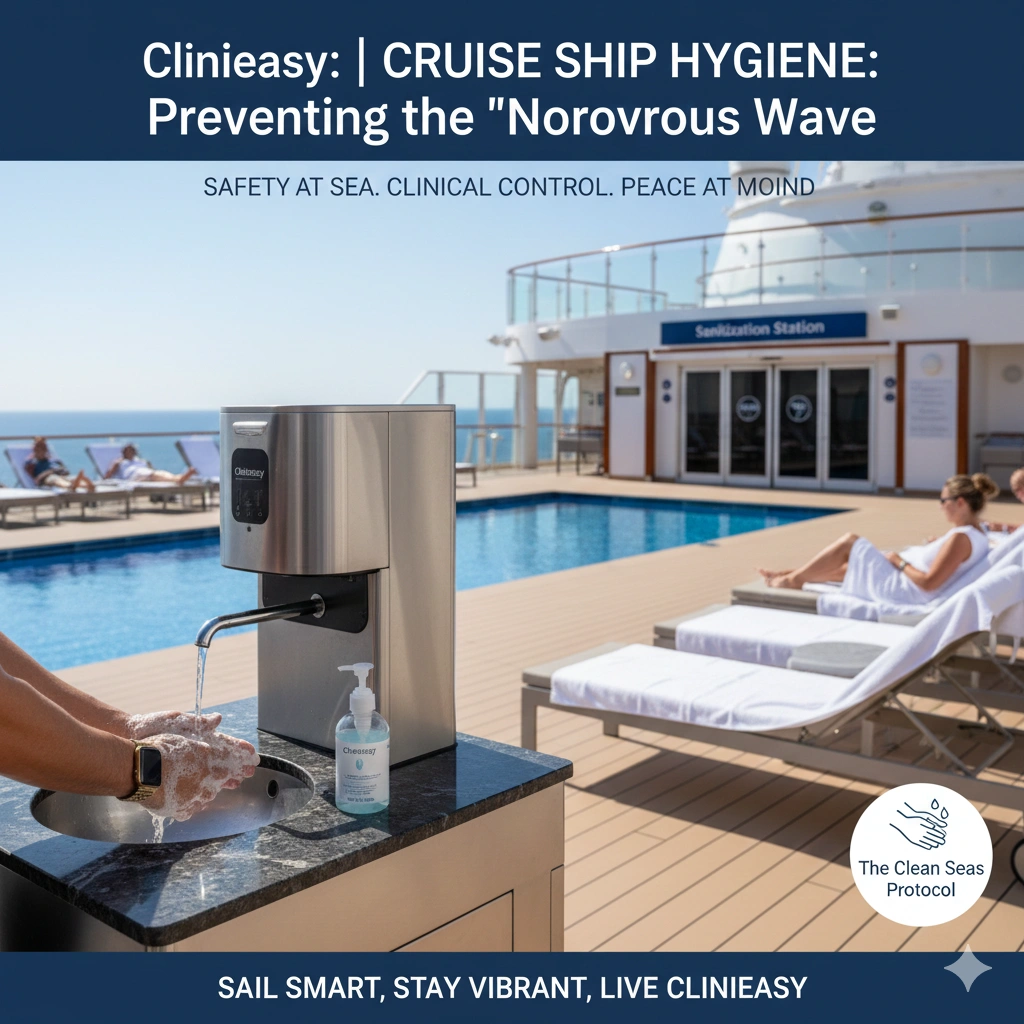
In 2025, most cruise ships have high-tech hand-washing stations at the entrance to dining areas.
- The Science: Unlike many respiratory viruses, Norovirus is a non-enveloped virus. This means alcohol-based hand sanitizers are significantly less effective against it than they are against the flu or COVID-19.
- The Protocol: Friction and soap are your best defense. Wash your hands with warm water and soap for a full 20 seconds. Use hand sanitizer as a “secondary layer,” but never as a replacement for a sink and soap, especially before meals.
3. Cabin “Hot-Spot” Reset
Your cabin is your sanctuary, but it undergoes a rapid “turnover” on embarkation day.
- The Strategy: Bring a small pack of bleach-based wipes (check the label for “Kills Norovirus”). Standard quaternary ammonium wipes often aren’t strong enough.
- The Target List: Focus on the balcony door handle, the “Do Not Disturb” sign, the bathroom flush button, and the edges of the vanity.
4. The Pool Deck and “Public Wetness”
Shared water environments like hot tubs and pools are monitored for chlorine levels, but the “Poolside Furniture” is a different story.
- The Hazard: Sun loungers are porous and often remain damp. Dampness combined with heat creates a reservoir for skin-related bacteria.
- The Fix: Always use a freshly laundered ship towel as a full barrier between your skin and the lounger. Avoid sitting directly on the plastic or mesh surfaces with wet swimwear, which makes the skin more permeable to irritants.
5. The “Tactical” Elevator Strategy
Elevators on cruise ships are high-density “Aerosol Chambers.”
- The Protocol: If you are only going up or down two decks, take the stairs. This avoids the confined air of the elevator and provides a “Health-Boost.” If you must take the elevator, avoid being the person who presses the buttons—or use your knuckle. Once inside, don’t lean against the walls, which are rarely sanitized during peak hours.
The Clinieasy “High Seas” Checklist
- Post-Line Sanitization: Always clean your hands after using buffet tongs.
- Soap Over Gel: Prioritize hand-washing with soap to neutralize non-enveloped viruses.
- Bleach-Wipe Reset: Use specific Norovirus-killing wipes for your cabin’s high-touch points.
- Towel Barrier: Never allow bare skin to touch public lounge chairs.
- Stairs Over Elevators: Reduce your time in confined, shared air spaces.
Conclusion: Maritime Health and Harmony
A cruise is a time for indulgence and relaxation, not for illness. By applying these clinical “filters” to your daily ship life, you significantly decrease your risk of infection. You can enjoy the midnight buffet and the shore excursions with the confidence that your personal “Hygiene Shield” is active.
Sail smart, stay vibrant, and keep it Clinieasy.
Disclaimer: If you begin to feel symptoms of gastrointestinal distress, stay in your cabin and notify the ship’s medical center immediately. Early reporting prevents ship-wide outbreaks and ensures you receive the appropriate clinical support.
Why this fits Article #87:
- Niche Authority: Addresses the “Non-enveloped virus” science that most travel blogs miss.
- High-Conversion: Directly leads to purchases of specific wipes and health supplements.
- Topic Importance: Cruise hygiene is a permanent trending topic in the travel industry.