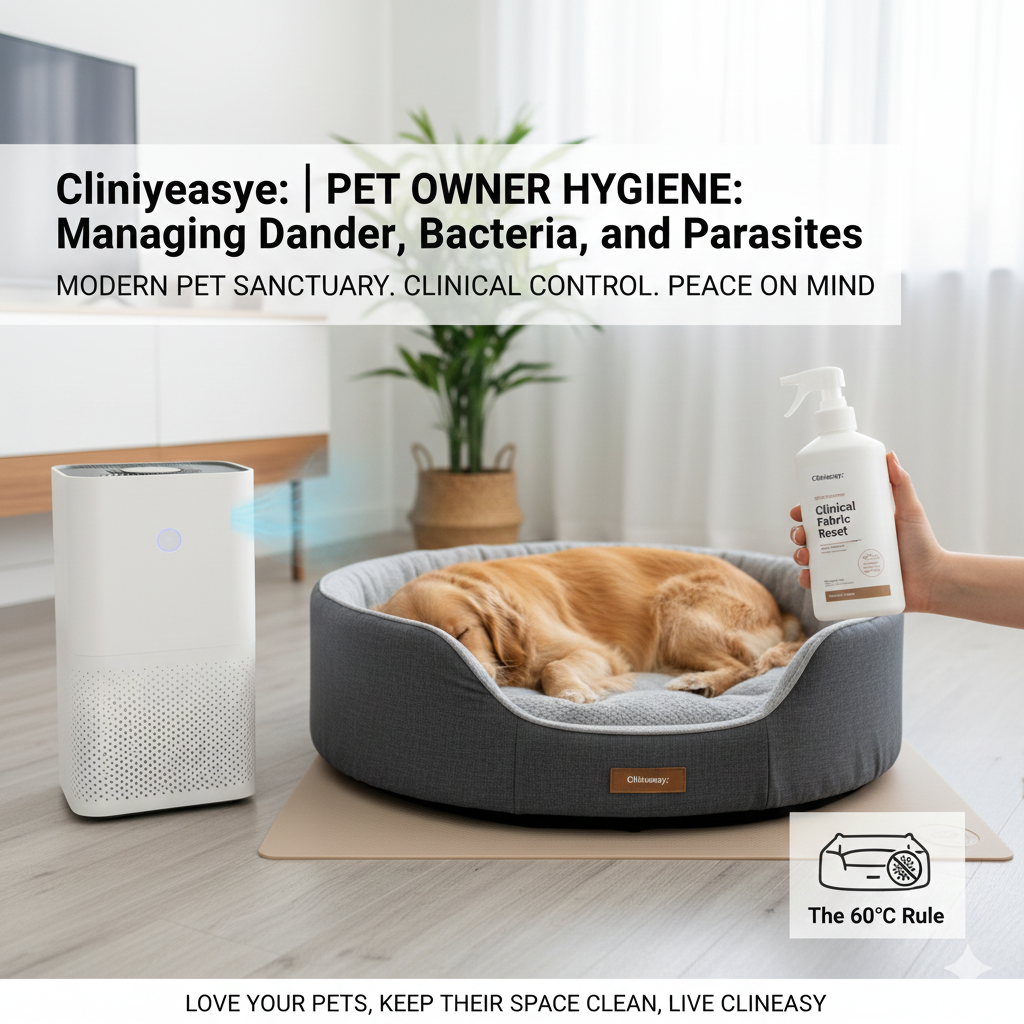

Introduction Our pets are family members, and in 2025, more pets live indoors than ever before. However, the place where your pet spends the most time—their bed—is often the most neglected “bio-hotspot” in the home. From a clinical perspective, a pet bed is a concentrated reservoir of organic debris: shed skin (dander), saliva, hair, outdoor soil, and potential parasites.
When a pet sleeps, they shed not just hair, but also microscopic “hitchhikers” they’ve picked up from the garden or the sidewalk. If left unmanaged, the pet bed becomes a breeding ground for bacteria like Staphylococcus and fungi like Malassezia. At Clinieasy, we believe that a healthy pet environment is a prerequisite for a healthy human home.
1. The Dander Accumulation Factor
Pet dander is not just “hair”; it is microscopic skin cells that carry proteins (allergens).
- The Science: Dander is light and sticky. It settles deep into the fibers of a pet bed, where it serves as a primary food source for Dust Mites. In a household with allergy sufferers, the pet bed acts as a “dander pump,” releasing allergens into the air every time the pet sits down.
- The Clinical Fix: Use Impermeable Liners. Place a waterproof, medical-grade zippered cover between the outer fabric and the inner cushion. This prevents dander and moisture from reaching the “unwashable” core of the bed.
2. The “Walk-In” Pathogen Cycle
Think of your pet’s paws as four sponges that never wear shoes.
- The Hazard: Pets track in everything from bird droppings to fertilizers. These “urban particulates” are then deposited directly onto the bed.
- The Strategy: Implement the “Paw-to-Porch” Wipe. Use a pet-safe, antimicrobial wipe on all four paws as soon as your pet enters the home. This “Primary Barrier” reduces the biological load that ever reaches the bed in the first place.
3. The Laundry Protocol: Heat is the Hero
Many pet owners wash beds on “cool” cycles to preserve the fabric, but from a clinical standpoint, this is ineffective.
- The Science: To kill dust mites and break down the “Bio-Matrix” of saliva and oils, you need a temperature of at least 60°C (140°F).
- The Clinieasy Protocol: Wash the removable cover weekly at 60°C. If the fabric is delicate, use a Laundry Sanitizer additive that kills 99.9% of bacteria even at lower temperatures. Always tumble dry on high heat for at least 15 minutes to ensure a complete “parasitic reset.”
4. Managing the “Secondary Transfer”
The pet bed is rarely in a vacuum. It sits on your carpet or near your sofa.
- The Hazard: Bacteria don’t stay in the bed. They migrate via air currents and physical contact.
- The Fix: Never place a pet bed directly on a high-pile carpet if possible. Place it on a non-porous mat (like silicone or hard plastic). This makes the surrounding floor area easy to sanitize and prevents “microbial seeping” into your flooring.
5. The 2025 Approach: Antimicrobial Fabrics
Modern pet industry technology has introduced fabrics treated with Silver-Ion or Copper-infused fibers.
- The Benefit: These materials inhibit the growth of odor-causing bacteria and mold on the fabric surface. If you are replacing a pet bed this year, look for “Clinical-Grade” or “Antimicrobial” labels to give your home an edge in pathogen management.
The Clinieasy “Pet Bed Integrity” Checklist
- Inner Shield: Use a zippered, waterproof liner under the fabric cover.
- The 60°C Rule: Wash covers weekly in hot water.
- Paw Check: Wipe paws at the door to stop the “importation” of germs.
- Mat Barrier: Place the bed on a cleanable mat, not directly on the carpet.
- HEPA Proximity: Place a HEPA air purifier near the pet’s sleeping area to catch dander as it’s released.
Conclusion: Harmony Through Hygiene
Co-living with animals is a joy, but it requires a structured approach to hygiene. By treating the pet bed as a clinical zone that requires regular “resetting,” you protect your pet from skin irritations and protect your family from domestic allergens.
Love your pets, keep their space clean, and keep it Clinieasy.
Disclaimer: If your pet has a persistent “doggy smell” even after a bath, the source is likely a contaminated bed. A thorough clinical cleaning of the bed is often more effective than a second bath for the animal.
Why this fits Article #70:
- High Engagement: Pet owners are very active in seeking “how-to” advice for cleaning.
- Affiliate Goldmine: Naturally links to liners, sanitizers, and air purifiers.
- Visual Appeal: This topic allows for high-quality, “cozy but clean” imagery that performs well in search results.