
Introduction In 2026, the world is more connected than ever, but as we move across borders, so do the microbes we carry. An airplane cabin is a unique clinical environment: high-density, low-humidity, and high-frequency turnover. While modern aircraft are equipped with advanced filtration, the “micro-environment” of your specific seat is often neglected by rapid turnaround cleaning schedules.
To arrive at your destination ready for adventure—rather than succumbing to the “post-flight cold”—you need a tactical approach to your seating area. At Clinieasy, we provide the clinical protocol for a “Clean Seat” experience.
1. The HEPA Reality: Air Quality vs. Surface Risk
A common misconception is that airplane air is “stagnant.”
- The Science: Modern planes (like the Boeing 787 or Airbus A350) refresh their air every 2-3 minutes using HEPA (High-Efficiency Particulate Air) filters that capture 99.97% of particles. The air you breathe is clinically cleaner than most office buildings.
- The Hazard: The risk isn’t the air; it’s the surfaces. Pathogens like Norovirus or MRSA can survive on plastic tray tables and fabric armrests for days.
- The Clinical Fix: Open your overhead air vent. Set it to a medium flow directed toward your face. This creates a “Laminar Air Shield” that helps push unfiltered air (from a neighbor’s cough) away from your immediate breathing zone.
2. The “Dirty Four” Audit
When you first sit down, before you touch your phone or your face, you must sanitize the “Dirty Four” high-touch zones.
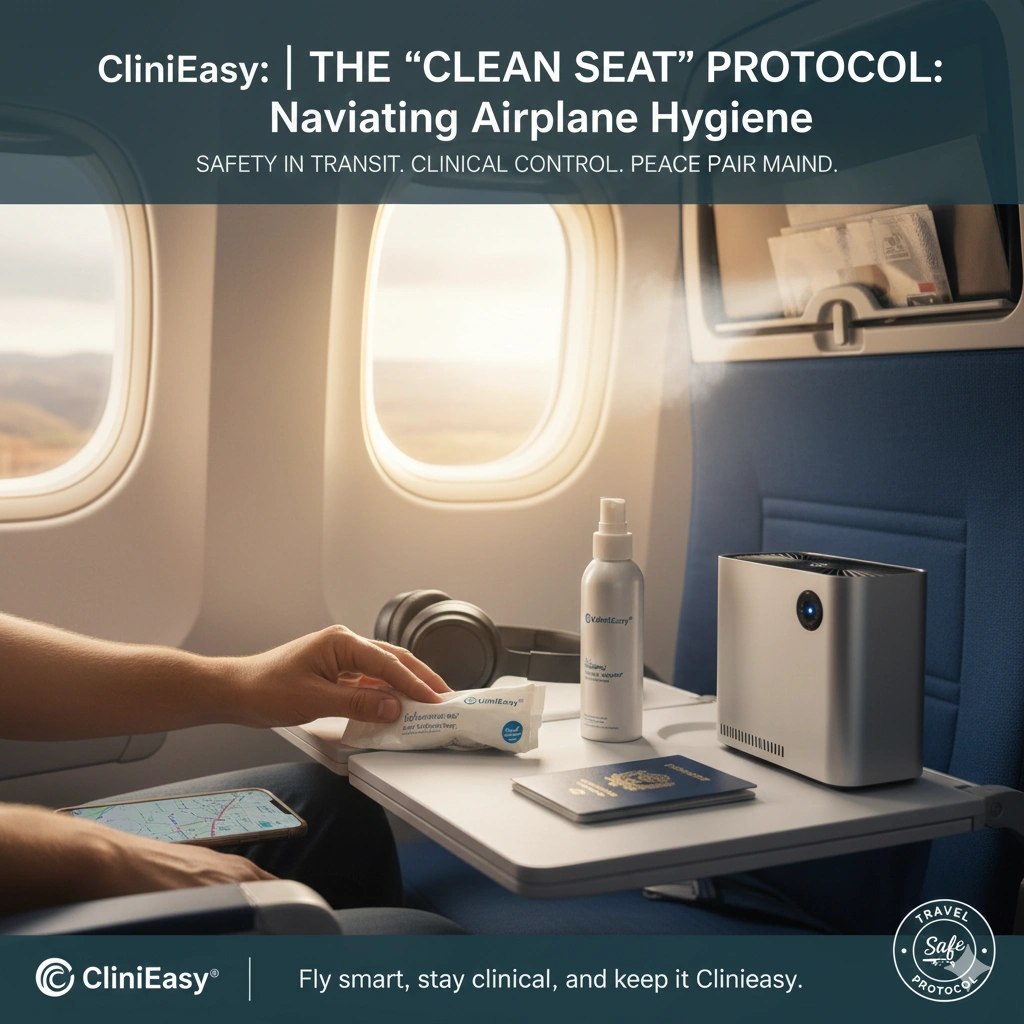
- The Strategy: Use a high-alcohol (70% isopropyl) disinfecting wipe on:
- The Tray Table: Both the top and the latch. This is statistically the dirtiest surface on the plane.
- The Armrests: Including the recline button.
- The Seatbelt Buckle: A frequently overlooked metal-on-metal touchpoint.
- The Headrest (if leather/plastic): If it is fabric, consider using a disposable paper headrest cover.
3. Humidity and Mucosal Integrity
Airplane cabins typically have a relative humidity of less than 20%—drier than most deserts.
- The Science: Low humidity dries out the Mucous Membranes in your nose and throat. These membranes are your “Physical Firewall”; when they dry out and crack, viruses can bypass your primary defenses easily.
- The Protocol: Use a saline nasal spray every 90 minutes during the flight. This keeps the cilia (tiny hairs) in your nose moving, allowing them to effectively trap and flush out pathogens. Stay hydrated with water, not alcohol, which further dehydrates these critical barriers.
4. The Lavatory Strategy
The airplane restroom is a high-risk zone due to its confined space and “aerosolized” flush.
- The Hazard: When an airplane toilet flushes, the high-velocity vacuum can create a “toilet plume” of microscopic particles.
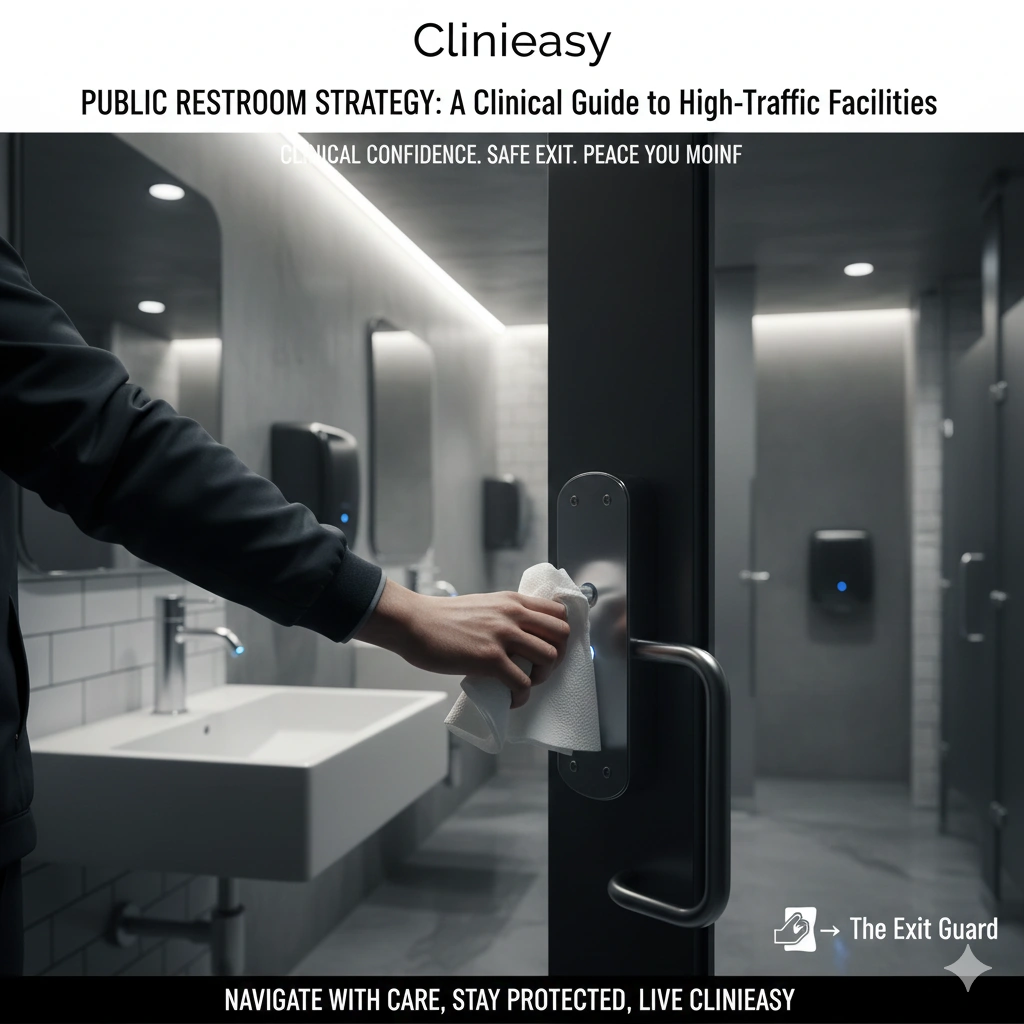
- The Fix: Close the lid before you flush. Use a paper towel to open the door and handle the faucet. Use hand sanitizer immediately upon returning to your seat, as the “sink water” on planes is often held in tanks that can harbor bacterial growth.
5. Post-Flight “Decon”
Hygiene doesn’t end when the “Fasten Seatbelt” sign turns off.
- The Protocol: Once you reach your hotel or home, your “Travel Clothes” should be treated as contaminated. Change immediately. Wipe down your smartphone and passport with an alcohol wipe—these are the two items you likely touched most frequently after handling airport bins and seatback pockets.
The Clinieasy “Flight Shield” Checklist
- Laminar Shield: Keep the air vent open and directed toward your face.
- The 60-Second Wipe: Sanitize the tray table, buckle, and armrests immediately.
- Nasal Hydration: Use saline spray every 90 minutes to maintain your “Physical Firewall.”
- Lid-Down Flush: Always close the toilet lid before flushing.
- Device Reset: Sanitize your phone and passport upon arrival at your destination.
Conclusion: Arrive Healthy
Travel should be about exploration, not recovery. By treating your airplane seat as a clinical workspace, you significantly reduce the “Biological Tax” of long-distance travel. You can enjoy the journey, knowing your personal “Bio-Bubble” is intact.
Fly smart, stay clinical, and keep it Clinieasy.
Disclaimer: If you have a compromised immune system, consider wearing a high-filtration (N95/FFP3) mask throughout the flight to further mitigate the risk of aerosolized pathogens in the cabin.
Why this fits Article #105:
- High Seasonal Interest: Travel tips are evergreen but peak during holiday and summer seasons.
- Actionable “Why”: Explains why the air vent is actually your friend.
- AdSense Synergy: Connects to travel tech, health supplements, and sanitization products.