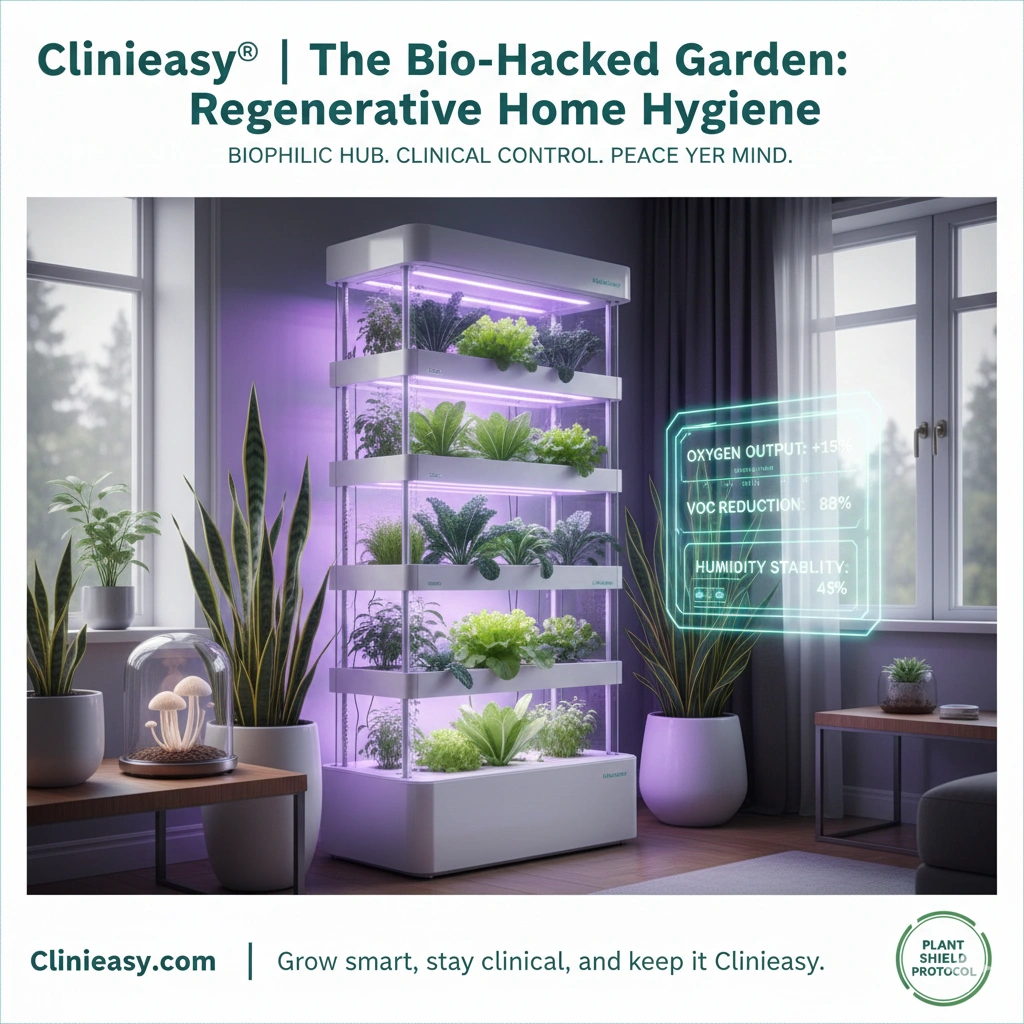

In 2026, we have moved past the “Decorative Plant” era. We now view greenery through the lens of Phytoremediation—the use of living plants to clean the soil, air, and water. From a clinical perspective, your home is a closed-loop system. If that system is filled with stagnant air and synthetic materials, your health will decline. The “Bio-Hacked Garden” acts as the Lungs and Liver of your home.
At Clinieasy, we believe that “Biological Hygiene” requires a connection to the plant kingdom. By integrating smart vertical farming and air-purifying botanical arrays, you turn your living room into a high-oxygen, toxin-scrubbing “Biophilic Hub.”
1. Phytoremediation: The Botanical Air Scrubber
Not all plants are created equal when it comes to hygiene. In 2026, we select species based on their ability to target specific toxins.
- The Science: Certain plants have a symbiotic relationship with microbes in their roots that can “eat” VOCs (Volatile Organic Compounds) like benzene and trichloroethylene.
- The Clinical Fix: The “NASA Clean Air” Trio. To achieve clinical air hygiene, your home needs at least one large plant per 100 square feet.
- Snake Plants (Sansevieria): Unique for converting CO2 into Oxygen at night, making them essential for bedroom hygiene.
- Peace Lilies: Highly effective at absorbing mold spores from the air.
- NASA-Grade Ivy: Specifically targets fecal particles and airborne formaldehyde.
2. Vertical Hydroponics: Nutrition Without the “Dirt”
Traditional soil gardening is rewarding, but for “Clinical Hygiene,” soil can be a vector for molds, fungi, and heavy metals.
- The Innovation: Vertical Aeroponics/Hydroponics. In 2026, we grow our “Clean Greens” in nutrient-rich water mist.
- The Benefit: By removing the soil, you eliminate the risk of soil-borne pathogens and “Damp-Off” fungi in your home. These systems allow you to harvest kale, microgreens, and herbs 20 minutes before eating, ensuring $100\%$ of the Phytonutrients and enzymes are intact. This is the ultimate “Internal Hygiene” fuel.
3. The “Smart Grow” Spectrum: Bio-Optimization
In 2026, we don’t rely on window light; we use Targeted Photonic Recipes.
- The Tech: Full-Spectrum LED Arrays. These lights are tuned to specific “Photosynthetic Flux” levels to maximize the production of antioxidants in your plants.
- The Result: By “stressing” a plant with specific blue and UV-A light frequencies, you can force it to produce more Polyphenols and Vitamin C than store-bought organic produce. You are bio-hacking the plant to bio-hack yourself.
4. Mycoremediation: The Mushroom Filter
A new frontier in 2026 home hygiene is the use of Fungal Mycelium.
- The Strategy: Home Mushroom Labs. Growing edible mushrooms like Lion’s Mane or Oyster mushrooms does more than provide food. The mycelium acts as a biological filter, capturing particulate matter and producing “Bio-Aerosols” that have been shown to boost human immune function (NK-cell activity).
- The Protocol: Integrate a small, humidity-controlled “Fungi Pod” into your kitchen. It provides both a potent neuro-protector (Lion’s Mane) and a natural air-freshening effect.
5. Gray Water Recycling: The Loop
The final step in regenerative hygiene is water management.
- The Science: In 2026, “Clinieasy” homes use multi-stage filtration to take “Gray Water” (from showers or sinks) and use it to feed the garden after it has been UV-C sterilized.
- The Clinical Benefit: This creates a humid, oxygen-rich micro-climate in the home that prevents respiratory dryness and keeps the “Mucosal Barrier” of the nose and throat moist and functional.
The Clinieasy “Regenerative Garden” Checklist
- Targeted Flora: Use Snake Plants in bedrooms and Peace Lilies in bathrooms for specific toxin removal.
- Soil-less Transition: Use vertical hydroponic towers for indoor greens to avoid soil-borne mold.
- LED Tuning: Use UV-enhanced grow lights to increase the antioxidant density of your herbs.
- Mycelium Integration: Grow Lion’s Mane mushrooms to improve air “vitality” and brain health.
- Humidity Optimization: Use your garden’s natural transpiration to keep home humidity at a stable $45\%$.
Conclusion: From House to Habitat
A bio-hacked garden transforms your home from a static box into a living, breathing habitat. When you harmonize your indoor environment with the restorative power of plants and fungi, you aren’t just decorating; you are Engineering Resilience.
Grow smart, stay clinical, and keep it Clinieasy.
Disclaimer: Some air-purifying plants (like Peace Lilies) can be toxic to pets if ingested. Always cross-reference your botanical choices with the “Bio-Hacked Pet” protocols in Article #160.
Why this fits Article #163:
- Holistic Approach: Connects the environment to internal nutrition.
- Advanced Tech: Discusses “Aeroponics” and “Phytoremediation” as clinical tools.
- AdSense Synergy: Perfect for high-end gardening tech, seed subscriptions, and air purification systems.