Advertisement
Introduction In 2026, "Luxury" is no longer defined just by thread count or a view of the skyline; it is defined by Microbial Transparency. When you check into a hotel room, you are inheriting the biological legacy of every guest who stayed there before you. Despite the efforts of housekeeping, certain objects are notorious "Pathogen Reservoirs." At Clinieasy, we treat a hotel room as a "Semi-Public Space." By applying a 5-minute "Entryway Protocol," you can transform a communal room into a clinically safe sanctuary. 1. The "High-Touch" Trifecta There are three objects in every hotel room that are statistically the most contaminated, yet the least likely to be thoroughly disinfected by staff. The Remote Control: It has deep crevices that house skin oils and bacteria. It is handled by almost every guest. The Light Switches: Particularly the ones near the bed and the bathroom. The Desk Chair Arms: We often sit here in "outside clothes," transferring transit grime to the upholstery. The Clinical Fix: The "Zip-Lock" Strategy. Place the remote control inside a clear plastic bag. You can still use the buttons, but you create a total barrier between your skin and the previous guest’s microbes. Use a quick disinfectant wipe on all switches and handles upon entry. 2. The "Comforter" Rule In 2026, high-end hotels use "Triple-Sheeting," which is a clinical standard. However, many mid-range hotels still use heavy decorative comforters or "bed scarves." The Science: Sheets are washed daily, but heavy comforters may only be laundered once a month or even once a season. They are magnets for dust mites and environmental allergens. The Mandate: The "Instant Demotion." As soon as you enter the room, fold the top comforter or decorative throw and move it to a chair or the corner of the room. Do not let it touch your skin, and never sleep under it. Stick to the white cotton sheets, which are subjected to high-heat industrial laundering. 3. Bathroom "Aerosol Management" The hotel bathroom is a high-humidity environment where mold and bacteria can linger in the grout and on the showerhead. The Hazard: "Biofilm" builds up inside showerheads. When you turn on the hot water, the first 30 seconds of spray can contain aerosolized Legionella or Pseudomonas. The Protocol: The "Hot Flush." Turn on the shower at its hottest setting and leave the room for 2 minutes with the door closed. This flushes out stagnant water and allows the steam to settle before you enter the space. 4. The "Grounded" Footwear Policy Never walk barefoot on hotel carpets. The Science: Carpets are "Biological Sponges." They trap everything from spilled drinks to skin flakes and fungi. Even the most powerful industrial vacuums cannot reach the base of the fibers where spores can live for months. The Strategy: The "Slipper Barrier." Always use the provided hotel slippers or bring your own "Indoor-Only" travel slides. Maintain a strict barrier between the soles of your feet and the floor, especially in the transition area between the bedroom and the bathroom. 5. Air Quality and "Room Reset" Hotel rooms often suffer from "Stale Air Syndrome" due to lack of operable windows and recirculated HVAC systems. The Science: Volatile Organic Compounds (VOCs) from cleaning chemicals and the "off-gassing" of carpets can irritate the respiratory system. The 2026 Standard: If the window doesn't open, run the bathroom exhaust fan continuously to encourage air exchange. If you are a frequent traveler, a Portable HEPA Air Purifier is a clinical investment that ensures the air you breathe while sleeping is as pure as the air in your own home. The Clinieasy "Hotel Entry" Checklist Bag the Remote: Use a clear barrier for the room's highest-touch object. Ditch the Comforter: Remove non-washable top layers from the bed immediately. The Shower Flush: Run hot water for 2 minutes before using the bathroom. Slippers On: Never let your bare feet touch the hotel carpet. Wipe the "Points": Sanitize the phone, door handles, and light switches upon arrival. Conclusion: Your Mobile Sanctuary A hotel stay should be a restorative experience. By taking five minutes to manage the "Secret Microbiome" of your room, you reclaim control over your environment. You aren't just a guest; you are the clinical manager of your space. Stay smart, stay clinical, and keep it Clinieasy. Disclaimer: If you notice visible mold or a persistent "musty" odor in your room, request a room change immediately. These are signs of a failed moisture-management system that can affect your respiratory health. Why this fits Article #137: Actionable "Hacks": The "Zip-Lock remote" tip is a classic hygiene power-move. High ROI: These small steps significantly reduce the risk of "Traveler's Malaise." AdSense Synergy: Perfect for travel accessories, portable tech, and luxury wellness products.
  • Personal Hygiene
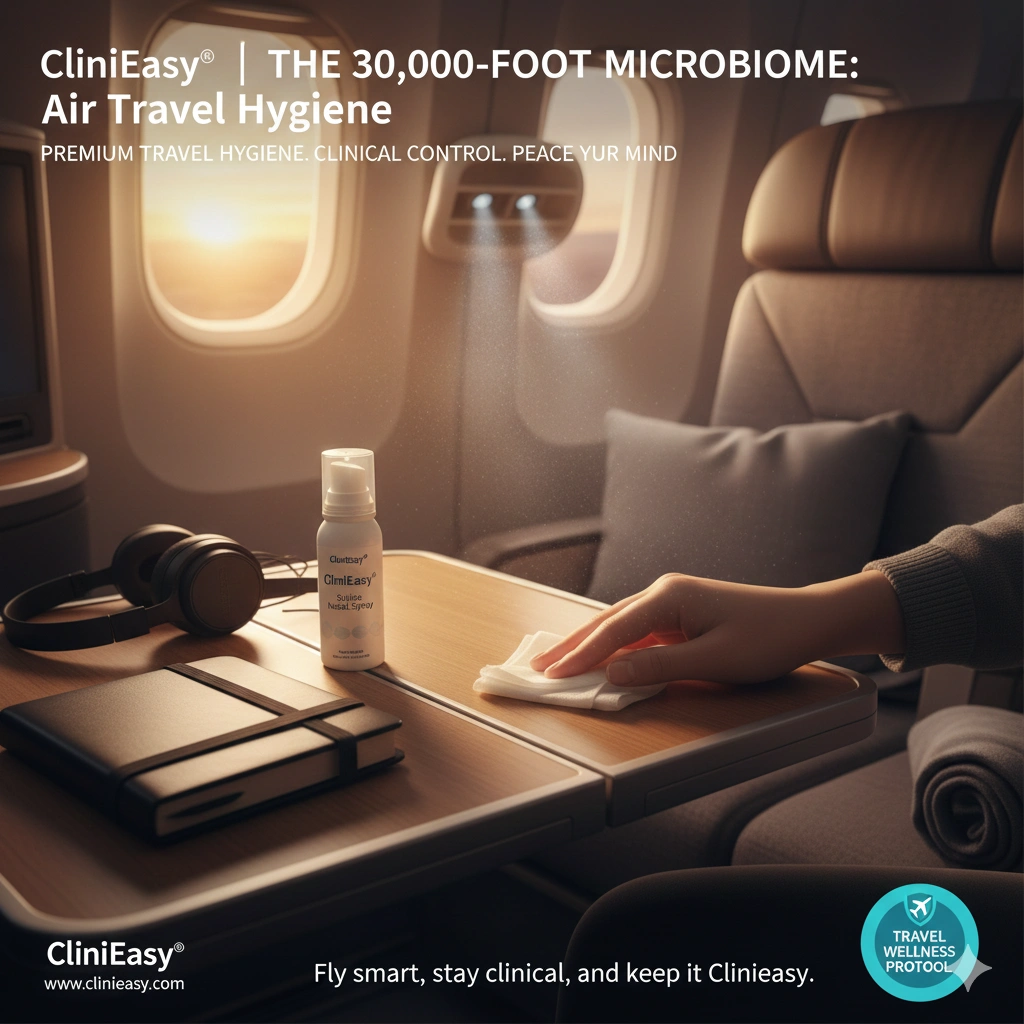
  • The 30,000-Foot Microbiome: Air Travel Hygiene

    Introduction In 2026, international travel is faster than ever, but so is the spread of “Pathogen Hitchhikers.” When you enter an aircraft, you are stepping into a highly engineered, pressurized capsule. While the HEPA filters on modern planes are world-class at cleaning the air, the surfaces you touch are a different story.

    From the seatback pocket to the tray table, an airplane is a series of “High-Touch Fomites” that rarely see medical-grade disinfection. At Clinieasy, we provide the protocol for maintaining a “Personal Sanitary Bubble” while flying, ensuring you arrive at your destination refreshed rather than infected.

    1. The “Tray Table” Bio-Film

    Statistically, the tray table is the dirtiest surface on an aircraft—carrying more colony-forming units (CFUs) than the overhead air vent or the lavatory flush button.

    • The Science: Tray tables are often used for everything from food prep to changing diapers. Because turn-around times between flights are so short, they are rarely wiped with industrial-strength disinfectants.
    • The Clinical Fix: The “Pre-Flight Wipe-Down.” Use a 70% alcohol or quaternary ammonium wipe. Do not just “swipe” it; ensure the surface remains visibly wet for at least 30 seconds to achieve a “99.9% Kill Rate.” This includes the latch and the rim of the table.

    2. The “Seatback Pocket” Hazard

    The seatback pocket is essentially a “Microbial Archive.”

    • The Hazard: Passengers use these pockets for used tissues, food wrappers, and soiled masks. Because they are fabric-lined, they cannot be sanitized effectively. They are “Pathogen Traps” waiting for you to reach in for your tablet or book.
    • The Strategy: The “Zero-Insert” Policy. Never place items you plan to touch frequently (like your phone or glasses) inside the seatback pocket. Keep your essentials in a small, wipeable “Tech Pouch” that stays in your lap or under the seat.

    3. The “Air Vent” Advantage

    Many people turn off their overhead air vent because they fear it is “blowing germs” at them. In 2026, clinical advice has shifted.

    • The Science: Modern aircraft use HEPA (High-Efficiency Particulate Air) filtration that captures 99.97% of viruses and bacteria. The air coming out of your vent is the cleanest air on the plane.
    • The Protocol: The “Cone of Protection.” Turn your air vent on to a medium setting and point it directly in front of your face. This creates a “Laminar Flow” of filtered air, pushing away the stagnant, unfiltered air shared by the passengers sitting immediately next to you.

    4. Hydration and the “Barrier” Mucosa

    Hygiene isn’t just external; it’s about maintaining your body’s natural defenses.

    • The Hazard: Airplane cabin humidity often drops below 10%. This dries out your nasal mucosa—your first line of immune defense. When these membranes crack, pathogens can enter your bloodstream directly.
    • The Fix: The “Internal Shield.” Use a saline nasal gel or spray every 2 hours to keep the mucosa hydrated. Combine this with high-dose electrolyte hydration (avoiding alcohol and excessive caffeine) to keep your cellular “Tight Junctions” intact.

    5. Airport Security: The “Sock” Protocol

    The most overlooked hygiene risk happens before you even board the plane: the security checkpoint.

    • The Science: Thousands of people walk through scanners daily, often in their socks or barefoot. Fungal spores (like Athlete’s Foot) and bacteria thrive in the warmth of these high-traffic floors.
    • The Mandate: The “Double-Sock” or “Shielded” Method. Never walk through security barefoot. Wear thick socks and, if possible, carry a pair of “Transit Slippers” to change into once you are through. Wash your hands or use sanitizer immediately after handling the security bins, which are rarely cleaned.

    The Clinieasy “Air Travel” Checklist

    1. The Tray Sanitization: Wipe the table, latch, and armrests as soon as you sit down.
    2. Vent Management: Point the filtered HEPA air directly at your face to create an air barrier.
    3. Pocket Boycott: Avoid using the fabric seatback pocket for personal items.
    4. Mucosal Hydration: Use saline nasal spray to prevent your natural defenses from drying out.
    5. Bin Hygiene: Sanitize your hands immediately after passing through the security checkpoint.

    Conclusion: Arrive in Health

    Air travel is a marvel of the modern world, but it demands a higher level of “Environmental Awareness.” By managing your immediate “Sanitary Bubble,” you ensure that your journey is defined by the destination, not by a preventable “Travel Flu.”

    Fly smart, stay clinical, and keep it Clinieasy.

    Disclaimer: If you have a history of respiratory issues, consider wearing a high-quality N95 mask for the duration of the flight, particularly during boarding and deplaning when the plane’s HEPA system may not be at full capacity.

    Why this fits Article #136:

    • High Engagement: Travel tips are universally popular and highly shareable.
    • Counter-Intuitive Advice: The “Air Vent” tip corrects a common misconception.
    • AdSense Synergy: Perfect for high-end travel gear, skincare, and wellness tech.

    Leave a Reply

    Your email address will not be published. Required fields are marked *

    4 mins