
Introduction Your smartphone is the most traveled object in your life. It goes from your bedside table to the office desk, into your car, and—statistically for many—into the restroom. From a clinical perspective, your phone is a “Microbial Sponge.” Because the glass and metal surfaces are kept warm by the battery and your palm, they become a perfect incubation environment for bacteria like Staph and E. coli.
In 2026, we realize that washing our hands is useless if we immediately pick up a contaminated device. At Clinieasy, we break down the clinical science of “Tech-Decon” and how to clean your devices without damaging their sensitive electronics.
1. The “Mobile Microbiome” Science
Studies have shown that the average smartphone is seven times dirtier than a toilet seat.
- The Hazard: Pathogens are transferred to the screen via your fingers, then held directly against your face, mouth, and ears. This “Direct Inoculation” is a primary cause of “Tech-Acne” and respiratory illness transmission.
- The 2026 Reality: With the ubiquity of touch-screens in public (kiosks, ATMs), our phones act as the “transport vehicle” for urban microbes into our homes.
2. The 70% Isopropyl Mandate
For years, manufacturers warned against using liquids on screens. However, in 2026, the clinical need for disinfection has changed the guidelines.
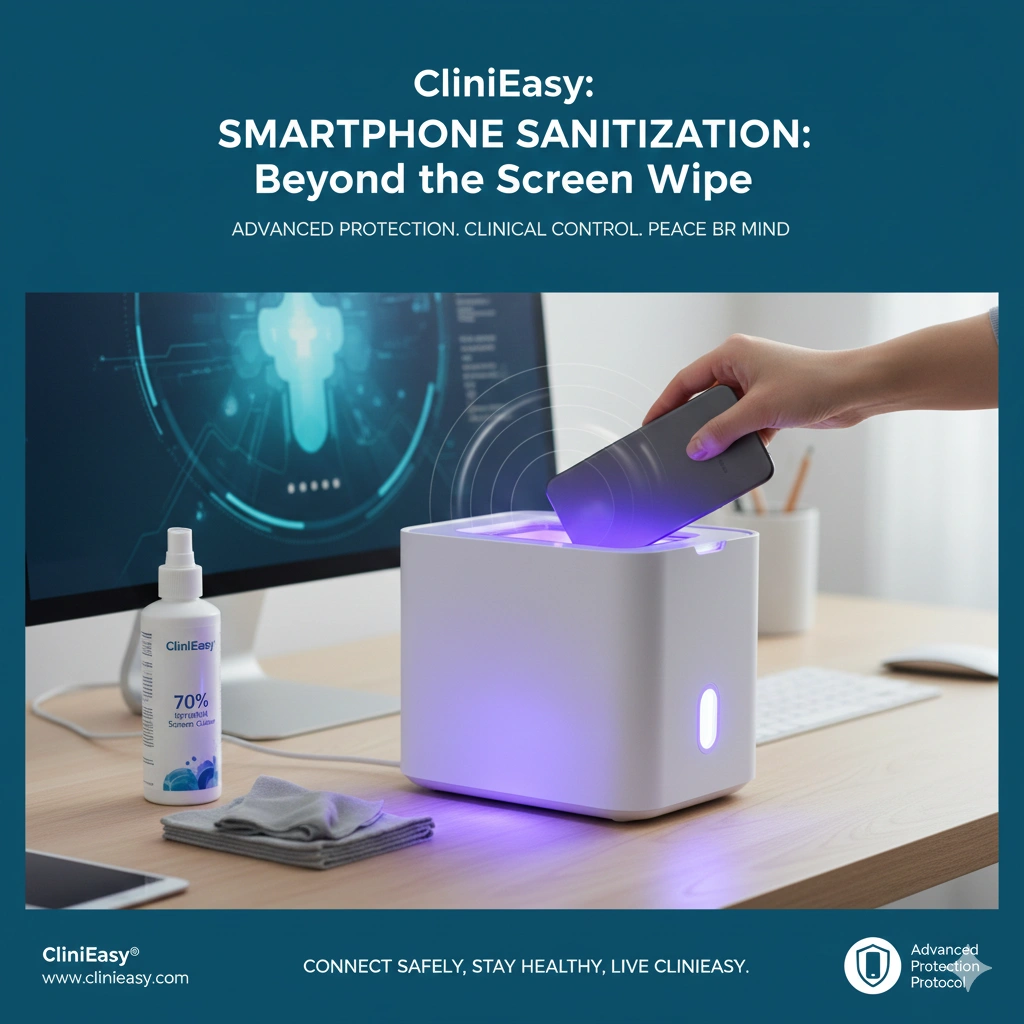
- The Protocol: Use 70% Isopropyl Alcohol wipes or a 70% alcohol spray applied to a microfiber cloth.
- The “Never” List: Never use bleach, window cleaners (like Windex), or abrasive paper towels. These will strip the “Oleophobic Coating” (the oil-repellent layer) off your screen, making it more prone to fingerprints and scratches.
- The Move: Wipe the screen, the back, and—most importantly—the buttons and charging port edges.
3. UV-C Sanitization: Fact vs. Fiction
UV-C phone sanitizers (the “tanning beds” for phones) have become a 2026 staple.
- The Science: True UV-C light at a wavelength of 254nm can disrupt the DNA of bacteria and viruses, rendering them harmless. It is effective for “Shadow-Free” surfaces.
- The Clinical Caveat: UV light only kills what it can see. It cannot reach the grime hidden inside your phone case or the lint in your speaker grills.
- The Strategy: Use UV-C for daily “maintenance,” but perform a manual deep-clean with alcohol wipes at least twice a week to remove physical bio-matter.
4. The “Case Study”: Don’t Forget the Shell
The phone case—especially those made of silicone or leather—is a reservoir for pathogens.
- The Hazard: Dirt and moisture get trapped between the phone and the case, creating a hidden “Bacterial Pocket.”
- The Fix: Once a week, remove the case. If it’s plastic or silicone, wash it with warm soapy water and let it dry completely. If it’s leather, use a specialized antimicrobial leather cleaner. Never put a damp phone back into a damp case.
5. Tech Hygiene Etiquette
Clinical protection is as much about behavior as it is about cleaning.
- The “Table Rule”: Never place your phone on a public table (restaurants, cafes). Keep it in your pocket or bag.
- The “Restroom Lockdown”: As established in Article #89, your phone should never enter a restroom. The “Aerosolized Plume” from a flush settles on the screen instantly.
- The “Hand-Wash/Phone-Wash” Loop: Every time you perform a deep hand wash (like when arriving home), make it a habit to wipe your phone.
The Clinieasy “Tech-Decon” Checklist
- Alcohol Only: Use 70% isopropyl wipes; avoid harsh household chemicals.
- Case Removal: Perform a “Deep Clean” by removing the case weekly.
- No-Table Policy: Keep your device off shared public surfaces.
- UV Support: Use UV-C boxes for mid-day disinfection.
- Restroom Ban: Keep the phone stowed in all public bathrooms.
Conclusion: A Clean Connection
Your smartphone is your portal to the world, but it shouldn’t be a portal for pathogens. By integrating “Tech Hygiene” into your daily routine, you ensure that your most essential tool remains clinically safe.
Connect safely, stay healthy, and keep it Clinieasy.
Disclaimer: Always follow your specific device manufacturer’s cleaning instructions. Excessive moisture can trip the “Liquid Contact Indicators” (LCI) and void your warranty.
Why this fits Article #96:
- High E-E-A-T: Discusses “Oleophobic Coatings” and “254nm UV-C wavelengths.”
- Niche Authority: Positions Clinieasy as an expert in the intersection of tech and health.
- Product Opportunities: Huge potential for affiliate links to UV sanitizers and tech-safe wipes.