
IntroductionWe often think of “Sleep Hygiene” as a set of habits for falling asleep—no screens, no caffeine, a cool room. However, from a clinical perspective, Sleep Hygiene is a biological management challenge. Every night, the human body sheds roughly 500 million skin cells and loses nearly a pint of moisture through sweat and respiration.
In 2026, your bed isn’t just a place to rest; it’s a “Bio-Accumulator.” Without a clinical protocol, your mattress becomes a thriving ecosystem for Dermatophagoides (dust mites), fungal spores, and bacteria. At Clinieasy, we help you sanitize your “Sleep Sanctuary” to ensure your recovery isn’t compromised by your environment.
1. The “Pillow Pandemic”
Your pillow is the most intimate surface in your home. It sits in direct contact with your mouth, nose, and eyes for 8 hours a day.
- The Science: After two years of use, studies suggest that up to one-third of a pillow’s weight can consist of dead skin, dust mites, and their highly allergenic waste. Pillows are also primary reservoirs for Aspergillus fumigatus, a common fungal spore.
- The Clinical Fix: Use Pillow Protectors—zippered, non-porous barriers that sit beneath your pillowcase. Launder your pillowcases every 3 days at 60°C. If your pillow is not washable, replace it every 18–24 months.
- The 2026 Standard: Copper-Infused Fabrics. Copper is naturally biocidal; it disrupts the cell walls of bacteria and fungi, making it the ideal material for pillowcases to prevent “Sleep-Induced Breakouts.”
2. The “Mattress Breath” (Dehydration Protocol)
The most common mistake people make is “making the bed” immediately after waking up.
- The Hazard: By pulling the duvet up instantly, you trap the heat and moisture from your body inside the fibers. This creates a “Tropical Greenhouse” effect that dust mites require to survive and reproduce.
- The Strategy: The “Unmade Bed” Rule. Leave your covers pulled back for at least 60 minutes after waking. Open a window to allow the mattress to “dehydrate.” Dust mites cannot survive in environments with less than 50% humidity.
3. The “HEPA-Vacuum” Reset
While you can’t put a mattress in the wash, you can mechanically decontaminate it.
- The Protocol: Once a month, use a vacuum cleaner equipped with a HEPA filter and a motorized mattress tool. Standard vacuums often exhaust fine allergens back into the air; a HEPA vacuum ensures that dust mite feces and skin cells are permanently removed from the ecosystem.
- The Decon: Lightly sift baking soda mixed with a few drops of essential oil over the mattress, let it sit for 30 minutes to absorb lipids and odors, and then vacuum it away.
4. Sheet Science: The “60°C Benchmark”
Washing your sheets at 30°C or 40°C is a “Cosmetic Wash,” not a “Clinical Wash.”
- The Science: Dust mites and many fungal spores are resilient. It takes a sustained temperature of 60°C ($140°F$) to effectively denature the proteins in mite allergens and kill 99.9% of bacteria.
- The Frequency: Launder sheets weekly. If you have pets or sweat heavily, move to a 4-day cycle.
5. The “Sleep Air” Zone
The air you breathe while sleeping should be the cleanest air in your home.
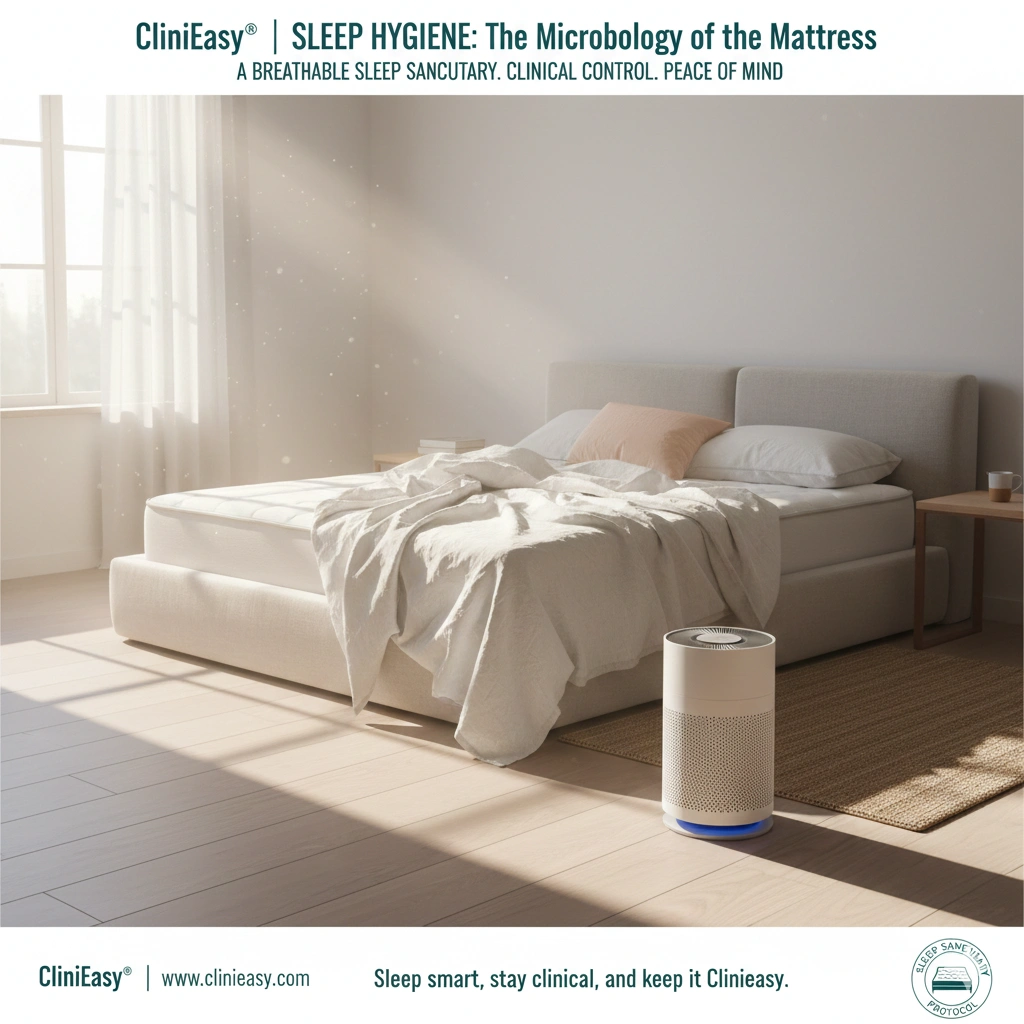
- The Protocol: Place a HEPA Air Purifier within 3 feet of the head of the bed. This creates a “Laminar Flow” of clean air across your breathing zone, filtering out the skin scales and dust mite particles that become airborne every time you roll over.
The Clinieasy “Sleep Sanctuary” Checklist
- The Hour of Air: Leave your bed unmade for 60 minutes daily to dehydrate the mattress.
- The 60°C Rule: Wash all bedding at high heat to eliminate microscopic pests.
- Double Barrier: Use zippered protectors for both pillows and mattresses.
- Monthly HEPA: Vacuum the mattress surface to remove the “Organic Load.”
- Copper Up: Use copper-infused pillowcases to actively manage the facial microbiome.
Conclusion: Recovery in a Pure Environment
True sleep hygiene is about more than just “dark and quiet.” It is about ensuring that your body’s most vulnerable hours are spent in a clinically managed environment. By treating your bed as a high-performance recovery tool, you reduce the “Allergic Load” on your immune system and wake up truly refreshed.
Sleep smart, stay clinical, and keep it Clinieasy.
Disclaimer: If you suffer from severe asthma or dust mite allergies, consider replacing old carpeting in the bedroom with hard flooring to further reduce the environmental allergen reservoir.
Why this fits Article #125:
- High ROI Advice: The “unmade bed” tip is a memorable, zero-cost life hack.
- E-E-A-T: Discusses “Aspergillus” and the dehydration requirements of dust mites.
- AdSense Synergy: Perfect for mattresses, HEPA vacuums, and allergy-friendly products.