
Introduction In 2026, we have moved past simply “managing symptoms” with antihistamines. We now focus on Pollen Interdiction. From a clinical perspective, pollen is an aggressive environmental particulate. It is designed to “stick” to surfaces—including your hair, skin, and clothing—and once it enters your home, it can remain active for weeks.
At Clinieasy, we treat allergy season as a “Decontamination Challenge.” By controlling the “Pollen Load” in your immediate environment, you reduce the triggers that lead to systemic inflammation.
1. The “Hair Magnet” Effect
Your hair is the most effective “Pollen Trap” on your body.
- The Science: Because of its large surface area and natural oils (or styling products), hair acts like a microfiber cloth for airborne pollen. If you go to bed without washing your hair, you are depositing a day’s worth of allergens directly onto your pillow—where you will breathe them in for 8 hours.
- The Clinical Fix: The “Pollen Shower” Mandate. During peak season, showering immediately upon returning home is non-negotiable. If you cannot wash your hair daily, wear a hat outdoors and brush your hair thoroughly before entering the bedroom to mechanically remove particulates.
2. The “Nasal Rinse” Decontamination
Your nose is your body’s primary “Air Filter,” and during spring, it becomes “clogged” with biological debris.
- The Hazard: Pollen grains trapped in the mucus membrane continue to release allergenic proteins long after you’ve come inside.
- The Protocol: Isotonic Nasal Irrigation. Use a saline rinse (Neti pot or powered irrigator) twice daily. This mechanically flushes the pollen out of the nasal passage, preventing the “Allergic Cascade” before it starts. Note: Always use distilled or previously boiled water to ensure clinical purity.
3. The “Threshold” Barrier
Pollen doesn’t just blow in through the window; it is “carried” in.
- The Science: Studies show that 80% of the pollen found in homes is tracked in on the soles of shoes and the coats of pets.
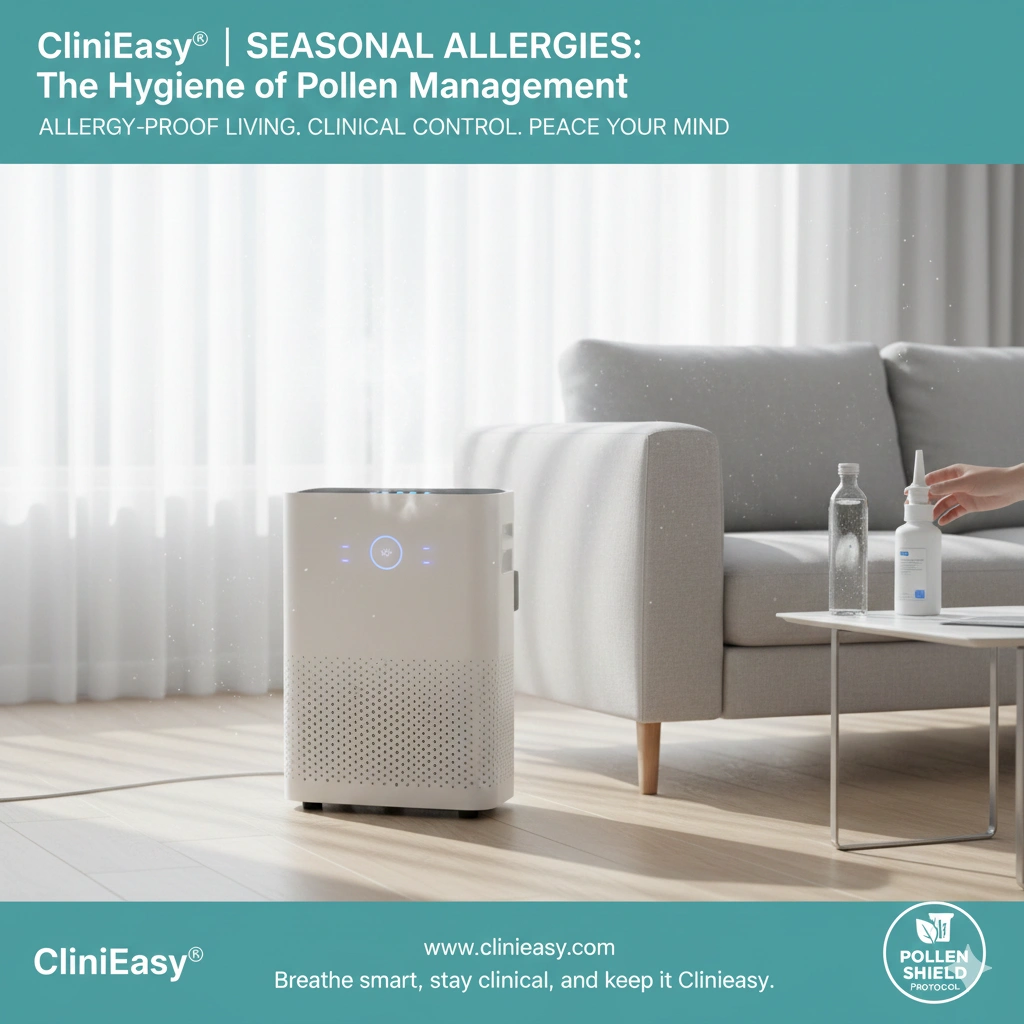
- The Strategy: The HEPA Mudroom. Establish a “Decon Zone” at the entrance of your home. Use a high-efficiency HEPA Air Purifier at the doorway to capture airborne particles as you enter. Wipe down pets with a damp cloth immediately after walks to remove pollen from their fur.
4. Laundry as Bio-Defense
During allergy season, your clothes are essentially “Pollen Sponges.”
- The Hazard: Drying clothes outside on a line is a major hygiene failure for allergy sufferers. The wet fabric captures airborne pollen and locks it into the fibers.
- The Fix: The “Hot Cycle” Reset. Use a dryer during peak season. Wash “Outdoor Wear” (jackets and jeans) more frequently and separately from bedding. Use a laundry additive designed to denature proteins (anti-allergen wash) to ensure the pollen is chemically neutralized.
5. HVAC and the “Recirculation” Trap
Many people believe that staying indoors is enough, but “Indoor Air” can often have higher pollen concentrations than the outside if the system is poorly managed.
- The Science: Standard HVAC filters are designed to protect the machine, not your lungs. They allow fine pollen particulates to recirculate through the house.
- The 2026 Standard: Upgrade to MERV 13 or HEPA-rated filters. Ensure your system is set to “Recirculate” rather than “Fresh Air” mode during high-pollen counts to prevent pulling the outside atmosphere into your sanctuary.
The Clinieasy “Pollen Shield” Checklist
- The Nightly Wash: Rinse your hair before sleep to keep your bed a “Pollen-Free Zone.”
- Nasal Flush: Use saline irrigation to mechanically remove trapped particulates.
- Shoe Quarantine: Never wear outdoor shoes past the entryway.
- Indoor Drying: Avoid line-drying clothes when pollen counts are high.
- MERV 13 Defense: Upgrade your home’s air filtration to capture microscopic allergens.
Conclusion: Breathing Clean in a Polluted Season
Seasonal allergies are a biological response to environmental overload. By adopting a clinical hygiene protocol, you move from a “reactive” state to a “proactive” one. You cannot control the trees, but you can control the purity of your personal environment.
Breathe smart, stay clinical, and keep it Clinieasy.
Disclaimer: If you experience severe respiratory distress or “Allergic Asthma,” consult an allergist. Clinical hygiene is a support system, not a replacement for prescribed medical treatments.
Why this fits Article #133:
- High E-E-A-T: Discusses “Isotonic irrigation” and “MERV 13” standards.
- Actionable Habits: Offers clear lifestyle changes like the “Pollen Shower.”
- AdSense Synergy: Perfect for air purifiers, nasal care products, and high-end HVAC filters.